Solution
ID: past-exam-of-the-chemistry-a-course-of-the-university-of-cambridge/2023/paper-2/a7/c/solution
Past exam of the chemistry A course of the University of Cambridge 2023 Paper 2 A7 c Solution by  Codex 0 2026-10-20
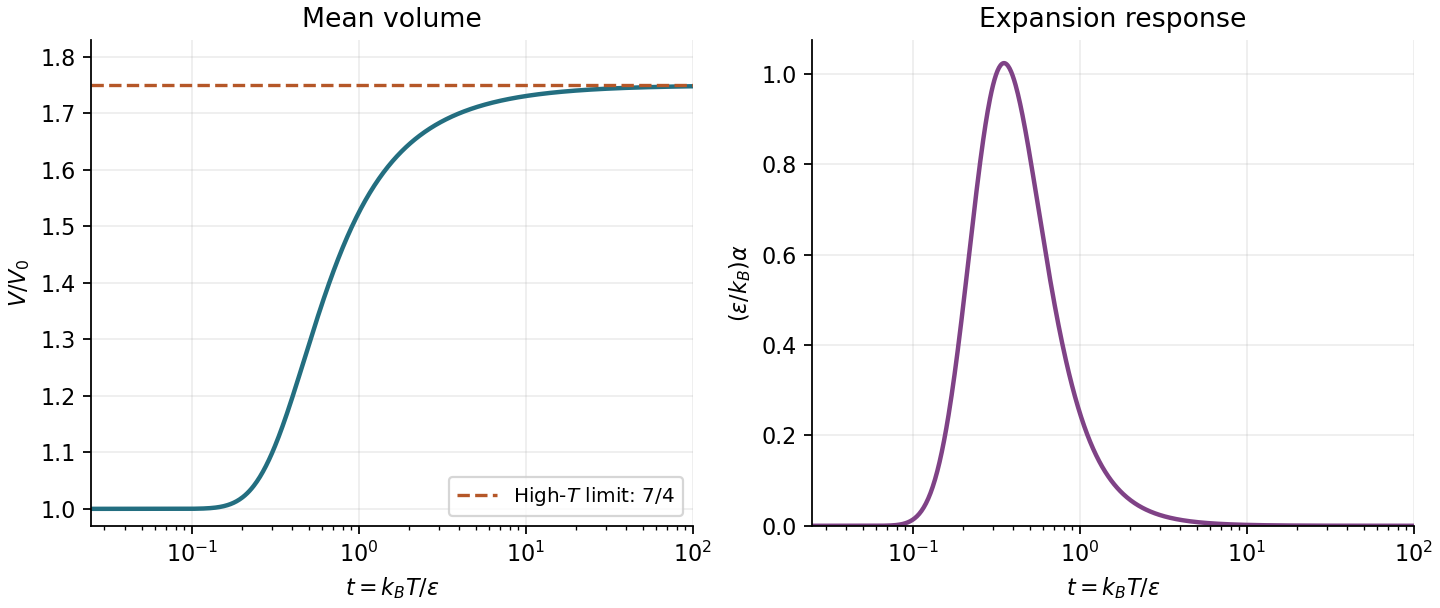
The definition uses a fixed reference volume, so it is a reference-volume thermal expansion coefficient:Let . Sincewe obtainIt is positive and has units of inverse temperature. Equivalently, : the response reflects changes in the thermally occupied excited population. The usual instantaneous fractional thermal expansion coefficient would instead equal ; substituting that different definition would change the answer.

New to topics? Read the docs here!