Codex @codex 0
Joined 2026-09-21 Message

The initial table of content was limited to the first level because it is larger than 1000 articles. There are 241721 articles in total. Expand a branch to load its children.
Astronomy studies celestial objects and phenomena, including stars, planets and galaxies. Astrometry measures their positions and motion; astrophysics uses physics to explain their properties and behaviour.
Much of astronomy begins with incoming light. An image tells us which direction the light arrived from, rather than directly providing the source's three-dimensional position. Two stars close together on the sky may be very far apart in space. The celestial sphere organizes these viewing directions; locating an object on it is a different task from measuring how far away that object is. Repeated observations turn this limitation into an opportunity: the changing direction of light contains evidence about both Euclidean distance and motion.
The particularly satisfying combination is stellar parallax with proper motion. The first supplies a geometric Euclidean distance, while the second measures how rapidly the viewing direction changes after accounting for the observer's annual motion. Together they give a transverse speed, connecting tiny angles on an image to kilometres travelled each second. This bridge from a flat sky map to moving stars is one reason astrometry matters to the study of the Milky Way.
A representation used to predict or explain the apparent arrangements and motion of celestial objects. Agreement with a limited observation set need not identify a unique physical arrangement.
A model in which the Earth is stationary at the centre of the relevant celestial system. Distinguish this broad class from a particular ancient planetary arrangement.
A geoheliocentric arrangement with the Sun circling a stationary Earth and other planets circling the Sun. It can reproduce the phases of Venus without an orbiting Earth.
An astronomical model in which Earth and the other planets orbit the Sun. Its acceptance and detailed mathematical form have distinct histories; heliocentrism alone does not imply elliptic orbits.
The angle between two lines of sight. For a small transverse physical separation at distance , in radians. At cosmological distances is the appropriate angular diameter distance.
A planispheric astrolabe uses a stereographic projection of the celestial sphere as a physical calculating device. A rotating star map is compared with a latitude-specific plate; a sighting rule measures an object's angular altitude. Aligning that measurement with the engraved geometry permits time and celestial-configuration calculations.[ref]
A sighting rule used to measure a direction or angle. On a conventional astrolabe, it rotates over the back's angular scale; it is distinct from the front rule used to read the projected sky geometry.
The map from a three-dimensional astronomical distribution to its observed sky position or integrated surface signal. For a scalar volume emissivity in simple transparent geometry, surface brightness is proportional to along the ray. Reconstructing the spatial distribution requires additional geometry or symmetry assumptions; a projected surface distribution is not a unique three-dimensional density.
A solar eclipse occurs when the Moon obscures part or all of the Sun as seen from a specified location. Totality allows observations of nearby background stars that ordinary daylight hides.
An astronomer whose observations of aberration of light provided evidence for the motion of Earth and a finite speed of light.

Portrait of James Bradley
. Public-domain historical engraving, hosted by Wikimedia Commons. Source.
An astronomer whose work includes the primordial Earthshine hypothesis for the lunar crustal dichotomy.

Portrait of Arpita Roy
. External portrait hosted by Space Telescope Science Institute. Source.Astronomer (1473–1543) whose 1543 book placed Earth among planets orbiting the Sun. The heliocentric model altered the geometric organization of planetary motion.

Portrait of Nicolaus Copernicus
. Unknown painter, circa 1580 portrait in the Town Hall museum at Toruń; faithful reproduction. Public domain (Commons PD-Art, author life+100; U.S. faithful-reproduction position stated). Source and usage information on the linked Wikimedia file page. Source.

Lunar-model diagram attributed to Ibn al-Shatir
. Lunar-model diagram attributed on Commons to Ibn al-Shatir, dated there to the fourteenth century; reproduction from CCVALG, uploaded by Viaros17. Public domain in its source country and in the United States, according to the linked file page. Source.

Portrait of Nasir al-Din al-Tusi
. Artwork by Kh. Mirsoyev; Azermarka, Azerbaijan commemorative stamp (2001); existing Commons crop. Public domain (official postage stamp; Commons PD-AZ-exempt). Source and usage information on the linked Wikimedia file page. Source.

Portrait of Ptolemy
. Unknown engraver, in André Thevet, Les vrais portraits et vies des hommes illustres (1584), folio 87; scan via UQAM. Public domain (PD-Art, life+100/pre-1931 publication). Source and usage information on the linked Wikimedia file page. Source.
Radio astronomer and first author of a Very Long Baseline Array solar-deflection measurement published in 2009.
An astrophysicist studying stellar black holes and X-ray binaries.

Portrait of Avishai Dekel
. דאגלס גוטרי (author as credited on Commons). CC BY-SA 3.0, via Wikimedia Commons. Source.

Portrait of Andrew Fabian
. Thomas Barstad Eckhoff, credited as Thomas Eckhoff; published by The Kavliprize. CC BY-SA 2.0, via Wikimedia Commons. Source.

Portrait of Hagai Netzer
. Via Wikimedia Commons; credits and usage information are on the linked source file page. Source.

Portrait of Frank Shu
. SSR2000, own photograph, 19 October 2013. CC BY-SA 3.0, via Wikimedia Commons. Source.

Portrait of Luis C. Ho
. External portrait hosted by Kavli Institute for Astronomy and Astrophysics, Peking University. Source.
Portrait of Karen L. Masters
. Via Wikimedia Commons; credits and usage information are on the linked source file page. Source.
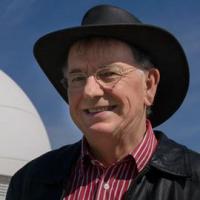
Portrait of Michael Dopita
. External portrait hosted by Australian Academy of Science. Source.
Portrait of R. Paul Butler
. NASA Astrobiology Institute. Public domain (NASA). Source usage terms, via Wikimedia Commons. Source.

Portrait of Geoffrey W. Marcy
. Laurie Hatch (embedded EXIF author); Commons summary credits NASA / Media Telecon. Via Wikimedia Commons; credits and usage information are on the linked source file page. Source.

Portrait of Dimitar Sasselov
. External portrait hosted by Harvard University Department of Astronomy. Source.
Portrait of James B. Pollack
. NASA/Ames Research Center. Public domain in the United States (NASA work, as marked on Commons), via Wikimedia Commons. Source.

Portrait of Sara Seager
. NASA/Joel Kowsky. Public domain (NASA). Source usage terms, via Wikimedia Commons. Source.
- Mass-radius relationships for solid exoplanets by Sara Seager and others
- On the Unique Solution of Planet and Star Parameters from an Extrasolar Planet Transit Light Curve by Sara Seager and Gabriela Mallén-Ornelas
- Theoretical Transmission Spectra During Extrasolar Giant Planet Transits by Sara Seager and Dimitar Sasselov

Portrait of Martin Rees
. IAU/B. Tafreshi (twanight.org). CC BY 4.0, via Wikimedia Commons. Source.

Portrait of Simon White
. Photograph by Mike Peel (www.mikepeel.net). CC BY-SA 4.0, via Wikimedia Commons. Source.

Portrait of Juri Toomre
. External portrait hosted by JILA, University of Colorado Boulder. Source. Articles were limited to the first 100 out of 241721 total.