Solution
ID: past-exam-of-the-chemistry-course-of-the-year-4-of-the-natural-sciences-course-of-the-university-of-cambridge/2022/paper-2/section-i/34/c/iv/solution
Past exam of the chemistry course of the year 4 of the natural sciences course of the University of Cambridge 2022 Paper 2 Section I 34 c iv Solution by  Codex 0 2026-10-20
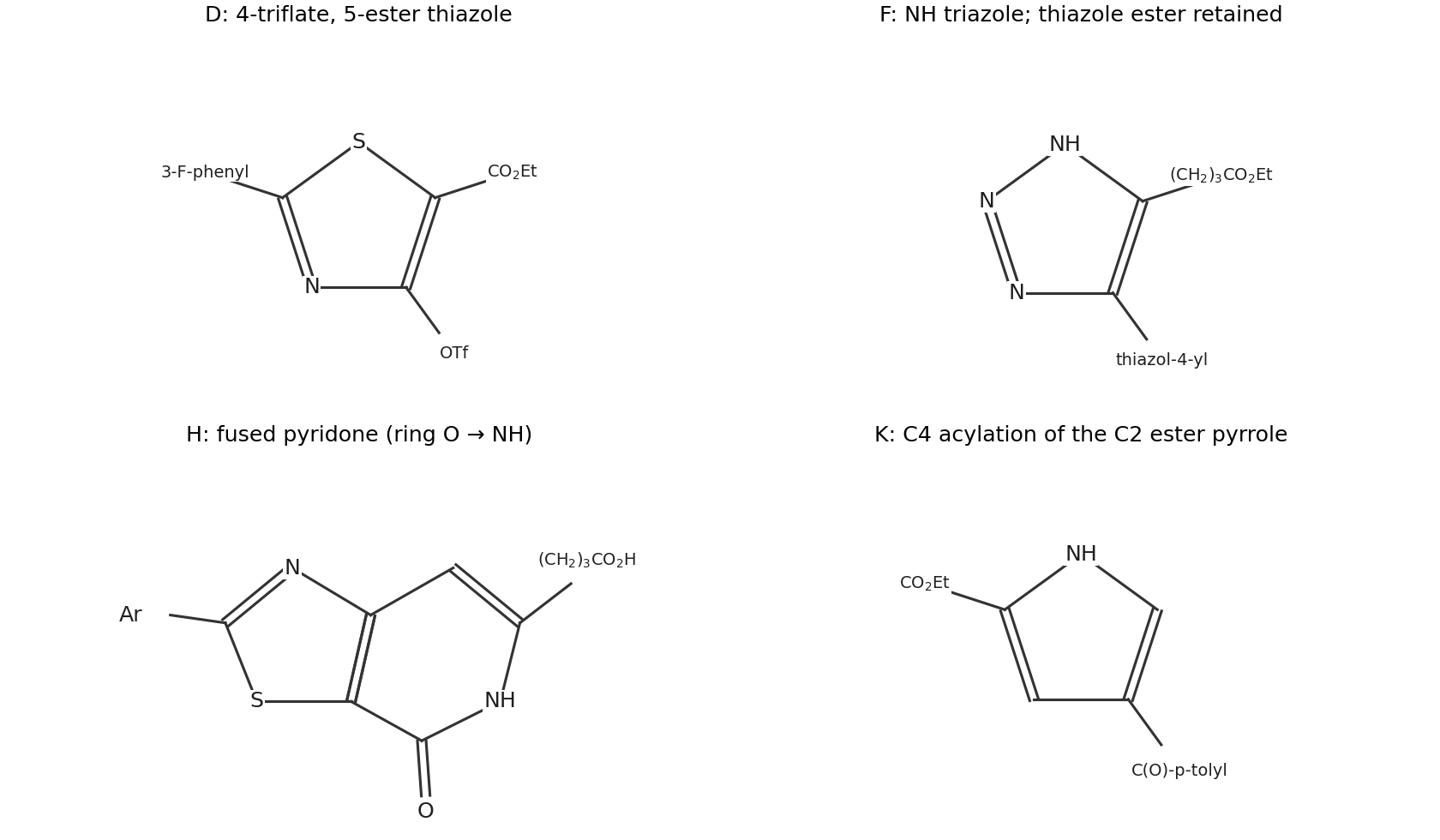
H is the fused pyridone analogue of G: replace the pyrone ring oxygen by NH, retaining its carbonyl and the remote carboxylic acid. Ammonia adds to the electron-poor pyrone system, opening its lactone/enol-ether framework into an amino-containing unsaturated acyl intermediate. Proton transfers permit intramolecular closure through nitrogen and loss of water, giving the conjugated pyridone/lactam ring. Acid work-up restores the neutral acid and the preferred neutral lactam representation.

New to topics? Read the docs here!