Solution
ID: past-exam-of-the-mathematics-course-of-the-university-of-oxford/2015/prelims/mathematics-v/4/b/i/solution
Past exam of the mathematics course of the University of Oxford 2015 Prelims Mathematics V 4 b i Solution by  Codex 0 2026-10-25
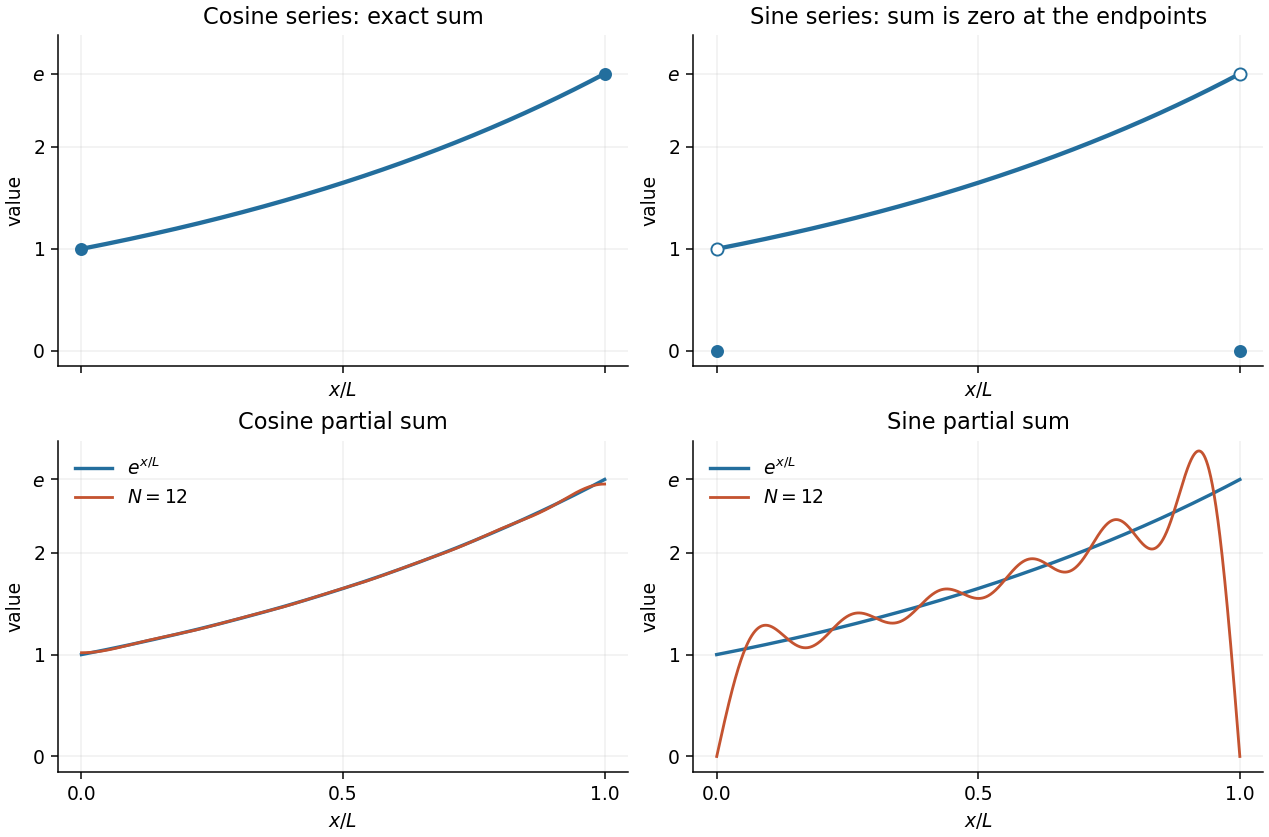
Set and . The required integrals follow fromConsequently the Fourier coefficients areThus the Fourier cosine series isand its sum is everywhere on . The Fourier sine series isand its sum is on and zero at the two endpoints. The open and filled circles in the sketches distinguish these endpoint limits from the actual values of the sum.

New to topics? Read the docs here!