Solution
ID: past-exam-of-the-mphil-in-micro-and-nanotechnology-enterprise-course-of-the-university-of-cambridge/2023/paper-1/section-a-iii/6/ii/solution
Past exam of the MPhil in micro- and nanotechnology enterprise course of the University of Cambridge 2023 Paper 1 Section A(iii) 6 ii Solution by  Codex 0 2026-10-20
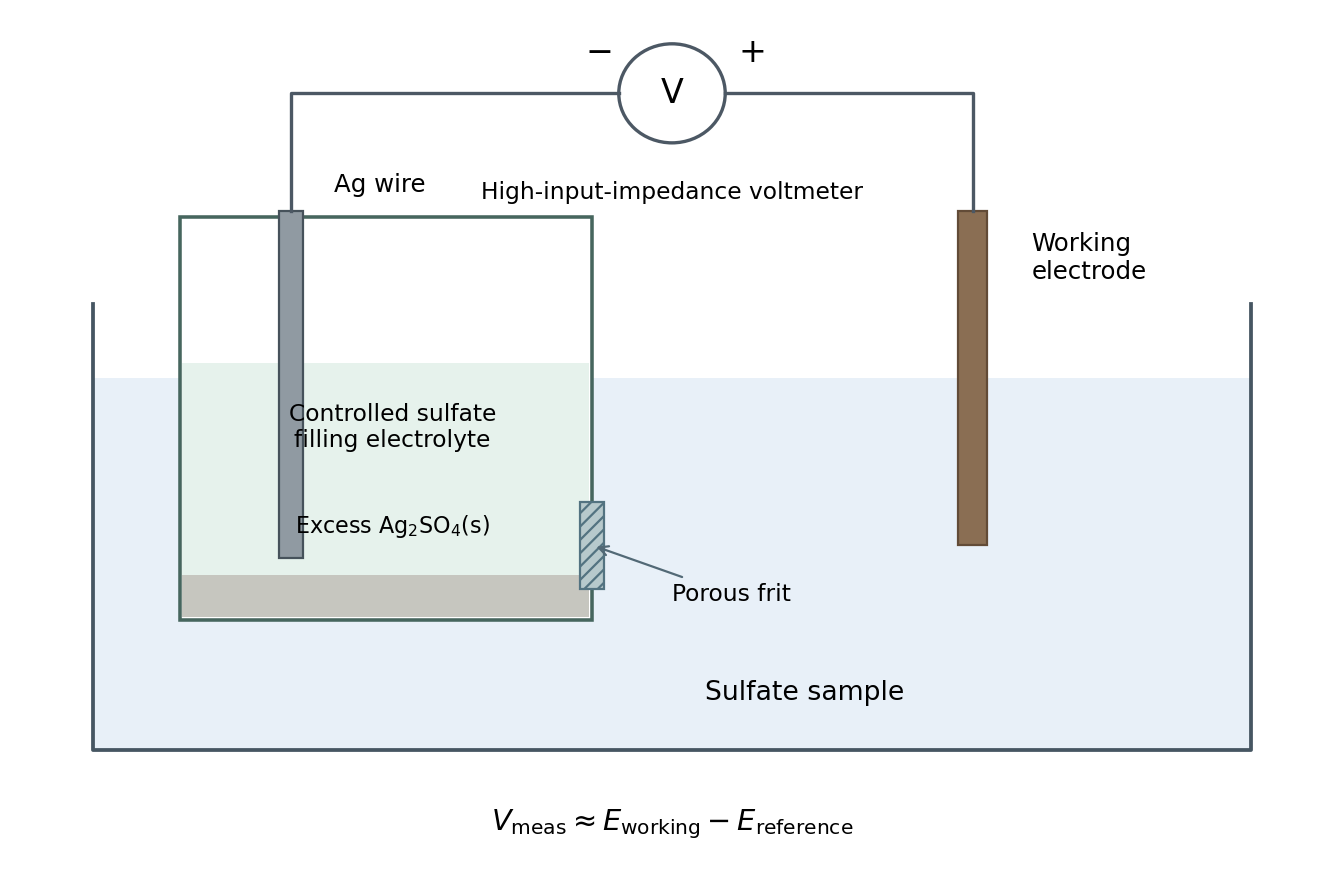
Use a silver wire or strip in contact with excess solid silver sulfate, immersed in a sulfate filling solution of known, stable activity. A porous frit connects the filling solution ionically to the sample while limiting bulk mixing. The reference housing should maintain the salt/electrolyte composition rather than letting the sample directly determine it.
Connect the unknown working electrode to the positive input and the silver reference to the negative input of a high-input-impedance voltmeter. The frit or sulfate-compatible salt bridge completes the ionic circuit. At negligible measuring current,A stable, small junction contribution is desirable. The reference electrode should not carry the counterelectrode current in a driven experiment: a separate counterelectrode is used when current is passed.

New to topics? Read the docs here!