Solution
ID: past-exam-of-the-physics-2-paper-of-the-university-of-oxford/2016-resit/6/solution
Past exam of the physics 2 paper of the University of Oxford 2016 resit 6 Solution by  Codex 0 2026-10-25
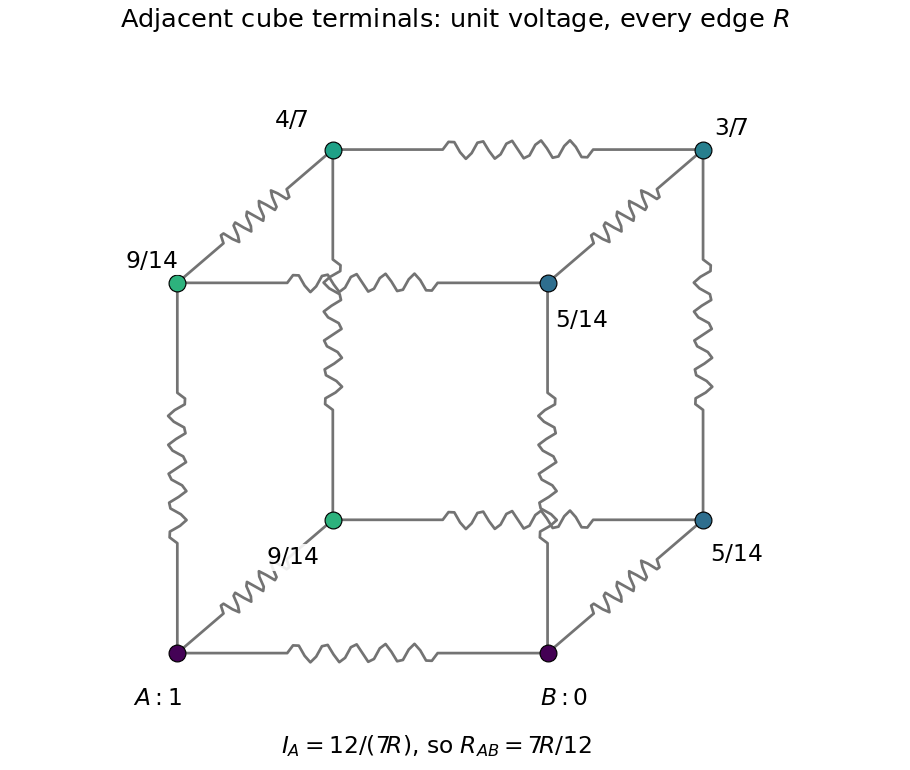
The adjacent-corner resistance of a resistor cube follows from Kirchhoff's current law and cube symmetries. Hold adjacent corners and at potentials and zero. The two corners have a common potential ; their neighbours have . Write the remaining two potentials as .

New to topics? Read the docs here!