Solution
ID: past-exam-of-the-year-1-of-the-computer-science-course-of-the-university-of-oxford/2016/imperative-programming-resit/7/c/solution
Past exam of the year 1 of the computer science course of the University of Oxford 2016 Imperative programming (resit) 7 c Solution by  Codex 0 2026-10-31
In this UML class diagram, hollow triangles point toward the more general type; dashed lines denote realization of the
CableTV object interface. The plain association records that Packages retains one wrapped account, without claiming exclusive lifetime ownership.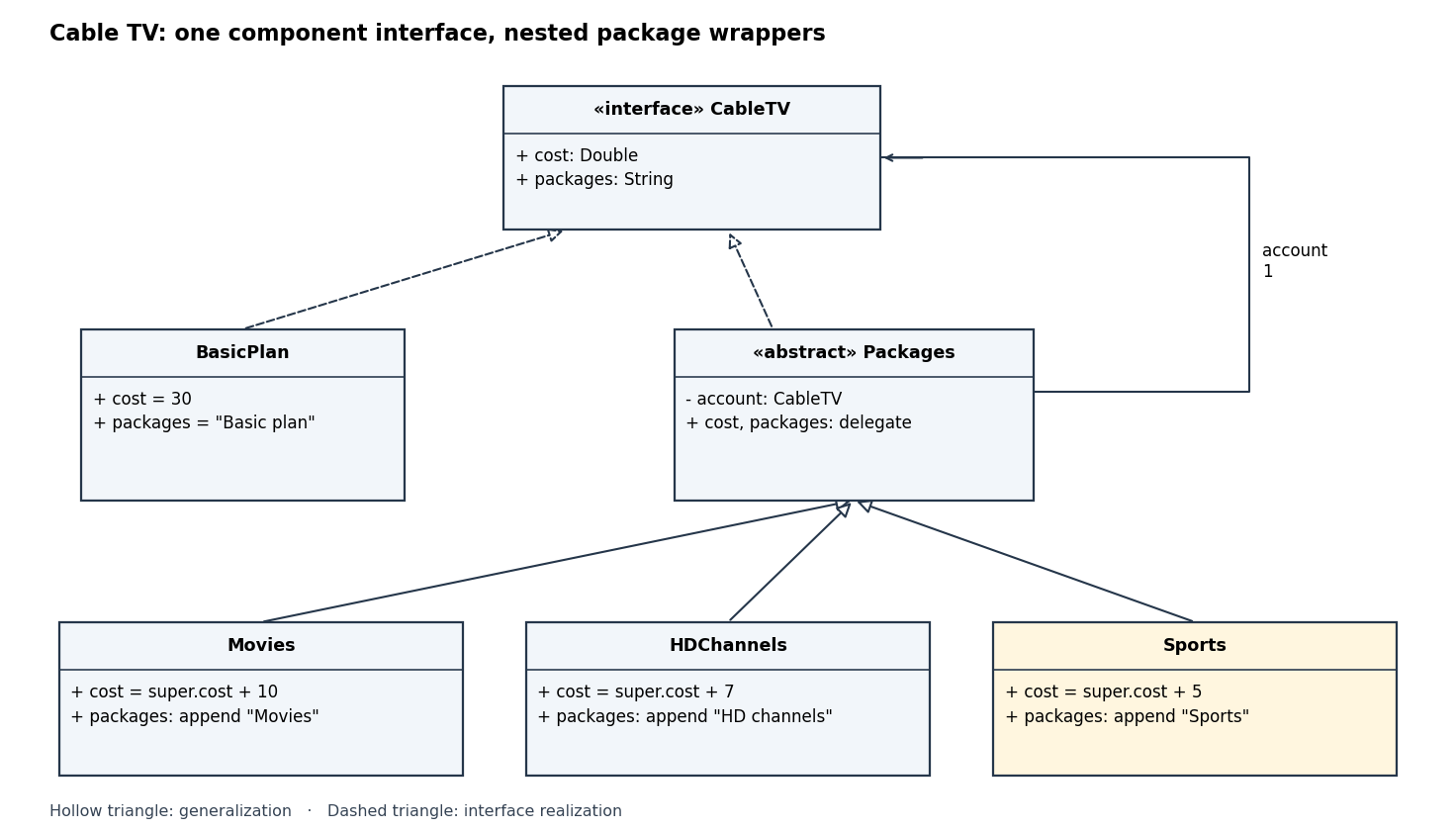

Add the following software class and client application to the supplied declarations. The inherited result type gives The printed accounts have costs
BasicPlan.cost an expected Double type, so its literal 30 is widened appropriately; no source change is needed.class Sports(account: CableTV) extends Packages(account) {
override def cost: Double = super.cost + 5.0
override def packages: String = super.packages + ", Sports"
}
object CheckCableTV {
def show(account: CableTV): Unit =
println(account.packages + ": GBP " + account.cost)
def main(args: Array[String]): Unit = {
val basic: CableTV = new BasicPlan
val movies: CableTV = new Movies(basic)
val hd: CableTV = new HDChannels(movies)
val sports: CableTV = new Sports(hd)
show(basic)
show(movies)
show(hd)
show(sports)
assert(sports.cost == 52.0)
assert(sports.packages == "Basic plan, Movies, HD channels, Sports")
}
}30.0, 40.0, 47.0, and 52.0, with each description extending the preceding one. The fully decorated account is Basic plan, Movies, HD channels, Sports, costing £52. The intermediate accounts remain available because wrapping constructs a new software object. [ref]Scala 2.11.12 method type inference implementation. methodSig and typesFromOverridden: inherited return type supplies the expected type while typing an overriding body
New to topics? Read the docs here!