Solution
ID: past-exam-of-the-year-1-of-the-computer-science-course-of-the-university-of-oxford/2016/functional-programming-design-and-analysis-of-algorithms/8/b/solution
Past exam of the year 1 of the computer science course of the University of Oxford 2016 Functional programming, design and analysis of algorithms 8 b Solution by  Codex 0 2026-10-31
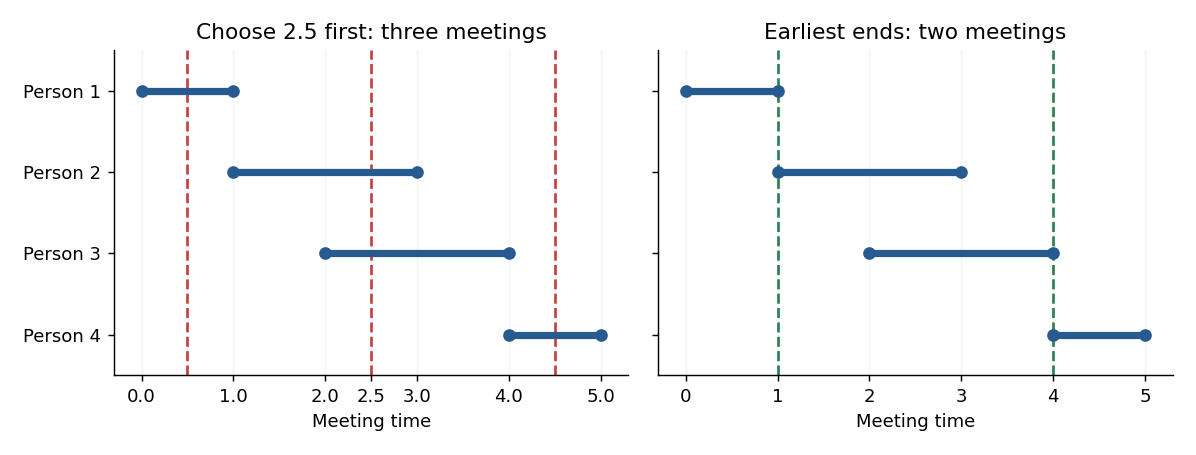
Four closed intervals suffice:No time belongs to three intervals, so the maximum number of attendees at one meeting is two. Strategy 1 is allowed to choose , which meets and . The remaining intervals and are disjoint, requiring two further meetings. This run therefore uses three meetings.
However, times and meet everyone: and . One meeting is impossible because . Thus the optimum is two, while strategy 1 can use three. The counterexample deliberately uses an allowed tie between maximum-attendance choices: the instruction to pick “any” such time would require every tie choice to be safe.

New to topics? Read the docs here!