
Theodor W. Hänsch developed high-resolution laser spectroscopy, including Doppler-free two-photon measurements of hydrogen. Absorbing one photon from each of two counterpropagating beams can cancel the first-order Doppler shift.
The resulting narrow resonance exposes atomic structure that is hidden inside an ordinary thermally broadened line. Comparing precise transition frequencies with theory tests atomic energy levels and their small corrections. His Nobel lecture also explains how optical frequency combs connect these optical measurements to an accurately countable frequency reference.[ref]
Doppler-Free Two-Photon Spectroscopy of Hydrogen by Theodor W. Hänsch and others. 1975 two-photon experiment
[ref]Passion for Precision by Theodor W. Hänsch. Nobel lecture: precision spectroscopy and frequency-comb measurement
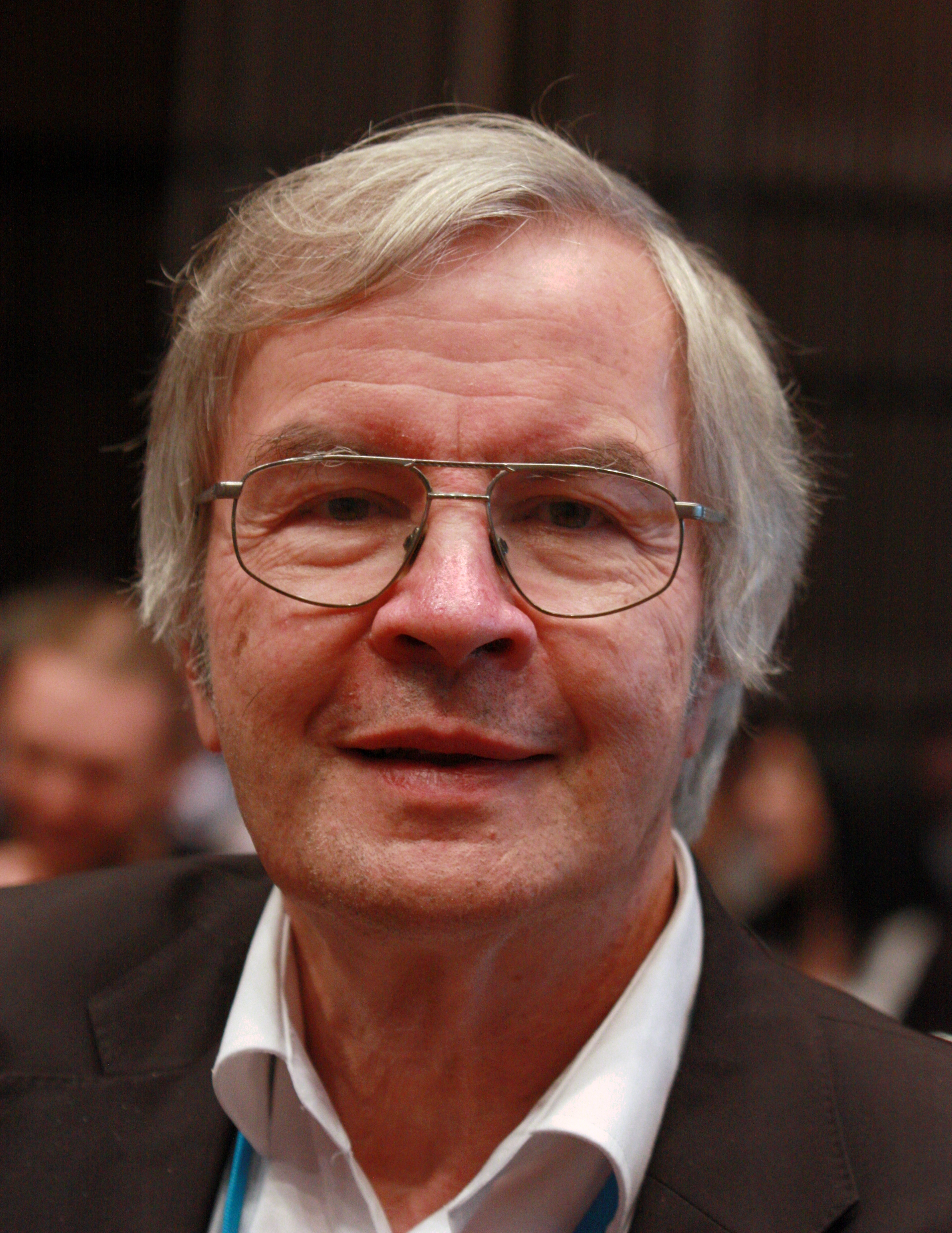
Portrait of Theodor W. Hänsch
. Source. 

Theodor W. Hänsch is a German physicist known for his pioneering work in the field of laser spectroscopy. Born on October 30, 1941, he has made significant contributions to the development of techniques for precision measurement of atomic and molecular spectra. Hänsch is particularly celebrated for his role in the advancement of the frequency comb technique, which allows for extremely high-precision measurements of light frequencies. Hänsch shared the Nobel Prize in Physics in 2005 with John L.
New to topics? Read the docs here!