
Physics Letters Updated 2025-07-16
Paper by Brian Josephson Updated 2025-07-16
Physics journal Updated 2025-07-16
The strongest are:
- early 20th century: Annalen der Physik: God OG physics journal of the early 20th century, before the Nazis fucked German science back to the Middle Ages
- 20s/30s: Nature started picking up strong
- 40s/50s: American journals started to come in strong after all the genius Jews escaped from Germany, notably Physical Review Letters
Fugging, Upper Austria Updated 2026-08-21

Austria Updated 2025-07-16
Mond Laboratory Updated 2026-08-21

University of Cambridge laboratory Updated 2025-07-16
History of the Josephson effect Updated 2025-07-16
In 1962 Brian Josephson published his inaugural paper predicting the effect as Section "Possible new effects in superconductive tunnelling".
In 1963 Philip W. Anderson and John M. Rowell published their paper that first observed the effect as Section "Possible new effects in superconductive tunnelling".
Some golden notes can be found at True Genius: The Life and Science of John Bardeen page 224 and around. Philip W. Anderson commented:
Philip W. Anderson Updated 2025-07-16
How to teach Projects must aim for novelty Updated 2025-07-16
The projects you do must always aim to achieving some novel result.
You don't have to necessarily reach it. But you must aim for it.
Novel result can be taken broadly.
But there must be something to your project that has never been done before.
You can start by reproducing other's work.
History of condensed matter physics Updated 2025-07-16
Handscroll Updated 2025-07-16
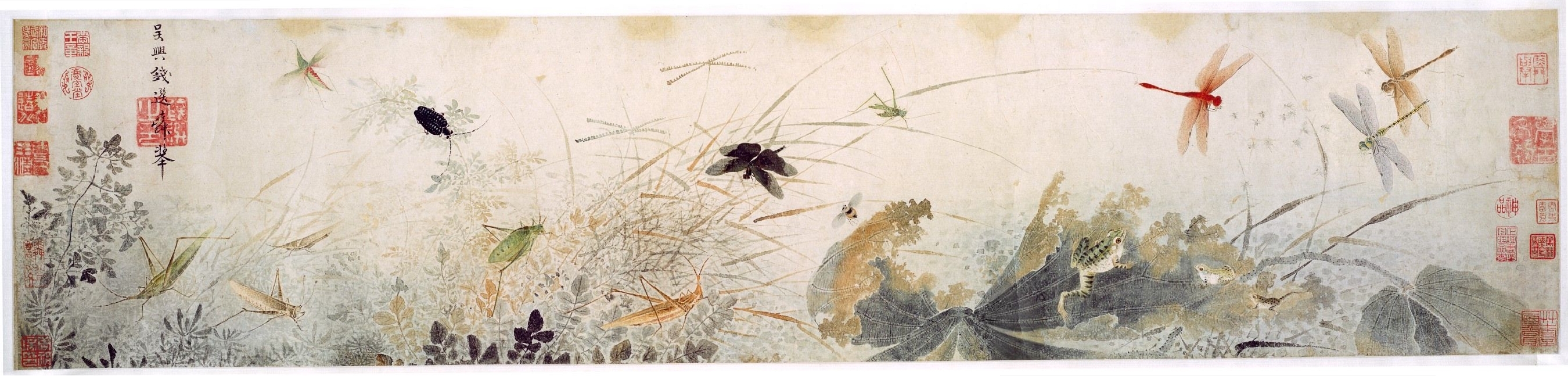


Champaign-Urbana metropolitan area Updated 2025-07-16
Bilibili Updated 2025-07-16
B4 Oxford physics course Updated 2025-07-16
www-pnp.physics.ox.ac.uk/~barra/teaching.shtml As of 2023, contains some good 2015 materials: web.archive.org/web/20220525094139/http://www-pnp.physics.ox.ac.uk/~barra/teaching.shtml It was called "Subatomic physics" back then.
2015 professor: Alan J. Barr.
Possible 2022 professor: Guy Wilkinson (unconfirmed): www.chch.ox.ac.uk/staff/professor-guy-wilkinson
B2 Oxford physics course Updated 2025-07-16
www-thphys.physics.ox.ac.uk/people/AndreiStarinets/sr_mt_2022.html (archive) contains 2022 problem sets and notes, well done Mr Andrei Starinets!
Quantum Software course of the University of Oxford Updated 2025-07-16
2022 page: www.cs.ox.ac.uk/teaching/courses/qsoft/ Half of the problems are Jupyter Notebooks, not bad.
Quantum Processes and Computation course of the University of Oxford Updated 2025-07-16
2022 page: www.cs.ox.ac.uk/teaching/courses/2022-2023/quantum/ (archive). Assignments are available:
- www.cs.ox.ac.uk/people/aleks.kissinger/courses/qpc2022/assignment1.pdf
- www.cs.ox.ac.uk/people/aleks.kissinger/courses/qpc2022/assignment2.pdf
- www.cs.ox.ac.uk/people/aleks.kissinger/courses/qpc2022/assignment3.pdf
- www.cs.ox.ac.uk/people/aleks.kissinger/courses/qpc2022/assignment4.pdf
- www.cs.ox.ac.uk/people/aleks.kissinger/courses/qpc2022/assignment5.pdf
- www.cs.ox.ac.uk/people/aleks.kissinger/courses/qpc2022/assignment6.pdf
2022 lecturer: Aleks Kissinger
The course would be better named ZX-calculus as it appears to be the only subject covered.
Tensor product in quantum computing Updated 2025-07-16
We don't need to understand a super generalized version of tensor products to know what they mean in basic quantum computing!
Intuitively, taking a tensor product of two qubits simply means putting them together on the same quantum system/computer.
The quantum state is called a separable state, because it can be written as a single product of two different qubits. We have simply brought two qubits together, without making them interact.
If we then add a CNOT gate to make a Bell state:we can now see that the Bell state is non-separable: we've made the two qubits interact, and there is no way to write this state with a single tensor product. The qubits are fundamentally entangled.
Quantum state vector Updated 2025-07-16
There are unlisted articles, also show them or only show them.