Arno de Klerk researches chemical conversion processes, including catalysis and hydrocarbon oxidation. His University of Alberta profile records qualifications in chemical engineering and analytical chemistry and describes work connecting conversion chemistry with reactor behavior.[ref]
Arno de Klerk at the University of Alberta. Official profile, About and Research
Measuring what reactants actually reach a liquid-phase reaction is one link between those subjects.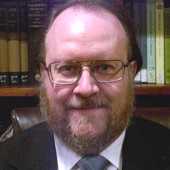
Arno de Klerk, portrait identified by the University of Alberta directory
. Source. With Muhammad N. Siddiquee, de Klerk coauthored a 2016 study of in situ liquid-phase oxygen measurement during oxidation. The primary abstract explains why oxygen availability affects reaction rate and product selectivity.[ref]
In Situ Measurement of Liquid Phase Oxygen during Oxidation by Muhammad N. Siddiquee and Arno de Klerk. Industrial & Engineering Chemistry Research 55, pp. 6607–6618, byline and Abstract
The contribution concerns quantifying the reaction environment rather than equating gas supplied to a vessel with dissolved reactant available everywhere inside it.An original well-mixed balance illustrates the issue. Let liquid oxygen concentration be , its equilibrium value at the gas boundary be , the volumetric transfer coefficient be , and a stipulated first-order consumption coefficient be . ThenFor and , the steady dissolved concentration is only . Doubling the transfer coefficient gives even though the intrinsic consumption coefficient is unchanged. A changed measured oxidation rate need not imply changed intrinsic chemical kinetics.
This is a deliberately simplified interphase mass transfer model, not reconstructed experimental data. Spatial gradients, changing products and chain reactions can require a richer description. Direct measurements of liquid composition make it possible to test which interpretation of a reactor's behavior is consistent with the observations.
Articles by others on the same topic
There are currently no matching articles.