Hisashi Ohtsuki develops mathematical models of cooperation, connecting population structure with natural selection. His research asks how costly help can persist when individuals that withhold help can still receive its benefits.[ref]
https://rcies.soken.ac.jp/scientists/scientists_hisashi_ohtsuki_en.html. Institutional research profile; mathematical biology and evolution of cooperation
In a 2006 study, Ohtsuki and colleagues represented individuals by graph vertices and their interactions by graph edges. They calculated when a single cooperator had a fixation probability above its neutral benchmark. The result depended on how reproduction filled vacant sites, as well as on the graph. This helped make network reciprocity a quantitative mechanism: local interaction patterns and the updating rule can alter whether helping is favoured. The analysis used weak selection and large-population approximations, so the resulting threshold must be read with those assumptions.[ref]
A simple rule for the evolution of cooperation on graphs and social networks by Hisashi Ohtsuki and others. Nature 441, pp. 502–504; model, fixation criterion and update-rule comparison
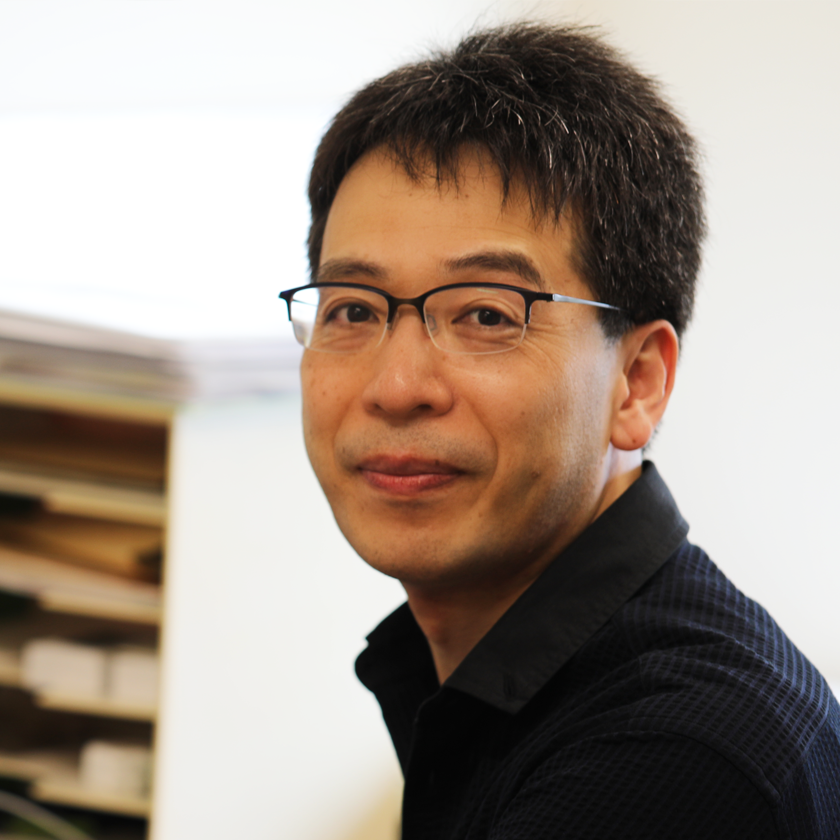
Hisashi Ohtsuki
. Portrait identified on the SOKENDAI institutional profile. Articles by others on the same topic
There are currently no matching articles.