Joseph Priestley investigated different kinds of gas by collecting them and testing their effects on a flame and on breathing. His account of the experiment of 1 August 1774 describes gas released from heated Mercury calx that supported unusually vigorous burning. He called the material dephlogisticated air; its subsequent interpretation became central to the chemistry of oxygen.[ref]
Experiments and Observations on Different Kinds of Air by Joseph Priestley (1775). Volume II, section III: experiment of 1 August 1774 and subsequent interpretation
Chemist whose Experiments and Observations on Different Kinds of Air by Joseph Priestley (1775) describes the investigation of dephlogisticated air.

Portrait of Joseph Priestley
. Ellen Sharples (1769–1849), pastel, 1794–1797; National Portrait Gallery, London, NPG 175; scan of a print. Public domain: life plus 100 years or fewer; United States publication before 1931; faithful 2D reproduction. Source usage terms, via Wikimedia Commons. Source. Articles by others on the same topic

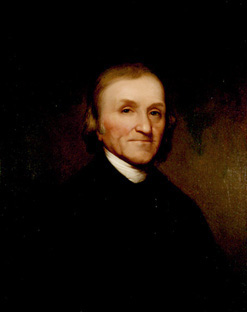
Joseph Priestley in 1801
. Source. 


Joseph Priestley (1733-1804) was an English theologian, chemist, and philosopher known for his work in various fields, particularly in chemistry and natural philosophy. He is best remembered for his discovery of oxygen in 1774, although he did not identify it as an element at the time. Priestley referred to the gas he discovered as "dephlogisticated air," and he conducted a series of experiments that demonstrated its role in supporting combustion and respiration.