
A Bell test compares experimental probabilities or expectation values with a Bell inequality. In a two-setting photon polarization test, each station chooses a polarizer orientation and records an outcome. A coincidence circuit identifies candidate pairs using an agreed timing rule. The choice of which trials enter the statistic is part of the experiment: correlations calculated only from detected pairs can differ from correlations of all emitted pairs. The Polarization CHSH count model separates ideal expectation values from this experimental selection problem.
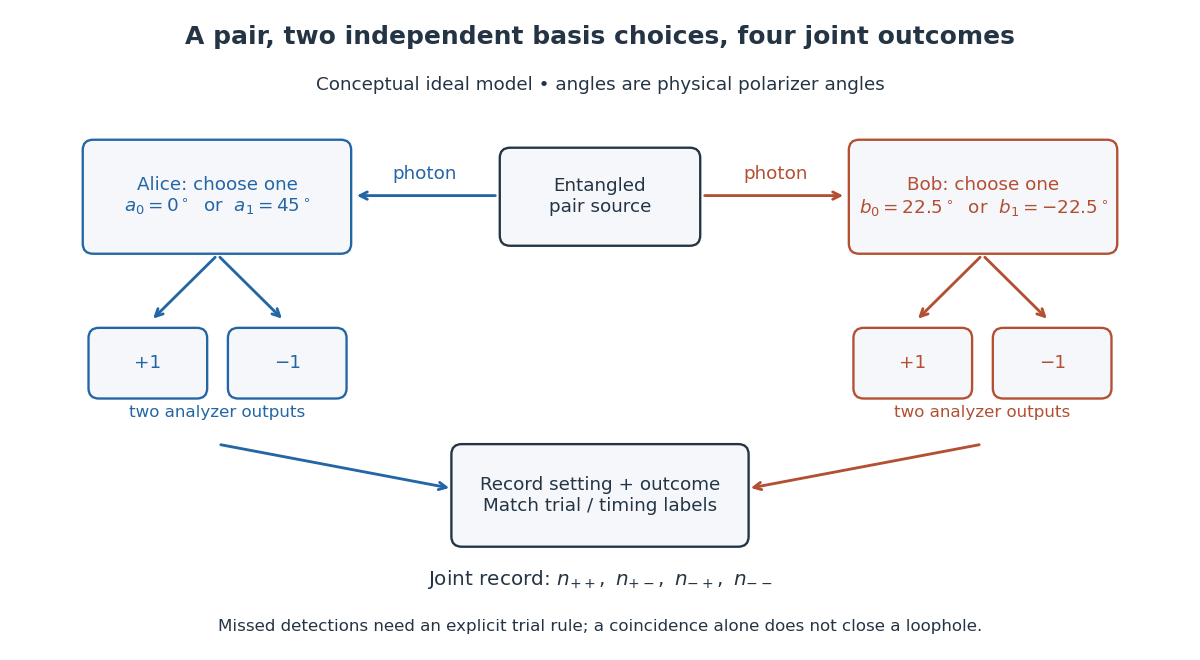
Two-setting polarization measurements and coincidence readout
. Conceptual apparatus for the ideal two-output model. The displayed angles belong to the worked CHSH example; they are not a reconstruction of a historical apparatus. Each station chooses one basis, then records either output. The coincidence record also needs a rule for missed detections. Details.
New to topics? Read the docs here!