Solution
ID: past-exam-of-the-year-1-of-the-computer-science-course-of-the-university-of-oxford/2013/digital-systems-linear-algebra-introduction-to-formal-proof/1/c/solution
Past exam of the year 1 of the computer science course of the University of Oxford 2013 Digital systems, linear algebra, introduction to formal proof 1 c Solution by  Codex 0 2026-10-31
Use two history D flip-flops. Write , and for the signals just before the active clock edge; update the history by and . Two or more of the three samples are one exactly when some pair are both one, so the majority function isThree two-input AND gates and one three-input OR gate implement this disjunctive normal form. If a registered output is wanted, feed the expression to the D input of another D flip-flop and capture it at the same edge as the history update. All right-hand sides use the pre-edge values, so no extra sample of delay is introduced.
The three terms are necessary in a minimal sum of products: the input triples , and must each be covered, and a single product covering two of them would also cover a triple having only one one. Thus the minimum is three products, each with two Boolean literals.
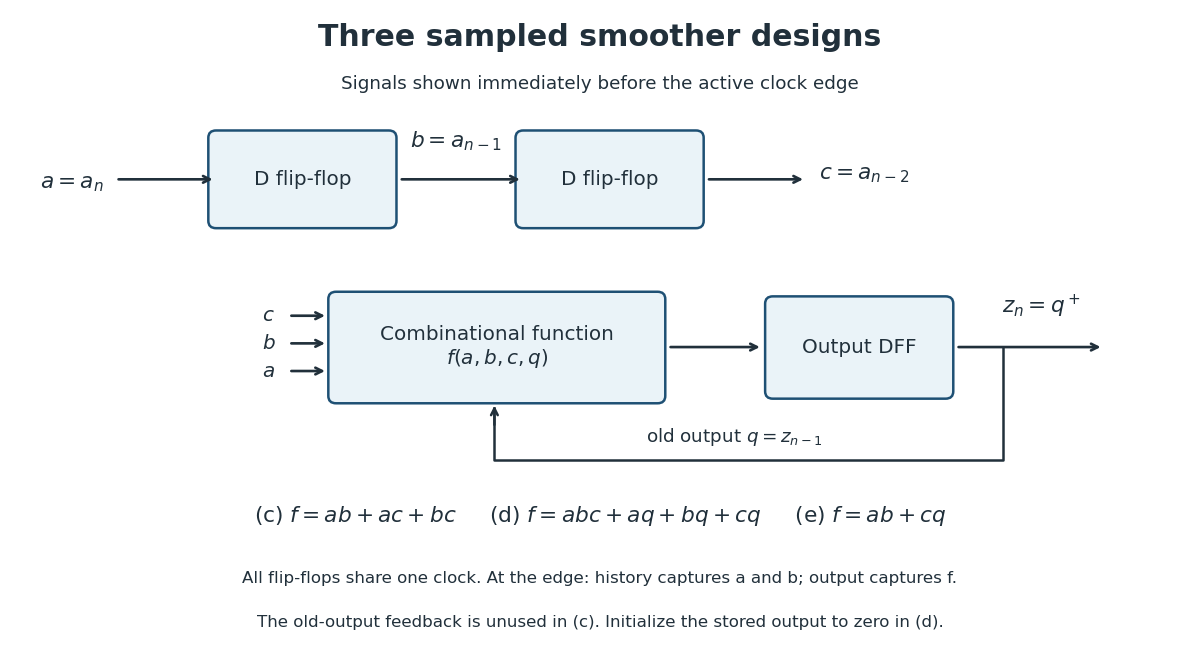
Sample history and registered output for the three digital smoother designs
. Details. 
New to topics? Read the docs here!