Saponification of triglycerides
ID: saponification-of-triglycerides

A triglyceride contains three ester linkages joining glycerol to fatty acid-derived acyl groups. Complete saponification therefore consumes three hydroxide equivalents per triglyceride, yielding one glycerol and three fatty acid carboxylates.[ref]
27.2 Soap. Organic Chemistry by John McMurry; §27.2, opening chemical definition and fat hydrolysis equation
Writing the three hydrocarbon groups separately allows their compositions to differ:This is the preceding ester chemical equation applied three times: each linkage supplies one carboxylate, and each formerly esterified oxygen on the glycerol scaffold gains one hydrogen. The two sides retain the same three groups and have net electric charge .
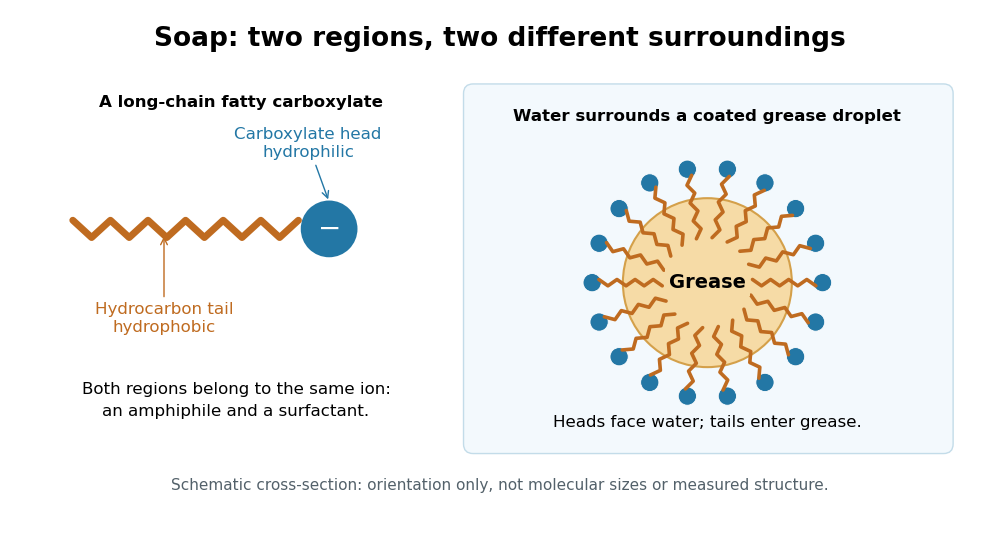
Soap consists of sodium or potassium salts of long-chain fatty acids. Its carboxylate head is hydrophilic, while its long hydrocarbon tail is hydrophobic. This makes it an amphiphile and a surfactant: the tails can associate with grease while the heads remain exposed to water, helping disperse grease for rinsing. An acetate ion is also a carboxylate, but lacks the long hydrophobic tail that gives soap this cleaning role.[ref]
27.2 Soap. Organic Chemistry by John McMurry; §27.2, chemical definition and paragraphs on the ionic head, hydrocarbon tail and removal of grease

New to topics? Read the docs here!