Avi Wigderson studies computational complexity theory, including the role of randomized algorithms in efficient computation. His research connects pseudorandom generators, computational hardness and derandomization. His book Mathematics and Computation by Avi Wigderson explains how sufficiently strong circuit-hardness assumptions can supply generators that fool efficient computational tests.[ref]
Mathematics and Computation by Avi Wigderson. Chapter 7, especially §7.3.2, pseudorandom generators from hard problems
The mechanism turns a lower-bound assumption into an algorithmic resource. If a generator with a short seed preserves a randomized computation's acceptance probability closely enough, enumerating all seeds can replace sampling random bits. The seed must be short enough for that enumeration to meet the claimed time bound; simply fixing one arbitrary seed does not supply the guarantee. This makes the power of randomness a precise question about computation rather than a visual impression that an output “looks random”.
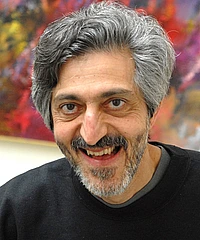
Portrait of Avi Wigderson
. Source. Articles by others on the same topic

Avi Wigderson is a prominent Israeli mathematician and computer scientist, known for his work in computational complexity theory, as well as other areas in theoretical computer science and mathematics. He is a professor at the Institute for Advanced Study in Princeton, New Jersey, and has made significant contributions to understanding the limits of computation and the nature of mathematical reasoning. Wigderson is particularly known for his work on the foundations of cryptography, randomness in computation, and the connections between computer science and mathematics.