Boaz Barak works on computational complexity theory, cryptography and the mathematical foundations of machine learning. His research homepage describes these interests and identifies his textbooks and lecture notes.[ref] His Introduction to Theoretical Computer Science by Boaz Barak develops computation through explicit models and resource bounds.
One example is pseudorandomness: a generated distribution can look random to efficient observers even though an unrestricted observer distinguishes it. Specifying the observer turns “looks random” into a mathematical guarantee, and connects a pseudorandom generator with the randomized algorithms it can safely simulate.[ref]
Introduction to Theoretical Computer Science by Boaz Barak. Modeling randomized computation, Pseudorandom generators
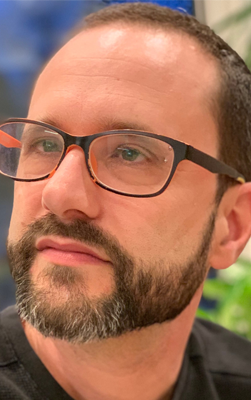
Portrait of Boaz Barak
. Portrait identified on the Harvard Lowell House profile. Source. Articles by others on the same topic

Boaz Barak is a prominent computer scientist known for his work in various areas of theoretical computer science, particularly in cryptography, complexity theory, and machine learning. He is a professor at Harvard University and has contributed to important advancements in cryptographic protocols and understanding the foundations of computational complexity. His research often intersects with practical applications, and he has published numerous papers in high-impact journals and conferences in his fields of expertise.