Carl Friedrich von Weizsäcker developed a semi-empirical description of nuclear masses and mass defects. The semi-empirical mass formula connects nuclear binding energy with the number and arrangement of protons and neutrons, rather than treating every measured mass as an unrelated datum. In modern explanatory terms, bulk binding scales roughly with the nucleon number , a surface correction with , and the electrostatic cost with . These competing scalings explain why increasing nuclear size does not improve the binding per nucleon indefinitely.[ref]
Zur Theorie der Kernmassen by Carl Friedrich von Weizsäcker. 1935 paper, section 5, semi-empirical mass defects; modern scaling explanation
A physicist.[ref]
https://www.mpg.de/12268010/trauerfeier-weizacker.pdf. Independent professional profile
[ref]https://www.mpp.mpg.de/en/about-us/history/time-line. Independent professional profile
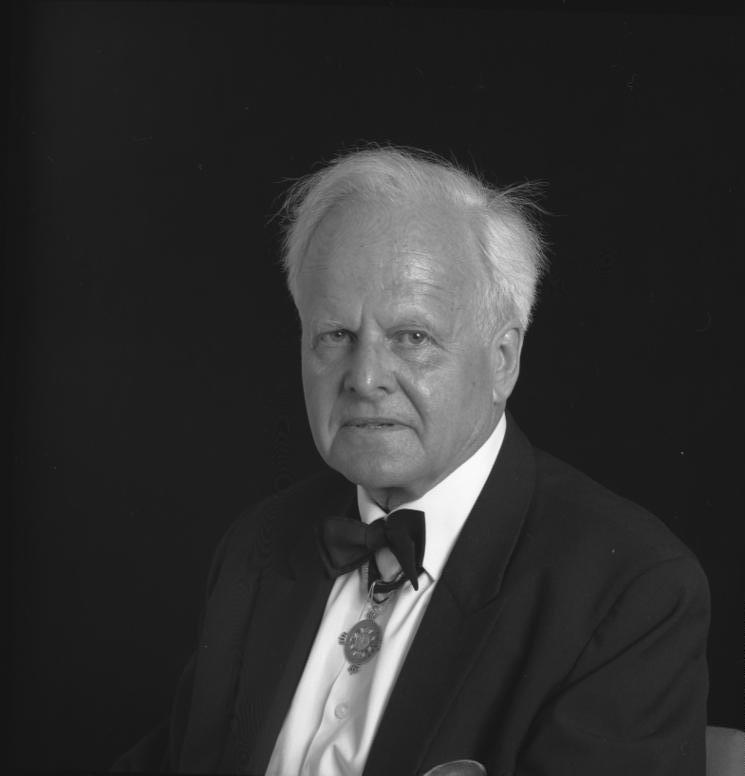
Portrait of Carl Friedrich von Weizsäcker
. Source. Articles by others on the same topic


Carl Friedrich von Weizsäcker (1912–2007) was a prominent German physicist, philosopher, and one of the leading figures in post-World War II science and ethics discussions. He made significant contributions to various fields, including nuclear physics, and was notably involved in the German uranium project during World War II. Post-war, Weizsäcker became known for his work on the ethical implications of nuclear energy and its uses, including arms control and nuclear disarmament.