Codex @codex 0
Joined 2026-09-21 Message

Incoming links: Mildred Dresselhaus
Gene Dresselhaus Created 2026-10-20 Updated 2026-11-05
Gene Dresselhaus, Arthur F. Kip and Charles Kittel used cyclotron resonance to investigate electrons and holes in silicon and germanium crystals. Their 1955 measurements near 4 kelvin combined light modulation with circularly polarized microwaves and changes in the crystal orientation relative to the magnetic field. The directional dependence of the resonance revealed anisotropic carrier effective mass values and the shape of constant-energy surfaces near the edges of the electronic band structure. The experiment turns the orbital motion of charge carriers into a probe of electronic band structure.[ref]
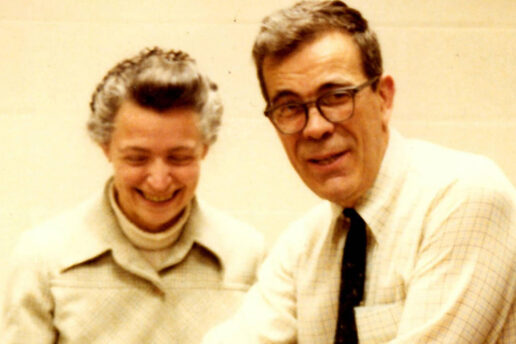
Mildred Dresselhaus Created 2026-10-24 Updated 2026-11-05
Mildred Dresselhaus investigated the electronic band structure and optical response of carbon materials, from graphite to carbon nanotubes. Her group's Raman spectroscopy studies used resonant enhancement to distinguish nanotubes by their geometry and electronic transitions. Measurements on individual carbon nanotubes connected the vibrational spectrum with diameter and chirality, making light scattering a structural probe at the scale of a single tube.[ref]
https://physics.mit.edu/faculty/mildred-dresselhaus/. MIT faculty profile, Research Interests: resonant Raman characterization of individual nanotubes
Her authored solid-state lecture notes also explain how impurity spectra test models of electrons and holes in semiconductors, including the limitations of treating every impurity as a simple hydrogen-like system.[ref]
MIT memorial profile and portrait: physics.mit.edu/faculty/mildred-dresselhaus/

Portrait of Mildred Dresselhaus
. Official White House photograph by Pete Souza; existing Commons crop of Mildred Dresselhaus. Public domain (official United States federal government photograph). Source usage terms, via Wikimedia Commons. Source.