Philipp Kukura is a chemist developing optical methods for molecular measurements. Oxford's departmental biography records his doctoral work with Richard A. Mathies at Berkeley, while its research description identifies mass photometry and light-scattering-based measurements of individual biomolecules in solution.[ref]
With David W. McCamant and Richard A. Mathies, Philipp Kukura coauthored the broadband femtosecond stimulated Raman spectroscopy method. A narrowband Raman pump and broadband short probe serve complementary spectral and temporal roles in that apparatus.[ref]
A useful motivation for single-particle mass photometry is that a mean can conceal a mixture. For an original illustration, a uniform population of100-kDa objects and a population containing two-thirds120-kDa and one-third60-kDa objects both have mean mass100kDa. Their mass distributions differ. Measurements resolving individual events can test that difference if their resolution, response calibration and selection effects are adequate.
The example is a counting argument, not a reported experiment or an assumption that every event is detected equally. Optical signal must be related to the desired molecular quantity through a validated measurement model. The connection between instrument development and molecular investigation runs through that relation, rather than through signal brightness alone.
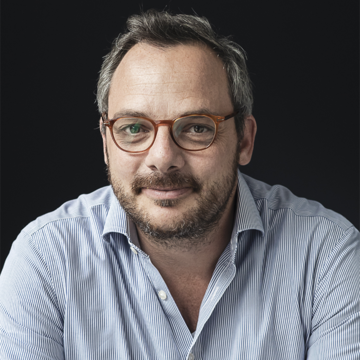
Philipp Kukura, portrait identified by his Oxford departmental profile
. Articles by others on the same topic

Philipp Kukura is a researcher and professor known for his work in the field of chemistry, particularly in the areas of spectroscopy and molecular imaging. He is associated with the University of St Andrews in Scotland. His research typically focuses on understanding molecular structures and dynamics using advanced spectroscopic techniques.