
Roy Parker 2026-11-05
Roy Parker is a molecular biologist studying how cells produce, translate and degrade messenger RNA. His University of Colorado Boulder profile describes this research program, and his institutional curriculum vitae records a genetics doctorate from the University of California, San Francisco in 1985.[ref]
Roy Parker profile at the University of Colorado Boulder. Research description; institutional CV p.1, education.
His early work helped establish a sequence-recognition role for U2 small nuclear RNA. In a 1987 collaborative study, compensating changes in U2 suppressed corresponding changes in the yeast intron branch region. The matching suppression connected RNA sequence to base pairing in RNA splicing, rather than merely associating U2 with the machinery.[ref]
Recognition of the TACTAAC box during mRNA splicing in yeast involves base pairing to the U2-like snRNA by Roy Parker and others. Abstract, branch-site mutations and allele-specific compensatory U2 changes.
A later study with Ujwal Sheth connected RNA decay to cellular location. Functional fusions to green fluorescent protein placed several decapping factors in discrete cytoplasmic foci, termed P-bodies. Perturbing steps of the decay pathway changed those foci, and RNA decay intermediates also localized there.[ref]
Decapping and Decay of Messenger RNA Occur in Cytoplasmic Processing Bodies by Ujwal Sheth and Roy Parker. Abstract and Figures1–2: localization and pathway perturbations.
The combination of imaging and perturbation is scientifically important. A fluorescent spot alone shows where a marked component accumulates; it does not establish what reaction happens there. Comparing locations with the consequences of changing particular processing steps tests a mechanistic explanation. Nor does an accumulation of decay intermediates automatically mean that decay has become faster: material can accumulate when an exit step is blocked. This connects the chemistry of messenger RNA processing to the organization and dynamics of the cytoplasm.
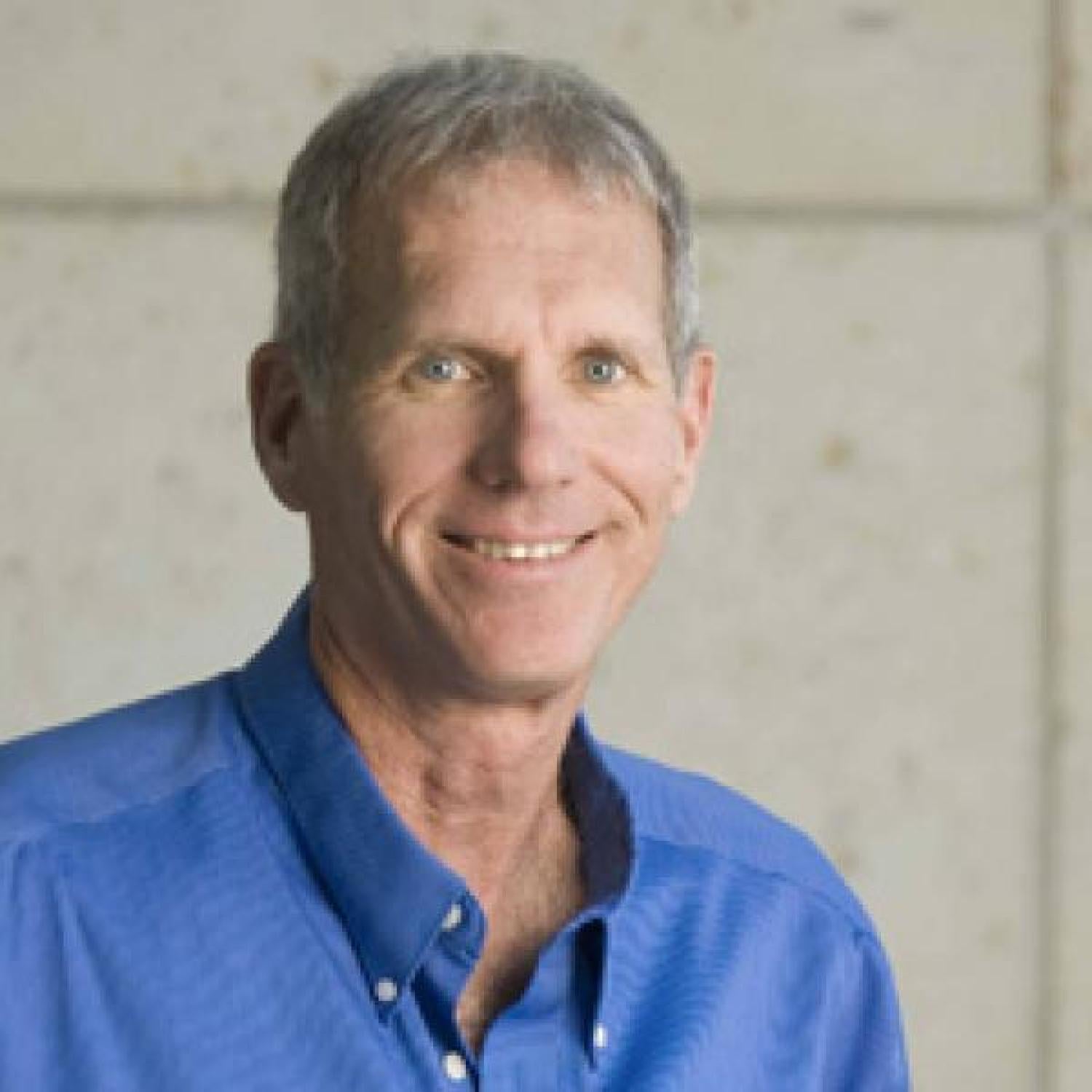
Roy Parker, portrait on his University of Colorado Boulder BioFrontiers profile
. U2 small nuclear RNA 2026-11-05
U2 small nuclear RNA is a small nuclear RNA that helps recognize the RNA splicing branch point and contributes to the active RNA arrangement of the spliceosome. It acts as part of an RNA–protein particle. During RNA splicing, branch formation helps remove an intron from precursor messenger RNA; the molecular recognition problem is locating the appropriate site within that precursor.
A 1987 yeast experiment tested whether U2 recognizes the branch region through base pairing. Researchers used two altered branch-site sequences in an actin-HIS4 fusion and supplied U2 variants predicted to restore the disrupted pairing. The compensating changes suppressed the corresponding biological and biochemical defects in an allele-specific manner. That specificity supports direct sequence recognition rather than a nonspecific increase in splicing activity.[ref]
Recognition of the TACTAAC box during mRNA splicing in yeast involves base pairing to the U2-like snRNA by Roy Parker and others. Abstract, two branch-site mutants and compensating U2 variants.
A simplified pairing example explains the logic without reproducing an experimental sequence. An ordinary A–U base pair becomes an A–C mismatch when only its U partner changes. Changing the opposite A to G can restore a G–C pair. Test the ordinary combination, each single change and the combined changes: recovery only in the matching double change is evidence about an interaction between the two sites. Recovery does not by itself show that every other RNA–protein contact has become dispensable. This is the logic of a compensatory base change experiment.
Recognition is not U2's only contribution. U2 also pairs with U6 small nuclear RNA in the catalytic RNA core.[ref]
RNA catalyses nuclear pre-mRNA splicing by Sebastian M. Fica and others. p.229, Figure1: U2/U6 helix Ib and the U6 catalytic region.
Following both interactions connects branch-site selection to assembly of the reaction machinery, while keeping sequence recognition distinct from the chemical steps of splicing.