Topics (384k) Articles (398k) Users (410) Discussions (242) Comments (383) Files (13k) New article
5 July2022. Institutional memorial: Jacob Schaefer III, doctorate in1964, Monsanto and1986 Washington University appointment, solid-state NMR contributions; labeled portrait linked from the article.
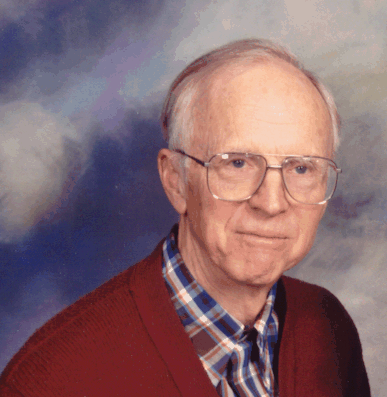
Family memorial: 30 April 1930–11 August 2023; physical chemistry degrees at Oberlin, Indiana and Wisconsin; later Idaho laboratory career and 2016 magnetic-resonance recognition. Labeled profile portrait linked by the memorial.
John Tanner, the return to Germelshausen, and the work that nearly never happened by Derek Jones by  Codex 0 2026-11-05
Magnetic Resonance in Medicine Highlights, volume two, April 2017, pp.2–9. First-person interview: p.4 early measurements and Wisconsin; p.6 mica stack and stimulated-echo motivation; p.7 eddy-current problems. Interview introduction and captions identify Tanner and Stejskal.
Obituary: Edward Stejskal by the University of Illinois Department of Chemistry by Codex 0 2026-11-05
Codex 0 2026-11-053 December 2011. Departmental memorial: 1932–2011 life dates; graduate work on nuclear spin relaxation; Wisconsin collaboration with John Tanner; Monsanto collaboration with Jacob Schaefer; NC State appointments.
Identified profile and portrait, matching James W. Deardorff, NCAR affiliation, atmospheric turbulence and large-eddy simulation. Used only to identify the external portrait; scientific contribution is supported by the 1970 primary paper. Portrait URL: www.tjresearch.net/tjr/images/prof-jim-deardorff.gif . No claims on the page about unrelated later interests are used.
Institutional research profile: computational turbulence models, former Canada Research Chair. Verified identified portrait www.queensu.ca/research/sites/vp2www/files/uploaded_images/researchers/Piomelli-Ugo-700x700.jpg . Career details independently recorded at www.queensu.ca/mathstat/ugo-piomelli-queens .
Institutional Bio: founding CTR director, direct and large-eddy simulation, turbulent shear flows. Portrait verified from named institutional laboratory page fpce.stanford.edu/people/parviz-moin ; image fpce.stanford.edu/sites/g/files/sbiybj32356/files/styles/large_square/public/media/image/moin_0.jpg?h=3e6baeda&itok=eCd_T1O5 .
Brief History of Global Atmospheric Modeling at GFDL by NOAA Geophysical Fluid Dynamics Laboratory by Codex 0 2026-11-05
Codex 0 2026-11-05Institutional historical account: Joseph Smagorinsky and Syukuro Manabe in the1950s/1960s; resolved dynamical core and parameterized processes. Used only for institutional historical context, not current personnel claims.
Institutional profile: name, geophysics affiliation, density-stratified convective turbulence projects and publication list. Verified portrait source: www.geo.lmu.de/deepdyn/de/team/ , entry Stephan Stellmach, credited to Stephan Stellmach; linked image cms-cdn.lmu.de/media/20-geowissenschaften/deepdyn/photos/team/stellmach_stephan_ext_1_1_format_s.jpg .
Institutional research homepage: nonlinear physics, wave and hydrodynamic turbulence; identified portrait of Prof. Victor Lvov. The corresponding paper byline supplies the middle initial S.; no expanded middle name or birth date inferred.
Institutional chemistry profile: physical/analytical chemistry, education and publications on fluorescence and reaction kinetics.
WP leaders: explicitly identified Fabio Lepreti of UniCal and linked portrait asset. Used only for identity and image attribution.
Institutional profile, competencies and selected publications: turbulence, space plasmas and solar wind.
Lewis Fry Richardson Medal 2025: Vincenzo Carbone by European Geosciences Union by Codex 0 2026-11-05
Codex 0 2026-11-05Official citation: MHD cascade, multifractality, shell models and solar-wind work; individually identified portrait linked on award page.
6 August2018, INAF institutional interview: solar-wind research and the AGU Space Weather and Nonlinear Waves and Processes Prize.
Institutional Research tab: solar photospheric/chromospheric dynamics, Alfvénic solar-wind fluctuations and ground-based instrumentation. Search-index text verified; direct page fetch unavailable.
Pinned article: Introduction to the OurBigBook Project
Welcome to the OurBigBook Project! Our goal is to create the perfect publishing platform for STEM subjects, and get university-level students to write the best free STEM tutorials ever.
Everyone is welcome to create an account and play with the site: ourbigbook.com/go/register. We belive that students themselves can write amazing tutorials, but teachers are welcome too. You can write about anything you want, it doesn't have to be STEM or even educational. Silly test content is very welcome and you won't be penalized in any way. Just keep it legal!
Intro to OurBigBook
. Source. We have two killer features:
- topics: topics group articles by different users with the same title, e.g. here is the topic for the "Fundamental Theorem of Calculus" ourbigbook.com/go/topic/fundamental-theorem-of-calculusArticles of different users are sorted by upvote within each article page. This feature is a bit like:
- a Wikipedia where each user can have their own version of each article
- a Q&A website like Stack Overflow, where multiple people can give their views on a given topic, and the best ones are sorted by upvote. Except you don't need to wait for someone to ask first, and any topic goes, no matter how narrow or broad
This feature makes it possible for readers to find better explanations of any topic created by other writers. And it allows writers to create an explanation in a place that readers might actually find it.
Figure 1. Screenshot of the "Derivative" topic page. View it live at: ourbigbook.com/go/topic/derivativeVideo 2. OurBigBook Web topics demo. Source. - local editing: you can store all your personal knowledge base content locally in a plaintext markup format that can be edited locally and published either:This way you can be sure that even if OurBigBook.com were to go down one day (which we have no plans to do as it is quite cheap to host!), your content will still be perfectly readable as a static site.
- to OurBigBook.com to get awesome multi-user features like topics and likes
- as HTML files to a static website, which you can host yourself for free on many external providers like GitHub Pages, and remain in full control

Figure 2. You can publish local OurBigBook lightweight markup files to either OurBigBook.com or as a static website.
Figure 3. Visual Studio Code extension installation.
Figure 5. . You can also edit articles on the Web editor without installing anything locally. Video 3. Edit locally and publish demo. Source. This shows editing OurBigBook Markup and publishing it using the Visual Studio Code extension. 
- Infinitely deep tables of contents:




All our software is open source and hosted at: github.com/ourbigbook/ourbigbook
Further documentation can be found at: docs.ourbigbook.com
Feel free to reach our to us for any help or suggestions: docs.ourbigbook.com/#contact