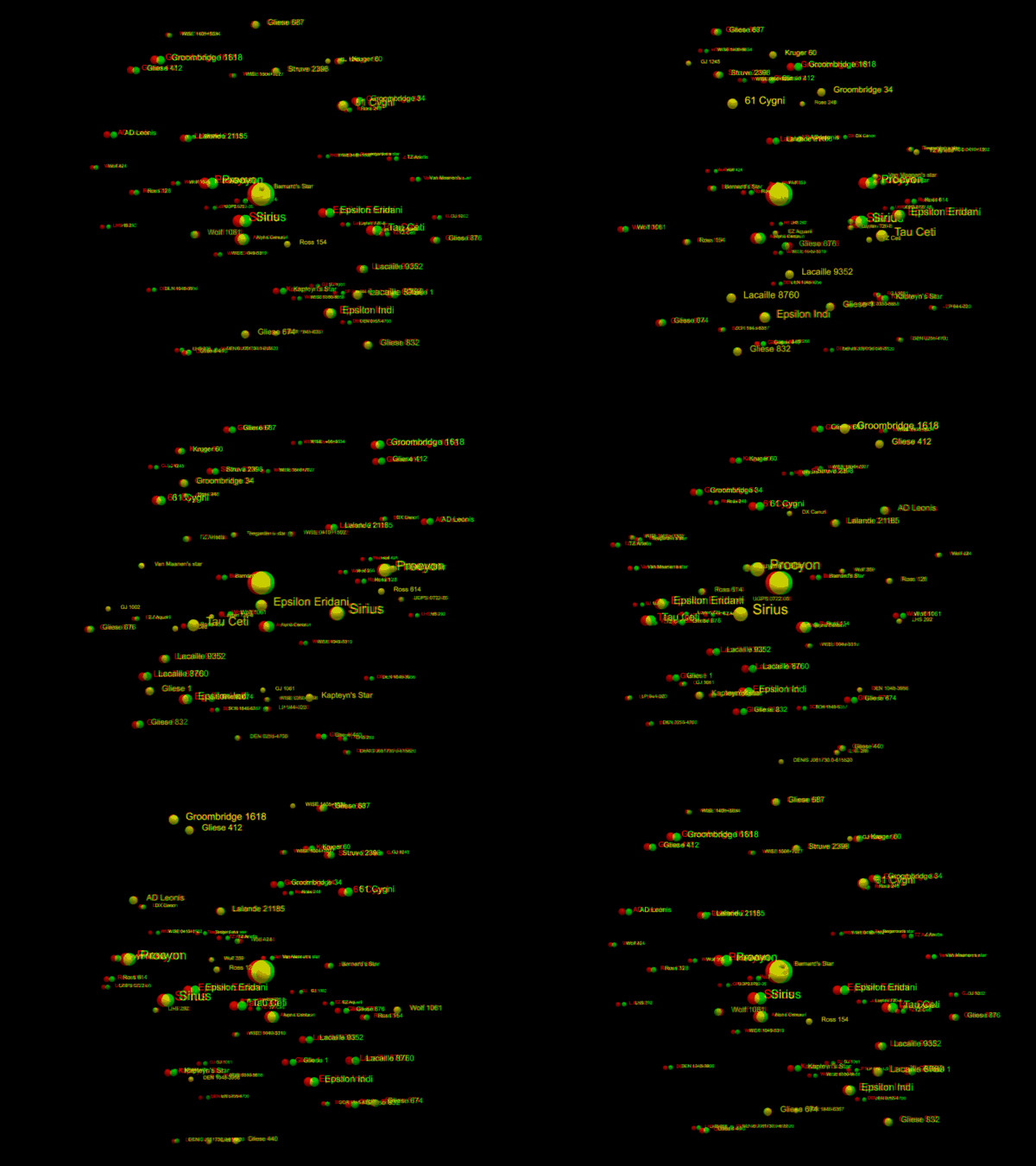

Some notable ones:
Articles by others on the same topic

The Sun is the star at the centre of the Solar system and a nearby example of a main-sequence star. Its effective temperature is approximately , its stellar radius about , and its luminosity about . These describe different aspects of the same object: radiating area and effective temperature combine through the Stefan–Boltzmann law to give solar luminosity.[ref]
Core hydrogen burning supplies the long-term energy budget. Energy reaches the photosphere through radiative transfer and convection, while solar neutrino detection samples the nuclear processes more directly. Resolved solar granulation and starspots reveal that the visible disc is structured and time-dependent. Comparing these accessible phenomena with unresolved stars helps calibrate wider stellar astrophysics.



The Sun is a nearly perfect ball of hot plasma, a luminous star at the center of our solar system. It is primarily composed of hydrogen (about 74% of its mass) and helium (about 24%), with trace amounts of heavier elements. The Sun is about 4.6 billion years old and is classified as a G-type main-sequence star (G dwarf). The Sun plays a crucial role in the solar system, providing the light and warmth necessary for life on Earth.