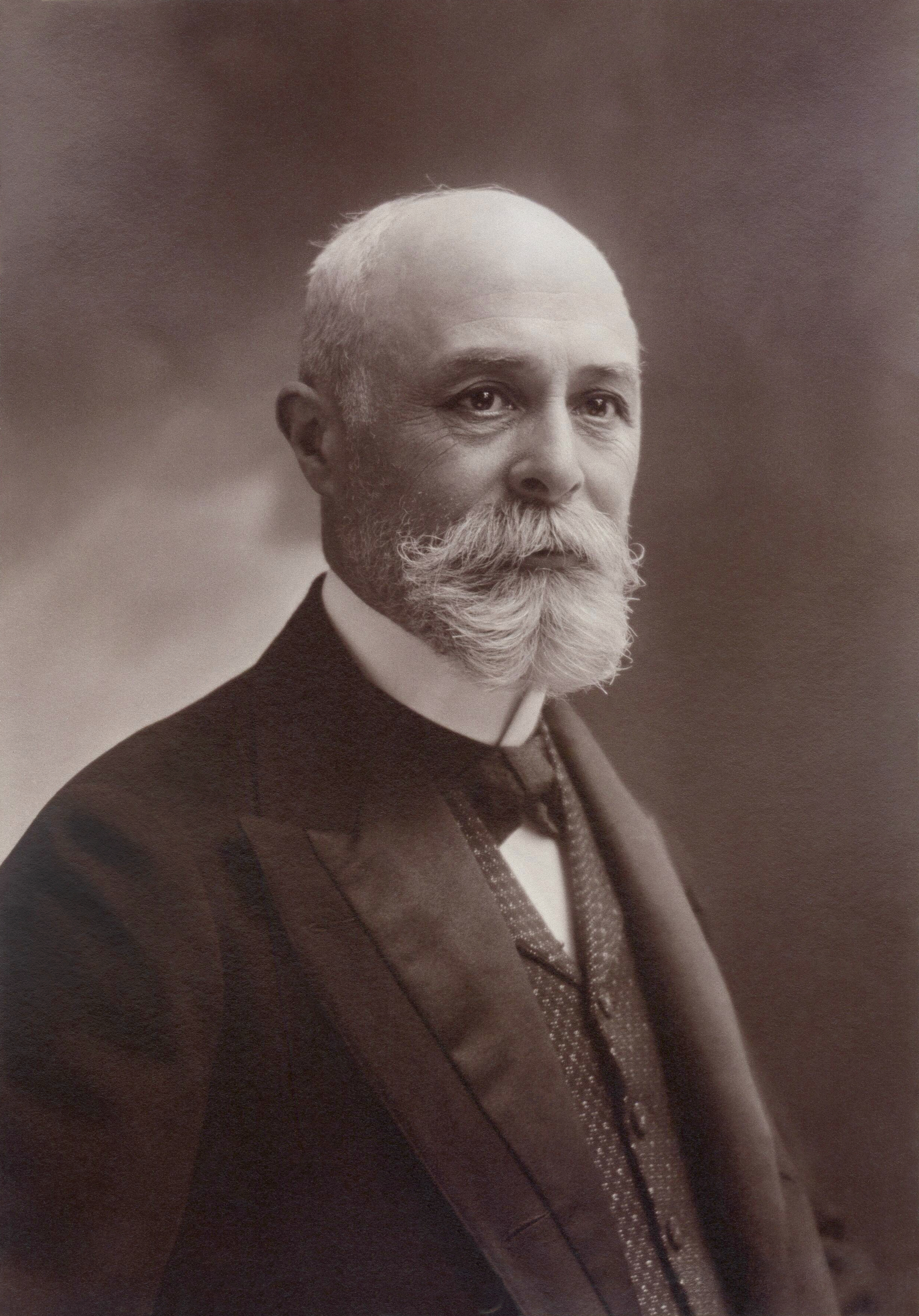
A physicist whose uranium experiments helped establish radioactivity. His 1896 photographic plate tests separated exposure to the material from immediate illumination; the cautious interpretation in his report is part of the story of Becquerel's uranium-radiation experiment. He held the chair of applied physics at the Paris Museum of Natural History.[ref]
Henri Becquerel - Biographical. Nobel Lectures, Physics 1901–1921; Biographical identity and professional specialization
Portrait of Henri Becquerel
. Source. Articles by others on the same topic

Henri Becquerel (1852–1908) was a French physicist who is best known for his discovery of radioactivity, a phenomenon important to the field of nuclear physics. In 1896, while investigating phosphorescent materials, he discovered that certain materials, such as uranium salts, emitted rays that could expose photographic plates even without light.