Joseph Goldberger investigated pellagra as a disease of inadequate nutrition when an infectious explanation was widely accepted. His work helped shift the question from which organism transmitted the disease to what was missing from the diet. He established a dietary explanation without isolating the specific protective nutrient; vitamin B3 was identified as the missing component later. [ref]
https://irp.nih.gov/catalyst/27/6/from-the-annals-of-nih-history. NIH historical account, dietary investigations and distinction from the 1937 identification of niacin
With G. A. Wheeler, Goldberger reported a 1915 experiment in which a restricted diet produced pellagra in at least six of eleven prisoners who completed the study. Their report compared the experimental group with other prisoners, considered differences in work and hygiene, and concluded that the restricted diet caused the disease.[ref]
Experimental Pellagra in the Human Subject Brought About by a Restricted Diet by Joseph Goldberger and G. A. Wheeler. printed pages 3338–3339, Controls, Results and Conclusion
The scientific lesson is to separate association, intervention and identification of a mechanism. Observing that a disease clusters among people eating similar foods suggests a hypothesis. Changing the diet tests that hypothesis more directly. Identifying the missing vitamin is a further chemical step, requiring evidence beyond the original feeding comparison.
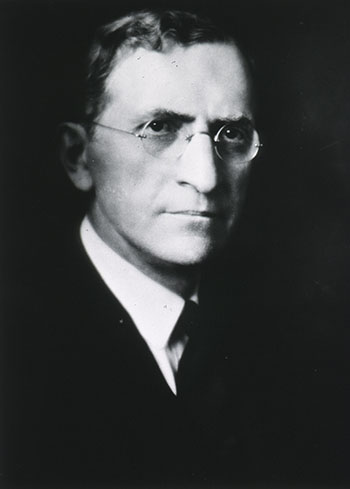
Joseph Goldberger
. Portrait credited to the National Library of Medicine in the NIH historical article. Articles by others on the same topic
There are currently no matching articles.