A physician is a medically trained professional who investigates and manages human disease and disorders of function. Medical reasoning connects a person's history and examination findings to explanations of altered anatomy and physiology, while comparing alternative causes rather than treating one symptom as a diagnosis.
A pulmonologist is a physician specializing in diseases of the lungs, conducting airways and related respiratory function. The work connects clinical observations with respiratory mechanics, ventilation and gas exchange. The American Board of Internal Medicine's primary specialty standards include supervision and interpretation of pulmonary-function testing, ventilator-related skills and bronchoscopy.[ref]
Pulmonary Disease by the American Board of Internal Medicine. Training and Procedure Requirements, pulmonary-function testing and bronchoscopy competencies
The scientific question determines the measurement. Spirometry records gas moved at the mouth. Lung compliance relates volume to an internal pressure difference. Gas exchange also depends on the exchange surface and blood flow, so an expired-volume trace does not by itself measure every part of respiratory performance. A pulmonologist interprets these complementary observations alongside the clinical context rather than treating all breathing measurements as interchangeable.
An original ventilation example illustrates why this distinction matters. Let tidal volume be , respiratory rate be , and non-exchanging conducting-airway volume be , representing anatomical dead space. In a simplified model where the remaining inspired gas reaches functioning exchange regions,The first is total ventilation per minute; the second is the model's alveolar ventilation. OpenStax distinguishes conducting-airway dead space from gas available to alveolar exchange.[ref]
Anatomy and Physiology 2e by J. Gordon Betts and others. §22.3, Respiratory Volumes and Capacities, anatomical and alveolar dead space
With stipulated L, twelve breaths per minute at L give total ventilation 6 L/min and alveolar ventilation 4.2 L/min. Thirty breaths per minute at L still move 6 L/min in total, but give only 1.5 L/min in this model. Equal total movement can therefore supply quite different amounts of fresh gas to exchange regions. These chosen numbers explain the quantities; they are not a breathing recommendation or a patient assessment.
Measurement quality is part of the specialty's scientific reasoning. The primary spirometry statement separately evaluates instrument response, maneuver acceptability and repeatability.[ref]
Standardization of Spirometry 2019 Update by Brian L. Graham and others. Device Quality Assurance and FVC Maneuver
A precise measurement of one function can be informative while leaving the cause of an abnormal result unresolved. Combining anatomy, mechanics and exchange measurements makes those remaining questions explicit.A cardiologist is a physician with specialized training in identifying and treating disorders of the heart and blood vessels. The specialization is cardiology; it concerns the cardiovascular system's structure and function rather than only one instrument or one type of operation.[ref]
The scientific work connects different observations to different physiological questions. Electrocardiography records electrical activity, echocardiography uses ultrasound to examine cardiac structures and motion, and flow measurements address the amount of blood transported per unit time. An electrical waveform, a chamber volume and a pressure reading are not interchangeable measurements of cardiac performance.
An original mean-flow example illustrates the pressure-flow distinction in cardiovascular assessment. In a simplified steady resistance model,where is cardiac output, is the mean pressure difference and represents effective vascular hydraulic resistance. Stipulated pressures 90 and 5 mmHg with flow 5 L/min imply . The same pressures with flow 2.5 L/min imply twice that resistance. A pressure observation alone therefore does not determine cardiac output. The model omits pulsatility and the distributed vascular geometry; it explains why complementary measurements are needed.
Another distinction concerns right ventricular ejection fraction: a fraction of chamber volume ejected per beat does not specify the number of beats per minute or the absolute volume transported. Interpreting a measurement requires its units, acquisition procedure and relationship to the physiological question. This quantitative reasoning is part of the specialty, alongside anatomical and clinical interpretation.
Miguel A. Quiñones is a cardiologist credited as chair and first author of the American Society of Echocardiography's 2002 recommendations on quantifying Doppler echocardiography. The primary report's byline gives his name and role, while its technical sections explain how acquisition methods determine the interpretation of recorded velocities.[ref]
Recommendations for Quantification of Doppler Echocardiography by Miguel A. Quiñones and others. Printed p.167, chair/byline; General Principles
The report distinguishes pulsed-wave Doppler echocardiography, which selects a sampling region but has pulse-rate aliasing limits, from continuous-wave Doppler echocardiography, which records high velocities without unique depth localization. This distinction is central when turning a spectral envelope into a physiological estimate: the measured signal must correspond to the anatomical quantity used in the model.[ref]
Recommendations for Quantification of Doppler Echocardiography by Miguel A. Quiñones and others. General Principles and PW/CW Doppler, pp.167–169
An original sensitivity example illustrates another issue emphasized by the report. Under the simplified pressure-difference model , a velocity underestimate by changes the calculated result byThe derived pressure difference is underestimated by , even before other model errors are considered. For a stipulated estimate of at the true velocity, the underestimated velocity gives . These numbers illustrate the quadratic mapping rather than provide a clinical threshold or a patient result.
The report explicitly notes this amplification when discussing beam orientation and pressure estimates.[ref]
Recommendations for Quantification of Doppler Echocardiography by Miguel A. Quiñones and others. Printed p.168, equation3 and angle-related errors
The contribution documented here is a practical, quantitative measurement framework. Reproducibly tracing a waveform and establishing the accuracy of a derived physiological value remain different tasks.Halfdan Ihlen was a Norwegian cardiologist who developed cardiac ultrasound research and diagnostic facilities at Rikshospitalet. A primary memorial by his colleagues records his specialist qualification in internal medicine and cardiology in 1982 and his later leadership of an ultrasound laboratory and appointment as professor.[ref]
Halfdan Ihlen obituary in Tidsskrift for Den norske legeforening. Opening biographical paragraphs, published 4 April2022
Ihlen is first author of the 1984 primary study comparing cardiac output determined by Doppler echocardiography with independently obtained values. Ten patients were studied using thermodilution at rest and during dobutamine infusion, and eleven using the Fick method at rest. This design tested an imaging-and-flow measurement against different physical reference methods and across changing flow conditions.[ref]
Determination of cardiac output by Doppler echocardiography by Halfdan Ihlen and others. Abstract: comparison methods, groups and changed-flow protocol
The measurement combines complementary quantities. The velocity-time integral supplies a length-like integral over a beat, while a measured anatomical area converts a representative integral into stroke volume. Multiplication by heart rate then gives cardiac output. An image alone, a peak velocity alone and an integrated velocity with an appropriate area are different kinds of evidence.
An original sensitivity example shows why the geometry matters. If an area is computed as , a diameter overestimate by multiplies the estimated area and, at unchanged velocity integral, the estimated volume by . Thus a modest diameter error produces a volume error even when the Doppler integral is reproduced perfectly. Comparison studies assess the complete measurement chain rather than only the repeatability of one display.

Halfdan Ihlen in the portrait accompanying his colleagues' memorial
. The external portrait appears immediately before the opening biographical paragraph in the Norwegian Medical Association journal memorial.Christopher M. Kramer is a cardiologist whose research uses cardiovascular magnetic resonance imaging to assess the heart. His University of Virginia profile identifies cardiovascular imaging as an area of expertise.[ref]
Christopher M. Kramer profile at UVA Health. Bio & Overview
He is the first author of the 2020 primary protocol document specifying standardized cardiovascular magnetic resonance imaging acquisitions.[ref]One concrete contribution of such a protocol is to make image geometry reproducible. Its left-ventricular procedure links the cardiac apex, mitral valve center, cardiac long axis views and a cardiac short-axis stack.[ref]
Standardized cardiovascular magnetic resonance imaging (CMR) protocols: 2020 update by Christopher M. Kramer and others. Left ventricular structure and function, items 3 and 6; Figures 1–3
The geometry determines which anatomy is acquired before an analyst draws a cavity boundary.An original example explains the measurement consequence. A volume reconstructed as depends on both the cavity areas and the represented slice thicknesses. If ten slices each have area 8 cm and represented thickness 0.8 cm, the estimate is 64 mL. Omitting one such slice loses 6.4 mL even if every retained boundary is traced perfectly. Standardized coverage and phase selection therefore address errors that cannot be removed merely by improving image segmentation on the available slices.
The documented protocol work connects acquisition choices to interpretable measurements of chamber structure and function. It provides technical procedures and reference geometry; the arithmetic example here illustrates their purpose rather than reporting a result from that document.

Alexander R. Opotowsky is a physician whose research includes adult congenital heart conditions, exercise physiology and evaluation of cardiac output measurements. His institutional profile identifies these scientific interests.[ref]
Alexander Opotowsky profile at Cincinnati Children's. Research interests: exercise physiology, pulmonary vascular disease and right ventricular function
In a 2017 primary study, Opotowsky and colleagues compared paired thermodilution and estimated-oxygen-uptake Fick principle measurements from 12,232 adults in a Veterans Affairs cohort and 3,391 adults at Vanderbilt. The investigators examined method agreement and subsequent mortality associations.[ref]
Thermodilution vs Estimated Fick Cardiac Output Measurement in Clinical Practice by Alexander R. Opotowsky and others. Abstract, Design, Exposures and Main outcomes; JAMA Cardiology 2, 1090–1099, DOI 10.1001/jamacardio.2017.2945
Comparing two methods does not make either an error-free ground truth.The measurement distinction can be explained by oxygen-uptake assumptions in estimated Fick output. At steady state, the oxygen Fick principle writeswhere is cardiac output, the numerator is oxygen consumption per unit time and the denominator is the arterial-minus-mixed-venous oxygen content difference. Estimating the numerator from an external formula introduces an assumption that directly scales the inferred cardiac output; it is distinct from measuring oxygen consumption.
For stipulated oxygen uptake of 200 mL/min and a content difference of , L/min. Substituting an estimated uptake of 250 mL/min gives 5 L/min, a 25% increase with unchanged content measurements. This is an original error-propagation example, not a patient result or a universal performance estimate. Errors in the content difference can also affect the ratio.
The primary study found that a small average difference between methods coexisted with wide limits of agreement.[ref]
Thermodilution vs Estimated Fick Cardiac Output Measurement in Clinical Practice by Alexander R. Opotowsky and others. Abstract, Results; Figure 1, paired-method differences
Positive and negative discrepancies can cancel in a mean while remaining substantial for individuals. This separates average bias, individual agreement and prognostic association, rather than treating all three as one measure of accuracy.
Alicia M. Maceira is a physician working in cardiology and cardiac imaging. Her hospital profile identifies cardiac diagnostic imaging as her specialization.[ref]
Alicia Maceira profile at Hospital Ascires. “Cardióloga” and “Especialista en Diagnóstico Cardiológico por Imagen”
Her primary research includes establishing right ventricle reference measurements with magnetic resonance imaging.In a 2006 paper, Maceira and colleagues studied 120 healthy adults, 60 men and 60 women aged 20–80 years, using cine images acquired by steady-state free-precession imaging and three-dimensional modelling. The study examined how age, sex and body surface area related to ventricular volumes and function.[ref]
Reference right ventricular systolic and diastolic function normalized to age, gender and body surface area from steady-state free precession cardiovascular magnetic resonance by Alicia M. Maceira and others. Abstract, Methods and results; European Heart Journal 27, 2879–2888, DOI 10.1093/eurheartj/ehl336
An original numerical example separates the measurements. If end-diastolic volume is 150 mL and end-systolic volume is 60 mL, the volume difference is 90 mL and right ventricular ejection fraction is . Dividing the 150 mL end-diastolic volume by a body surface area of gives an indexed volume of approximately . The fraction and the indexed volume describe different properties; neither numerical value alone specifies a universal reference interval.
The study found associations with age even for several size-normalized measurements. This motivates population conditioning of ventricular reference intervals: scaling by body surface area need not eliminate all dependence on age or sex.[ref]
Reference right ventricular systolic and diastolic function normalized to age, gender and body surface area from steady-state free precession cardiovascular magnetic resonance by Alicia M. Maceira and others. Abstract, Results and Conclusion
Reference values also belong to an acquisition and analysis procedure. A numerical example explains the quantities; clinical interpretation requires the appropriate validated reference framework.
Alicia Maceira, identified on her official Hospital Ascires cardiology profile.
A surgeon is a physician with specialized training in evaluating and treating conditions for which surgery may be appropriate. The role includes deciding whether an operation is justified, performing the relevant operative work, and directing perioperative care. The American College of Surgeons describes competence in terms of education, training, experience and demonstrated proficiency, rather than the ability to perform an isolated manual maneuver.[ref]
Surgical reasoning connects anatomy with physiology. Knowing where structures lie is different from knowing how an intervention will change their function. The response of living tissue also connects biomechanics, healing and the condition of the surrounding tissue. An operation can achieve an immediate geometric objective while its later biological outcome still depends on these processes.
An original mechanical example illustrates why local geometry matters. If a tensile force is carried uniformly through load-bearing area , nominal stress isA chosen force over gives ; the same force over half that area gives . This idealized calculation explains a geometric sensitivity, rather than specifying a tissue's actual strength or a surgical technique. Real tissue can be anisotropic and nonlinear, so a nominal stress alone does not determine its biological response.
Evaluating outcomes also requires scientific judgment. In a hypothetical audit, 20 adverse outcomes among 200 cases give a crude rate , while 5 among 100 give . The difference does not by itself identify a difference in surgical skill or treatment effect: the groups may differ in underlying illness, operation complexity and follow-up. Causal inference requires a comparison that addresses how the groups were formed, rather than treating every outcome percentage as a controlled experiment.
The decision is shared with the patient. Informed consent includes the proposed operation, its risks and benefits, alternatives including nonoperative care, and the roles of the treating team. Responsibility also extends beyond the operation through postoperative and continuing care.[ref]
Statement on Principles by the American College of Surgeons. Sections II.A–B, informed consent and alternatives; Sections II.E–F, postoperative responsibility and continuity
Thus operative skill, biological understanding and evaluation of evidence are connected parts of the profession.Ryozo Omoto was a cardiovascular surgeon and a coauthor of the 1985 real-time Color Doppler paper with Chihiro Kasai, Koroku Namekawa and Akira Koyano. Its author biography identifies his surgical work at Saitama Medical School. The paper includes cardiac flow images alongside instrument and phantom experiments.[ref]
Real-Time Two-Dimensional Blood Flow Imaging Using an Autocorrelation Technique by Chihiro Kasai and others. Printed pp. 458, 461–462 and 464: full name, clinical tests and author biography
A central interpretive distinction is between the displayed beam-direction component and the full blood flow velocity. In an ideal projection model, . For a constructed speed , a beam at measures a component, whereas a perpendicular beam has zero component. Zero Doppler shift does not imply zero flow.
Likewise, a sign-coded color indicates motion relative to the ultrasound beam, rather than automatically identifying oxygenated blood or a particular vessel. Turning a frequency estimate into a cardiac observation therefore requires geometry and timing, not just a color scale. Omoto's coauthored work connects that measurement problem with observing intracardiac flow; the paper's case observations do not by themselves establish universal diagnostic accuracy.
Bartley P. Griffith coauthored the 1994 experiment comparing image-derived ventricular area with a balloon-based pressure-volume reference. The publisher's full byline directly verifies the identity. The study used perfused dog hearts, a micromanometer catheter and automated echocardiography to investigate estimates of ventricular compliance.[ref]
His university profile identifies his professional field as surgery, including heart and lung transplantation and the development of circulatory-support devices.[ref]
Bartley P. Griffith faculty profile by University of Maryland School of Medicine. Primary Appointment and Biosketch, Personal Statement
A central issue is the conversion between a geometric surrogate and the mechanical quantity of interest. If volume and area are linked by a differentiable relation , the chain rule givesThe reciprocal slope has area-per-pressure units, whereas ventricular compliance has volume-per-pressure units. They require a geometric conversion before being interpreted as the same physical quantity.
For an original local example, suppose and . Then mmHg/mL and mL/mmHg. Simply copying the area-pressure inverse slope would give 0.5 square centimetres per mmHg, a different observable.
This illustrates why an experimental reference is valuable even when the surrogate and reference curves have similar shapes. The paper's abstract explicitly confines its conclusion by noting that clinical application remains to be validated.[ref]

Bartley P. Griffith, identified portrait linked from his University of Maryland faculty profile
. Andrea Salica is a surgeon whose published work connects aortic root anatomy with aortic valve repair. His European Hospital profile identifies his specialty as cardiac surgery, and his full name appears beside Ruggero De Paulis on their 2019 anatomical exposition.[ref]
Andrea Salica profile at European Hospital. Named physician page, Cardiochirurgo
[ref]Surgical anatomy of the aortic valve and root—implications for valve repair by Ruggero De Paulis and Andrea Salica. Byline and General considerations
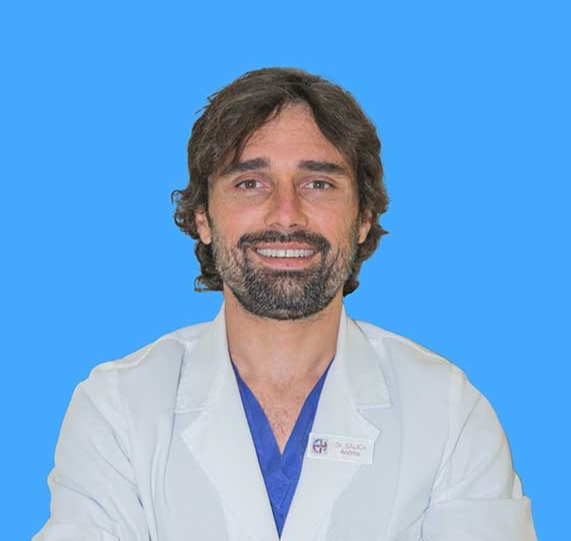
Andrea Salica, portrait linked from his named European Hospital cardiac-surgery profile
. Source. The coauthored article distinguishes several anatomical references often compressed into one casual description of an annulus. Its figures separate the basal reference through the low points of the valve attachments, the outward-bulging aortic sinuses and the sinotubular junction. The attachment of the aortic valve is crown-shaped rather than one flat circular line. These distinctions make aortic root measurement-plane dependence a substantive measurement issue.[ref]
Surgical anatomy of the aortic valve and root—implications for valve repair by Ruggero De Paulis and Andrea Salica. General considerations; Figure 1, three diameter levels; Figure 2, attachment geometry
An original geometric example explains why naming a measured diameter is insufficient. A circular opening with diameter 24 mm has area . An ellipse with full axis lengths 24 and 30 mm has area , 25% larger. One 24 mm diameter is compatible with both geometries. These are stipulated shapes, not anatomical reference values or dimensions reported for a patient.
The example motivates recording the measurement plane, axis and shape assumptions alongside the number. A root dimension also does not itself measure coaptation, the contact of valve tissues during closure. Spatial organization and observed valve function are related observations with different definitions. Salica's verified contribution here is to the joint anatomical account; its coauthor list alone does not allocate each illustration or observation to one author.
Ruggero De Paulis is a surgeon whose work includes aortic root reconstruction and the design of a sinus-containing conduit. UniCamillus identifies cardiac surgery as his field and credits him with the Valsalva graft.[ref] The original 2000 paper gives his full byline and explicitly attributes the modified conduit's design to RDP.[ref]
A new aortic Dacron conduit for surgical treatment of aortic root pathology by Ruggero De Paulis and others. Printed pp. 457–458, byline and Methods, design attribution
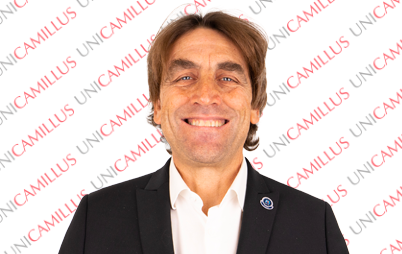
Ruggero De Paulis, portrait linked from his named UniCamillus cardiac-surgery faculty profile
. Source. The design addresses a geometric distinction between a straight tube and the bulging aortic sinuses. In the report, differently oriented corrugations in a short graft segment allow circumferential expansion near the root while the adjoining tube retains a different directional response. The resulting shape includes artificial sinus-like spaces and a narrowed sinotubular junction.[ref]
A new aortic Dacron conduit for surgical treatment of aortic root pathology by Ruggero De Paulis and others. Printed p. 458, Methods and Figures 1–4
This is an example of using structural geometry to control a device's mechanical response, rather than specifying only one nominal tube diameter.The initial report described nine operations and used visual inspection, echocardiography and angiography to assess the reconstructed geometry. It reported no mortality or morbidity in that series.[ref]
A new aortic Dacron conduit for surgical treatment of aortic root pathology by Ruggero De Paulis and others. Printed p. 457, Abstract, Methods and Results
Those observations document an initial series; they do not by themselves establish a zero underlying event probability.An original binomial distribution illustration quantifies that distinction. If nine independent procedures from a specified population have zero events, a one-sided 95% upper confidence bound under the stipulated model isThis is a mathematical illustration of sample-size limitations, not an estimate of an individual patient's risk or a comparison between treatments. Follow-up duration and the event definition also belong to the observed endpoint.
With Andrea Salica, De Paulis later coauthored the detailed 2019 account of aortic valve and root anatomy.[ref]
Surgical anatomy of the aortic valve and root—implications for valve repair by Ruggero De Paulis and Andrea Salica. Byline and General considerations
The papers connect explicit geometry, a fabricated conduit and measurements of the resulting reconstruction.A. Senning, the surgeon Åke Senning, contributed to the development and evaluation of cardiovascular interventions. The University of Zurich's institutional history describes his technical innovations in cardiac surgery and his appointment to direct Surgical Clinic A in 1961.[ref]
Åke Senning historical profile at the University of Zurich. Opening biography, technical innovations and Zurich appointment

Åke Senning, portrait linked by the University of Zurich Faculty of Medicine
. With A. R. Grüntzig and W. E. Siegenthaler, Senning coauthored the 1979 primary report on coronary angioplasty. The series included cases requiring emergency bypass graft surgery after acute deterioration.[ref]
Nonoperative dilatation of coronary-artery stenosis: percutaneous transluminal coronary angioplasty by A. R. Grüntzig and others. Byline; Abstract, emergency bypass observations
The joint work connects a catheter-based mechanical intervention with the need to evaluate outcomes beyond its immediate geometric result.The scientific distinction is between achieving an intended local change and obtaining an acceptable overall outcome. Enlarging a narrowed coronary artery addresses one anatomical objective. Complications, subsequent procedures and later function are additional observations; none is fully encoded by the immediate opening of the vessel.
An original audit example makes the endpoint problem explicit. Suppose 80 of 100 procedures meet a chosen technical-success definition and 10 patients experience a specified adverse event. If is the technical-success set and the adverse-event set, thenWithout knowing overlap, the number with technical success and no recorded event can lie between 70 and 80. Subtracting ten assumes every adverse event occurred among technical successes; counting all eighty ignores the overlap question. These are hypothetical counts, not Senning's reported outcomes.
The example explains why procedural development and clinical evaluation need shared, explicit endpoints. Senning's verified contribution here is to the joint primary study; a coauthor list alone does not assign each device modification or clinical observation to one individual.
Robert B. Rutherford was a surgeon whose work on reporting standards helped make results of vascular surgery more precisely comparable. He is the first author of the 1997 revised standards for reports on lower-extremity ischemia; the original paper directly supplies his full published name and surgical affiliation.[ref]
Recommended standards for reports dealing with lower extremity ischemia: Revised version by Robert B. Rutherford and others. Printed p. 517, byline and affiliation; opening statement of purpose
An important contribution of the joint standards is to distinguish different meanings of graft patency. A bypass graft can remain open without an intervention on the graft, remain open because an intervention prevented occlusion, or regain flow after an occlusion. The paper distinguishes primary graft patency, assisted primary graft patency and secondary graft patency, with explicit rules about what procedures and retained structures count.[ref]
Recommended standards for reports dealing with lower extremity ischemia: Revised version by Robert B. Rutherford and others. Printed pp. 524–525, failed and failing grafts and patency definitions
The distinction changes the scientific question answered by a percentage. In an original simplified cohort of 100 grafts with complete follow-up to one common time, suppose 70 remain open without qualifying assistance, 15 remain open after a preventive intervention, 10 are open after restoration following occlusion, and 5 are closed. Under the stated classification model, the corresponding cumulative counts areThe rates , and describe the same cohort under different endpoints. Calling any one simply the success rate loses information about durability, surveillance and restoration. These are constructed counts, not outcomes reported by Rutherford.
Real cohorts have unequal follow-up and losses to observation. The standards discuss time-dependent patency estimation, including life-table and Kaplan–Meier estimator methods, rather than assuming that every published proportion is a complete common-time cohort fraction.[ref]
Recommended standards for reports dealing with lower extremity ischemia: Revised version by Robert B. Rutherford and others. Printed p. 525 onward, Estimating patency rates
Rutherford's contribution illustrates how explicit definitions and survival analysis can be as important to clinical evidence as the mechanical success of an individual operation.Pierre-Alain Clavien is a surgeon associated with visceral and transplantation surgery in Zurich. The University of Zurich's faculty record identifies his full name and clinical field.[ref]
Pierre-Alain Clavien faculty profile at the University of Zurich. Named faculty record and clinic affiliation

Pierre-Alain Clavien, portrait linked by the University of Zurich faculty record
. With Daniel Dindo and Nicolas Demartines, Clavien coauthored the 2004 revision and evaluation of a therapy-based postoperative complication classification. The joint study distinguishes complications from failure to achieve an operation's intended goal and from inherent sequelae.[ref]
The scientific problem is measurement: comparing surgical outcomes requires deciding what is being counted and how severity is represented. An inherent consequence of the intended procedure, an unintended postoperative complication and failure to cure are different outcome concepts. A system can record one without claiming to exhaust the others.
An original example illustrates why ordered grades should not automatically be treated as equal numerical increments of patient burden. Suppose two recorded complications have grades I and IIIa, while two others both have grade II. Coding those three ordered categories as would give the same numerical average, , for both pairs. That equality follows from the chosen codes; it does not establish equivalent clinical burdens or identical outcome distributions.
Reporting category counts preserves information hidden by that arithmetic. If an analysis assigns numerical utilities or costs to grades, the additional mapping needs justification rather than being supplied by the category labels themselves.
The Clavien-Dindo classification provides a reproducible reporting framework, not a guarantee that patients, treatments or institutions are otherwise comparable. Follow-up, detection and case mix also affect the observed distribution. Clavien's verified contribution here is to the joint classification work; the illustrative coding example is not an experimental result attributed to him.
Nicolas Demartines is a surgeon whose CHUV professional background includes visceral and liver/pancreatic cancer surgery. A dated institutional announcement identifies that clinical and academic context.[ref]
Changement à la tête du CHUV by CHUV (15 December 2022). Biographical paragraph, 15 December 2022
Demartines coauthored the 2004 complication-classification study with Daniel Dindo and Pierre-Alain Clavien. It evaluated the reporting scheme in a surgical cohort and through an international surgeon survey.[ref]
Classification of Surgical Complications: A New Proposal With Evaluation in a Cohort of 6336 Patients and Results of a Survey by Daniel Dindo and others. Byline and Patients and Methods
Standardizing outcome categories helps comparison, but does not by itself standardize the patients being compared.An original case mix example makes that limitation quantitative. Suppose a low-risk stratum has complication probability and a high-risk stratum in each of two hypothetical centers. Center A treats 80 low-risk and 20 high-risk patients, giving expected complicationsCenter B treats 20 low-risk and 80 high-risk patients, givingThe crude expected rates are therefore and , despite identical stratum-specific risks in this constructed example.
Using the same illustrative reference mix givesfor both centers. This calculation shows what changes when the patient mix is held fixed; it is not a measured comparison of actual centers or a complete adjustment for every clinical difference.
The Clavien-Dindo classification addresses a different part of the measurement problem: identifying and grading a complication consistently. A credible outcome comparison also specifies its denominator, follow-up and patient selection. Causal inference about the effect of an operation requires more than observing a difference in crude rates. The documented contribution is Demartines's participation in the shared classification research, without assigning every methodological component to an individual author.
Daniel Dindo is a surgeon identified by his hospital's physician record with surgery and proctology. He is the first named author, with Nicolas Demartines and Pierre-Alain Clavien, of the 2004 paper underlying the revised Clavien-Dindo classification.[ref][ref]
The paper tested its scheme in a cohort of 6336 patients and an international surgeon survey. In the cohort analysis, patients with multiple complications were represented by their most severe complication.[ref]
Classification of Surgical Complications: A New Proposal With Evaluation in a Cohort of 6336 Patients and Results of a Survey by Daniel Dindo and others. Patients and Methods; Validation of the Modified Classification
That is an explicit data-summary choice, not a claim that additional events never matter.An original example distinguishes surgical complication count versus patient incidence. Among three hypothetical patients, suppose the first has grade I and grade II events, the second has one grade II event, and the third has none. There are three events in two affected patients. Patient incidence is , while events per patient is . These quantities have different denominators and interpretations.
Recording only each patient's highest grade represents the first two patients as grade II in both cases, despite their different event counts. That summary can be appropriate for a severity-focused endpoint, while another question may require counts, timing or the complete event history. An analysis should define the outcome before interpreting its percentage.
Reproducibility is another measurement issue. If two raters assign the same category to 18 of 20 case descriptions, their raw agreement is . That number alone does not prove clinical validity or describe how consequential the two disagreements were. Inter-rater reliability and the suitability of the classification for a particular question are related but distinct considerations.
Dindo's documented contribution is authorship of the joint proposal and evaluation. The small patient and rater examples above explain why standardized definitions and transparent aggregation matter; they are not additional observations from his published cohort.
Judah Folkman (1933–2008) was a surgeon and investigator who developed an influential experimental and therapeutic hypothesis about tumour angiogenesis. His 1971 article treated tumour cells and capillary endothelial cells as interacting populations and explored the possibility that restricting new vessel growth could restrict tumour growth.[ref]
Tumor Angiogenesis: Therapeutic Implications by Judah Folkman. Publisher preview and article, pp. 1182–1186
This was not a claim that he first observed every association between tumours and blood vessels.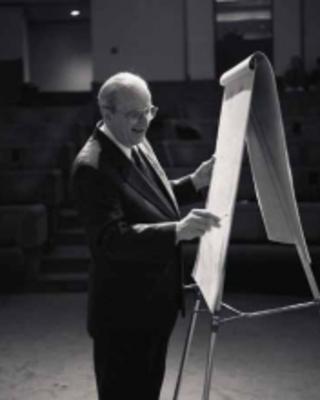
Judah Folkman, portrait linked by Harvard Medical School Department of Ophthalmology
. A motivating primary experiment separated tumour cells from host tissue with membrane chambers. Folkman and collaborators described new-vessel outgrowth near chambers containing melanoma or carcinoma cells in rat dorsal air sacs. The separation supported an explanation involving material that could pass from the tumour compartment, rather than requiring direct tumour-cell contact with every responding vessel. Their paper also reported an active tumour-derived fraction.[ref]
Isolation of a Tumor Factor Responsible for Angiogenesis by Judah Folkman and others. Printed p. 275, chamber observations and experimental motivation; abstract, isolated activity
The logical distinction matters: an angiogenic response to a fraction is evidence of biological activity, not by itself identification of one pure molecule that explains every tumour. The work made host blood vessel growth an experimental variable to investigate alongside tumour-cell proliferation.
An original supply model illustrates the geometric motivation. Suppose a spherical avascular cell mass of radius consumes a resource at constant rate per volume and can receive it only through its outer surface at flux . Its total demand and maximum stipulated supply areDemand does not exceed supply only when . Doubling radius increases demand eightfold but surface supply only fourfold. Adding internal vessels changes the supply geometry and therefore changes this model's assumptions.
This is a deliberately simplified volume-versus-surface calculation, not Folkman's measured tumour-size law or a universal clinical threshold. Real oxygen transport, diffusion, consumption, perfusion and cellular adaptation are more complex. It explains why growth of the supporting vasculature can be mechanistically important rather than merely a visual accompaniment to growth.
Harvard's institutional biography verifies his dates and portrait and places the 1971 proposal in its historical context.[ref]
Judah Folkman profile by Harvard Medical School Department of Ophthalmology. Heading, dates, portrait and biography
The lasting scientific contribution was a testable connection between tumour behavior and the surrounding vascular response; evaluating a particular treatment still requires evidence specific to that disease and intervention.William Martin Abbott was a vascular surgeon and investigator at Massachusetts General Hospital. The Society for Vascular Surgery’s primary memorial records his full name, his laboratory and clinical work, and his 1992 society presidency.[ref]
Former SVS President Abbott Mourned by Jonathan Gertler. Opening biographical paragraphs
Abbott participated in the collaboration that grew functional arteries in vitro; the follow-up paper identifies William Abbott with the MGH Department of Surgery.[ref][ref]
Former SVS President Abbott Mourned by Jonathan Gertler. Memorial identity and linked follow-up byline evidence
This work connects vascular surgery to biomaterials and tissue engineering: a replacement vessel must support blood flow and withstand mechanical loading while interacting with biological tissue.For example, pressure resistance and the ability to retain a surgical connection are distinct mechanical requirements. A strong tube can still fail at its connection, and a mechanically intact tube does not by itself demonstrate sustained flow through an open lumen. Separating those outcomes makes a laboratory evaluation more informative than a single strength measurement. Abbott’s combined clinical and investigative career placed such questions at the interface of surgical function and engineered materials.
Jonathan Gertler, identified as Jonathan P. Gertler in his professional profile, is a former academic vascular surgery specialist associated with Harvard Medical School and Massachusetts General Hospital. That profile describes publications in clinical vascular surgery and the biology of the endothelium and smooth muscle cells.[ref]
Jonathan P. Gertler profile by Back Bay Life Science Advisors. Named profile and clinical/scientific background paragraph
The initial P. is retained without expanding it.
His professional-society memorial of William Martin Abbott describes the connection between vascular surgical observations, graft behavior and vascular-cell research. It is a primary account authored by Gertler, rather than evidence that every investigation described there was his own experiment.[ref]
Former SVS President Abbott Mourned by Jonathan Gertler. Byline, 4 April 2023, for Massachusetts General Hospital; paragraphs on vascular graft behavior and multidisciplinary laboratory work
An original blood flow model illustrates one scientific issue relevant to this field. For steady laminar flow of a Newtonian fluid in a rigid circular tube, the Hagen-Poiseuille equation givesAt fixed pressure difference, viscosity and length, reducing the tube radius to changes predicted flow to . Retaining about four tenths of the modeled flow is a much larger change than the radius reduction alone might suggest.
This calculation does not describe all features of an artery: wall compliance, pulsatile loading and the surrounding tissue can matter. It explains why geometric openness, mechanical behavior and biological response are separate questions when evaluating a vessel or a replacement graft. The chosen ratio is an illustration, not a result attributed to Gertler or a clinical treatment threshold.
The documented scientific scope connects vascular surgery with the behavior of living vessel walls, rather than reducing the specialty to making a mechanically strong tube. The professional profile and authored historical account establish that scope without assigning an unverified individual discovery.
T. K. Greenlee is a coauthor of the 1971 study of bonding between a glass-ceramic biomaterial and bone. The publisher’s byline lists Greenlee at the Veterans Administration Hospital in Gainesville, Florida.[ref]
Bonding mechanisms at the interface of ceramic prosthetic materials by L. L. Hench and others. Author affiliations and primary abstract
The study connected an interfacial chemical model with observations in biological tissue. Laboratory studies of material solubility and hydroxyapatite crystallization were compared with histology and ultrastructure around implants in rat femurs. This comparison addresses a concrete problem: a material can have suitable bulk mechanical properties while developing an unsuitable interface with living bone. Microscopic observations of that interface help test a proposed bonding mechanism instead of inferring it from bulk strength alone.[ref]
Bonding mechanisms at the interface of ceramic prosthetic materials by L. L. Hench and others. Abstract, comparison of in-vitro studies with in-vivo rat-femur implant observations
In his historical account, Larry L. Hench identifies Greenlee as an orthopaedic surgeon involved in the early work.[ref]
The Story of Bioglass by Larry Hench. Printed pp. 10–11: T. K. Greenlee, Jr. and the original collaborators
W. C. Allen is a coauthor of the 1971 paper on a bone-bonding glass-ceramic. The primary publisher record associates Allen with the College of Engineering at the University of Florida.[ref]
Bonding mechanisms at the interface of ceramic prosthetic materials by L. L. Hench and others. Byline and author affiliations
The joint work examined how a biomaterial could develop a bond with bone, combining glass-ceramic solubility and interfacial hydroxyapatite crystallization studies with implant histology and ultrastructure. The example illustrates why designing a biomaterial requires more than selecting a high-strength material: interfacial reactions and the surrounding biological response can control how a mechanical load is transmitted. The publication compares laboratory interfacial evidence with tissue observations rather than treating every implant interface as chemically inert.[ref]
Bonding mechanisms at the interface of ceramic prosthetic materials by L. L. Hench and others. Primary abstract, experimental comparison and proposed interfacial bonding model
Hench’s retrospective describes the collaborator Bill Allen as an orthopaedic surgeon; the 1971 source byline is retained here as W. C. Allen.[ref]
R. J. Splinter is a coauthor of the 1971 investigation of bonding mechanisms at the interface of ceramic prosthetic materials. The publisher lists Splinter with the College of Engineering at the University of Florida.[ref]
Bonding mechanisms at the interface of ceramic prosthetic materials by L. L. Hench and others. Primary byline and affiliations
The study developed a model for the bond between a glass-ceramic biomaterial and bone. It related material solubility and interfacial hydroxyapatite crystallization to histology and ultrastructure observed around rat-femur implants. Its scientific significance lies in examining a changing interface: dissolving species and newly formed mineral can matter as much as the original solid surface. Comparing chemical observations with tissue structure provides a way to test this mechanism, rather than assuming that contact alone establishes a durable bond.[ref]
Hench’s retrospective describes Ray Splinter as a medical student who later became a reconstructive surgeon; the original publication’s R. J. Splinter byline is retained without expanding its initials.[ref]
Joann G. Elmore is a physician whose research examines variability in cancer diagnosis, including how consistently pathologists classify biopsy material. Her research group's description connects that work with statistics and machine learning for evaluating diagnostic decisions.[ref]
Joann G. Elmore research group at UCLA. “About Our Research Group”: cancer diagnosis, physician variability and statistical methods
In a 2017 primary study, Elmore and colleagues assembled 240 skin biopsy cases and gave participating pathologists sets of 36 or 48 cases. The design included a second interpretation of the same cases at least eight months later; 187 pathologists completed 8,976 interpretations in the first phase. Comparing an observer with their own later reading, with other observers and with a reference panel answers three different questions about statistical classification.[ref]
Pathologists' diagnosis of invasive melanoma and melanocytic proliferations: observer accuracy and reproducibility study by Joann G. Elmore and others. Abstract, Participants and Results; Methods, reference diagnoses; BMJ 357:j2813, DOI 10.1136/bmj.j2813
The distinction is within-observer agreement versus reference agreement. In an illustrative set of 20 cases, an observer might repeat 18 of their earlier classifications but agree with a reference classification on only 14: the two proportions are and . Repeating the same erroneous category increases the first proportion without improving the second. These are invented counts to explain the design, not results from Elmore's study. A consensus reference is an explicitly defined comparison standard; it does not make a panel infallible, and the diagnostic mix of a selected test set must be considered before interpreting an overall agreement percentage.

W. E. Siegenthaler coauthored the 1979 primary evaluation of coronary angioplasty with A. R. Grüntzig and A. Senning. The published byline records these initials. The report combined a clinical case series with measurements of the narrowed vessel and its pressure drop, and explicitly called for a prospective randomized comparison with surgical and medical management.[ref]
Nonoperative dilatation of coronary-artery stenosis: percutaneous transluminal coronary angioplasty by A. R. Grüntzig and others. Byline; Abstract, measurements and final comparative-evaluation statement
This contribution illustrates a distinction between demonstrating that an intervention can change a physical obstruction and establishing how its outcomes compare with alternatives. A selected series can document feasibility and observed complications. It does not automatically supply the outcomes that the same patients would have had under another treatment.
The report's 32 technical successes among 50 treated patients give the observed fraction .[ref]
Nonoperative dilatation of coronary-artery stenosis: percutaneous transluminal coronary angioplasty by A. R. Grüntzig and others. Abstract, treated population and technical-success count
That denominator is the treated series, not every person with coronary artery disease or everyone considered for an intervention. Eligibility, selection and the definition of success determine what the fraction describes.An original case mix example shows why a comparison can change even if subgroup responses do not. Suppose a hypothetical endpoint occurs with probabilities and in two patient groups. A series containing from the first group has modeled ratewhereas a series containing only from that group has rate . The difference was created entirely by group composition in this model. It is not a treatment-effect estimate or a result attributed to Siegenthaler.
A clinical trial with a justified comparison addresses a different question from a selected feasibility series. Randomized experiment design helps control treatment assignment; follow-up and endpoint definitions still need scrutiny. Siegenthaler's jointly authored report is scientifically notable for presenting the initial clinical evidence while recognizing the further comparative evidence required.
A. R. Grüntzig is the first author of the 1979 primary report on coronary angioplasty coauthored with A. Senning and W. E. Siegenthaler. The report describes introducing a catheter through a systemic artery and dilating a narrowed coronary artery by controlled inflation of a balloon catheter under local anaesthesia.[ref]
Nonoperative dilatation of coronary-artery stenosis: percutaneous transluminal coronary angioplasty by A. R. Grüntzig and others. Byline; Abstract, catheter apparatus and intervention
The apparatus links geometry and physiology: a distensible balloon changes a local narrowing, while measurements test the result. In the successful cases, the authors reported mean stenosis changing from to and mean coronary pressure difference from to .[ref]
Nonoperative dilatation of coronary-artery stenosis: percutaneous transluminal coronary angioplasty by A. R. Grüntzig and others. Abstract, successful-case stenosis and pressure measurements
These are paired observations within the reported successful group, not mean outcomes for every attempted procedure or a randomized comparison.The arithmetic distinguishes percentage points from relative changes. The reported stenosis values differ by 50 percentage points; relative to the initial value, the numerical reduction isFor the pressure difference, the analogous reduction is . The two calculations describe different observables and need not yield the same fraction. Neither calculation alone establishes a corresponding change in survival or overall health.
An ideal fluid-mechanical model helps motivate measuring pressure as well as geometry. For steady laminar flow through a uniform rigid tube, Hagen-Poiseuille equation givesAt fixed dynamic viscosity , length and volume flow rate , increasing radius by a factor reduces the modeled pressure difference to of its former value. This is an illustrative sensitivity calculation, not a reconstruction of a living coronary artery, whose geometry, wall motion and flow conditions are more complicated.
Grüntzig's joint report makes the mechanical intervention experimentally testable through multiple readouts. Interpreting those readouts still requires attention to failed attempts, complications, follow-up and selection. A physically effective local change and a favorable comparative clinical outcome are related hypotheses requiring different evidence.
G. A. Wheeler coauthored a 1915 dietary experiment with Joseph Goldberger investigating the cause of pellagra. The study followed prisoners in Mississippi after placing them on a restricted diet dominated by cereal foods. Eleven remained in the experiment to its end; the authors reported symptoms sufficient for a diagnosis of pellagra in at least six. Other prisoners under observation did not develop comparable evidence of the disease.[ref]
Experimental Pellagra in the Human Subject Brought About by a Restricted Diet by Joseph Goldberger and G. A. Wheeler. printed pages 3336–3339, Experiment, Controls and Results
The comparison mattered because it changed food intake while observing people in the same broad setting. The findings supported a dietary explanation without identifying the particular missing nutrient. They should not be read as a population-wide disease probability: a small, selected group subjected to a particular intervention answers a narrower question. The report also records that participation followed an offer of a pardon, which is essential context for interpreting its use of the word “volunteer”.[ref]
Experimental Pellagra in the Human Subject Brought About by a Restricted Diet by Joseph Goldberger and G. A. Wheeler. page 3336, recruitment; page 3339, Conclusion
Joseph Goldberger investigated pellagra as a disease of inadequate nutrition when an infectious explanation was widely accepted. His work helped shift the question from which organism transmitted the disease to what was missing from the diet. He established a dietary explanation without isolating the specific protective nutrient; vitamin B3 was identified as the missing component later. [ref]
https://irp.nih.gov/catalyst/27/6/from-the-annals-of-nih-history. NIH historical account, dietary investigations and distinction from the 1937 identification of niacin
With G. A. Wheeler, Goldberger reported a 1915 experiment in which a restricted diet produced pellagra in at least six of eleven prisoners who completed the study. Their report compared the experimental group with other prisoners, considered differences in work and hygiene, and concluded that the restricted diet caused the disease.[ref]
Experimental Pellagra in the Human Subject Brought About by a Restricted Diet by Joseph Goldberger and G. A. Wheeler. printed pages 3338–3339, Controls, Results and Conclusion
The scientific lesson is to separate association, intervention and identification of a mechanism. Observing that a disease clusters among people eating similar foods suggests a hypothesis. Changing the diet tests that hypothesis more directly. Identifying the missing vitamin is a further chemical step, requiring evidence beyond the original feeding comparison.
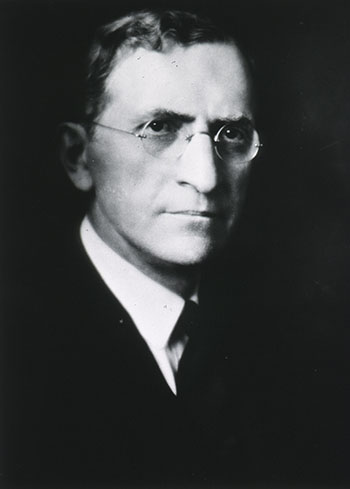
Joseph Goldberger
. Portrait credited to the National Library of Medicine in the NIH historical article.Adam L. Bartret led a radiological study testing whether variant sciatic nerve routes near the piriformis muscle were associated with piriformis syndrome. The researchers classified anatomy on 783 hip magnetic resonance imaging studies and compared recorded clinical diagnoses. Variants occurred in about 19% of hips, with no statistically significant diagnostic association in this cohort.[ref]
The study illustrates the distinction between identifying an anatomical variant and showing that it causes pain. A visible difference can be incidental; conversely, this observational result does not establish that every possible compression mechanism is absent.

Portrait of Adam L. Bartret
. Identified Stanford radiology residency portrait. Source.Steven E. Schraffordt led a dissection study of the pudendal nerve and its terminal branches. Examination of 28 cadavers documented variations relevant to the motor supply of the external anal sphincter. In five specimens, interconnecting inferior rectal and perineal branches formed a local nerve plexus near the sphincters.[ref]
Anatomy of the pudendal nerve and its terminal branches: a cadaver study by Steven E. Schraffordt and others. 2004, abstract, Methods and Results
This is a practical contribution of anatomical observation: an intact muscle can lose function if its nerve supply is injured. A schematic branching pattern therefore needs to be interpreted alongside documented variation when considering pelvic anatomy.
A physician who compiled practical observations about drugs and their use in nineteenth-century medicine. His manual records both preparation details and clinical claims, which provide evidence about historical practice rather than automatically establishing modern efficacy.[ref]
A Manual of Practical Therapeutics by Edward John Waring (1865). author contribution and cited discussion
Additional portrait catalogue: Wellcome photograph of a drawing of Waring.
A physician who analyzed the first British Pharmacopoeia. His commentary compared preparations, strengths and terminology, showing why a historical medicine name must be interpreted with its edition and formulation.[ref]
The Prescriber's Analysis of the British Pharmacopoeia by John Birkbeck Nevins (1864). author contribution and cited discussion
A physician who investigated diagnosis, prognosis and treatment in delirium tremens. His clinical discussion documents disagreement over interventions such as opium and stimulation, making it useful evidence of how treatment claims were evaluated at the time.[ref]
Practical Notes on Diagnosis, Prognosis, and Treatment in Cases of Delirium Tremens by Thomas Laycock. author contribution and cited discussion
Physician and author of Practical Notes on Diagnosis, Prognosis, and Treatment in Cases of Delirium Tremens by Thomas Laycock. Verified Wellcome portrait record, M0003163.
A medical author who organized urinalysis around physical, chemical and microscopic observations. Relating measurements to clinical interpretation illustrates why one urine finding should be assessed alongside the sampled material and other evidence.[ref]
Urinalysis in Clinical Methods by David M. Roxe. author contribution and cited discussion
Author of Urinalysis in Clinical Methods by David M. Roxe, identified by the chapter and PubMed record. No birth dates or expanded name are inferred.
A bounded exact-name and institutional portrait search did not establish a securely identified portrait. The commercial physician profile returned an image label, but this was not sufficient to establish an authenticated portrait of the chapter author; no likeness is supplied.
A physician who connected diseased pork, microscopic parasites and trichinellosis in an 1864 account. Identifying organisms in tissue supplied a different kind of explanation from treating the condition as nonspecific food spoilage.[ref]
On Poisoning by Diseased Pork by Julius Althaus. author contribution and cited discussion
Physician and author of On Poisoning by Diseased Pork by Julius Althaus. Wikimedia Commons image index, including the identified portrait file Julius Althaus.jpg.
A physician who documented severe gastric damage in a case of oxalic-acid poisoning. The report connected clinical circumstances with postmortem findings, while a single case could not establish an invariant appearance in every poisoning.[ref]
Case of Criminal Poisoning with Oxalic Acid, in Which Perforation of the Stomach Took Place by Henry Duncan Littlejohn. author contribution and cited discussion
Physician and forensic scientist. Wellcome Collection: identified portrait M0003164, an archival reproduction of a photograph.
A physician and toxicologist who experimentally investigated the action of water on lead. Comparisons involving dissolved salts and surface deposits showed why metal exposure depends on water chemistry as well as the presence of lead.[ref]
On the Action of Water upon Lead by Robert Christison. author contribution and cited discussion
Physician and toxicologist. National Portrait Gallery: identified portraits, including the circa-1860 photograph catalogued as NPG x45706.
A physician who investigated general paresis and explicitly distinguished that term from a nonspecific description of paralysis. His writing is evidence about historical clinical and pathological categories rather than an interchangeable modern diagnostic standard.[ref]
The Pathology of General Paresis by William Henry Octavius Sankey. author contribution and cited discussion
Physician who published on general paresis in 1864. Identity and verified externally hosted portrait: RCP Museum biography and labelled portrait.
A medical author who combined microscopic descriptions with observations about tumor behavior. His nineteenth-century categories connected tissue appearances with recurrence and malignancy, but do not map automatically to one modern tumor type.[ref]
Illustrations of the Pathology of Cancer by John Zachariah Laurence. author contribution and cited discussion
Surgeon and ophthalmologist; author of the 1856 Illustrations of the Pathology of Cancer by John Zachariah Laurence. Identity: wellcomecollection.org/works/wmmt58cd. The catalogue gives an uncertain birth year, so no exact birth date is inferred.
Verified external portrait attempt: ACNR, volume 20, issue 1, history feature, Figure 1: John Zachariah Laurence. The indexed facsimile caption identifies the pictured person. A separate Wellcome portrait-photograph catalogue result records M0017615, reference WT/D/1/20/1/157/85. No portrait file is copied into the repository.
A physician who distinguished external fatty growth around the heart from changes within muscle fibers. Microscopy helped separate lesions that could share a broad historical name while involving different tissue arrangements.[ref]
On Fatty Diseases of the Heart by Richard Quain. author contribution and cited discussion
Physician associated with On Fatty Diseases of the Heart by Richard Quain.
Official biography and portrait: Royal College of Physicians biography; identity and dates.
Portrait catalogue description: Portrait of Sir Richard Quain, RCP object X120.
A surgeon who reported a case combining intestinal obstruction by a gallstone with rupture of the heart. The account linked clinical events with observations of a friable ventricular wall; it establishes a case, not a universal causal sequence.[ref]
Gallstone ileus with rupture of the heart by J. B. Junor. author contribution and cited discussion
Surgeon in Peebles named with these initials in Gallstone ileus with rupture of the heart by J. B. Junor. The source establishes the initials and affiliation, not full forenames or biographical dates. A bounded name-and-affiliation portrait search did not establish an authentic portrait or an exact Wikipedia article.
A physician who reported a shipboard comparison of treatments for scurvy. A common diet and parallel treatment groups helped make differences in recovery interpretable. The historical observation preceded identification of vitamin C.[ref]
A Treatise of the Scurvy by James Lind. author contribution and cited discussion
Physician who published A Treatise of the Scurvy by James Lind.
Verified portrait source: Portraits in the James Lind Library record.
A physician and medical author who connected medicinal substances, their preparations and clinical uses. His text distinguishes chemical identity from finished pharmaceutical form, making its dated monographs useful for interpreting historical terminology.[ref]
The Essentials of Materia Medica and Therapeutics by Alfred Baring Garrod (1865). author contribution and cited discussion
Author of The Essentials of Materia Medica and Therapeutics by Alfred Baring Garrod (1865). Royal College of Physicians biography.

Portrait of Alfred Baring Garrod
. Photograph attributed to Elliott and Fry. Verified Commons record, public domain marking.

A physician and medical writer whose discussions distinguished clinical appearances and competing disease categories. His account of historical skin-disease names illustrates why a descriptive label cannot always be translated directly into one present-day diagnosis.[ref]
The Practice of Medicine by Robley Dunglison (1844). author contribution and cited discussion
Physician and medical writer. Identity and verified portrait: Portrait of Robley Dunglison, Annals of Medical History, 1928. The primary scan is externally hosted.
A physician whose On the Mode of Communication of Cholera by John Snow investigated relations between water supplies and cholera. External portrait: Science Museum Group, portrait of John Snow.
Author of the 1894 physical taper comparison in The True Position of Oxygen as a Restorative in Carbonic Acid Poisoning by W. Ernest Thomson. The author identity and career are corroborated by the British Journal of Ophthalmology obituary, 1938, p. 59, identifying the thesis and its publication. Exact-name portrait searches did not establish a securely identified portrait; no portrait or dates are invented.
Author of On Arsenic as a Poison; Its Tests and Antidote by E. J. Shearman, published in 1844. The cited paper identifies him as a physician at Rotherham; no unverified expansion of his initials is supplied.
A physician whose investigations included historical bread adulteration. External portrait: Wellcome Collection L0002750, CC BY 4.0.

A physician and toxicologist who investigated physiological tests for digitalin. External portrait: National Portrait Gallery, portrait NPG D44989.
Articles were limited to the first 100 out of 148 total.
Articles by others on the same topic
There are currently no matching articles.