Joann G. Elmore is a physician whose research examines variability in cancer diagnosis, including how consistently pathologists classify biopsy material. Her research group's description connects that work with statistics and machine learning for evaluating diagnostic decisions.[ref]
Joann G. Elmore research group at UCLA. “About Our Research Group”: cancer diagnosis, physician variability and statistical methods
In a 2017 primary study, Elmore and colleagues assembled 240 skin biopsy cases and gave participating pathologists sets of 36 or 48 cases. The design included a second interpretation of the same cases at least eight months later; 187 pathologists completed 8,976 interpretations in the first phase. Comparing an observer with their own later reading, with other observers and with a reference panel answers three different questions about statistical classification.[ref]
Pathologists' diagnosis of invasive melanoma and melanocytic proliferations: observer accuracy and reproducibility study by Joann G. Elmore and others. Abstract, Participants and Results; Methods, reference diagnoses; BMJ 357:j2813, DOI 10.1136/bmj.j2813
The distinction is within-observer agreement versus reference agreement. In an illustrative set of 20 cases, an observer might repeat 18 of their earlier classifications but agree with a reference classification on only 14: the two proportions are and . Repeating the same erroneous category increases the first proportion without improving the second. These are invented counts to explain the design, not results from Elmore's study. A consensus reference is an explicitly defined comparison standard; it does not make a panel infallible, and the diagnostic mix of a selected test set must be considered before interpreting an overall agreement percentage.

W. E. Siegenthaler coauthored the 1979 primary evaluation of coronary angioplasty with A. R. Grüntzig and A. Senning. The published byline records these initials. The report combined a clinical case series with measurements of the narrowed vessel and its pressure drop, and explicitly called for a prospective randomized comparison with surgical and medical management.[ref]
Nonoperative dilatation of coronary-artery stenosis: percutaneous transluminal coronary angioplasty by A. R. Grüntzig and others. Byline; Abstract, measurements and final comparative-evaluation statement
This contribution illustrates a distinction between demonstrating that an intervention can change a physical obstruction and establishing how its outcomes compare with alternatives. A selected series can document feasibility and observed complications. It does not automatically supply the outcomes that the same patients would have had under another treatment.
The report's 32 technical successes among 50 treated patients give the observed fraction .[ref]
Nonoperative dilatation of coronary-artery stenosis: percutaneous transluminal coronary angioplasty by A. R. Grüntzig and others. Abstract, treated population and technical-success count
That denominator is the treated series, not every person with coronary artery disease or everyone considered for an intervention. Eligibility, selection and the definition of success determine what the fraction describes.An original case mix example shows why a comparison can change even if subgroup responses do not. Suppose a hypothetical endpoint occurs with probabilities and in two patient groups. A series containing from the first group has modeled ratewhereas a series containing only from that group has rate . The difference was created entirely by group composition in this model. It is not a treatment-effect estimate or a result attributed to Siegenthaler.
A clinical trial with a justified comparison addresses a different question from a selected feasibility series. Randomized experiment design helps control treatment assignment; follow-up and endpoint definitions still need scrutiny. Siegenthaler's jointly authored report is scientifically notable for presenting the initial clinical evidence while recognizing the further comparative evidence required.
A. R. Grüntzig is the first author of the 1979 primary report on coronary angioplasty coauthored with A. Senning and W. E. Siegenthaler. The report describes introducing a catheter through a systemic artery and dilating a narrowed coronary artery by controlled inflation of a balloon catheter under local anaesthesia.[ref]
Nonoperative dilatation of coronary-artery stenosis: percutaneous transluminal coronary angioplasty by A. R. Grüntzig and others. Byline; Abstract, catheter apparatus and intervention
The apparatus links geometry and physiology: a distensible balloon changes a local narrowing, while measurements test the result. In the successful cases, the authors reported mean stenosis changing from to and mean coronary pressure difference from to .[ref]
Nonoperative dilatation of coronary-artery stenosis: percutaneous transluminal coronary angioplasty by A. R. Grüntzig and others. Abstract, successful-case stenosis and pressure measurements
These are paired observations within the reported successful group, not mean outcomes for every attempted procedure or a randomized comparison.The arithmetic distinguishes percentage points from relative changes. The reported stenosis values differ by 50 percentage points; relative to the initial value, the numerical reduction isFor the pressure difference, the analogous reduction is . The two calculations describe different observables and need not yield the same fraction. Neither calculation alone establishes a corresponding change in survival or overall health.
An ideal fluid-mechanical model helps motivate measuring pressure as well as geometry. For steady laminar flow through a uniform rigid tube, Hagen-Poiseuille equation givesAt fixed dynamic viscosity , length and volume flow rate , increasing radius by a factor reduces the modeled pressure difference to of its former value. This is an illustrative sensitivity calculation, not a reconstruction of a living coronary artery, whose geometry, wall motion and flow conditions are more complicated.
Grüntzig's joint report makes the mechanical intervention experimentally testable through multiple readouts. Interpreting those readouts still requires attention to failed attempts, complications, follow-up and selection. A physically effective local change and a favorable comparative clinical outcome are related hypotheses requiring different evidence.
G. A. Wheeler coauthored a 1915 dietary experiment with Joseph Goldberger investigating the cause of pellagra. The study followed prisoners in Mississippi after placing them on a restricted diet dominated by cereal foods. Eleven remained in the experiment to its end; the authors reported symptoms sufficient for a diagnosis of pellagra in at least six. Other prisoners under observation did not develop comparable evidence of the disease.[ref]
Experimental Pellagra in the Human Subject Brought About by a Restricted Diet by Joseph Goldberger and G. A. Wheeler. printed pages 3336–3339, Experiment, Controls and Results
The comparison mattered because it changed food intake while observing people in the same broad setting. The findings supported a dietary explanation without identifying the particular missing nutrient. They should not be read as a population-wide disease probability: a small, selected group subjected to a particular intervention answers a narrower question. The report also records that participation followed an offer of a pardon, which is essential context for interpreting its use of the word “volunteer”.[ref]
Experimental Pellagra in the Human Subject Brought About by a Restricted Diet by Joseph Goldberger and G. A. Wheeler. page 3336, recruitment; page 3339, Conclusion
Joseph Goldberger investigated pellagra as a disease of inadequate nutrition when an infectious explanation was widely accepted. His work helped shift the question from which organism transmitted the disease to what was missing from the diet. He established a dietary explanation without isolating the specific protective nutrient; vitamin B3 was identified as the missing component later. [ref]
https://irp.nih.gov/catalyst/27/6/from-the-annals-of-nih-history. NIH historical account, dietary investigations and distinction from the 1937 identification of niacin
With G. A. Wheeler, Goldberger reported a 1915 experiment in which a restricted diet produced pellagra in at least six of eleven prisoners who completed the study. Their report compared the experimental group with other prisoners, considered differences in work and hygiene, and concluded that the restricted diet caused the disease.[ref]
Experimental Pellagra in the Human Subject Brought About by a Restricted Diet by Joseph Goldberger and G. A. Wheeler. printed pages 3338–3339, Controls, Results and Conclusion
The scientific lesson is to separate association, intervention and identification of a mechanism. Observing that a disease clusters among people eating similar foods suggests a hypothesis. Changing the diet tests that hypothesis more directly. Identifying the missing vitamin is a further chemical step, requiring evidence beyond the original feeding comparison.
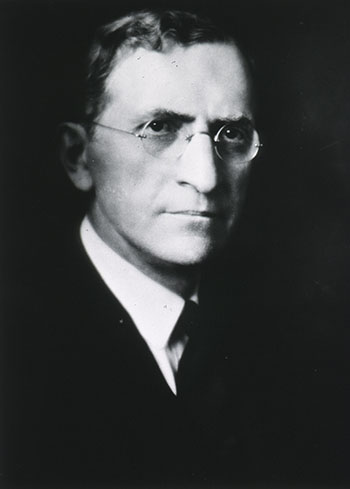
Joseph Goldberger
. Portrait credited to the National Library of Medicine in the NIH historical article.Adam L. Bartret led a radiological study testing whether variant sciatic nerve routes near the piriformis muscle were associated with piriformis syndrome. The researchers classified anatomy on 783 hip magnetic resonance imaging studies and compared recorded clinical diagnoses. Variants occurred in about 19% of hips, with no statistically significant diagnostic association in this cohort.[ref]
The study illustrates the distinction between identifying an anatomical variant and showing that it causes pain. A visible difference can be incidental; conversely, this observational result does not establish that every possible compression mechanism is absent.

Portrait of Adam L. Bartret
. Identified Stanford radiology residency portrait. Source.Steven E. Schraffordt led a dissection study of the pudendal nerve and its terminal branches. Examination of 28 cadavers documented variations relevant to the motor supply of the external anal sphincter. In five specimens, interconnecting inferior rectal and perineal branches formed a local nerve plexus near the sphincters.[ref]
Anatomy of the pudendal nerve and its terminal branches: a cadaver study by Steven E. Schraffordt and others. 2004, abstract, Methods and Results
This is a practical contribution of anatomical observation: an intact muscle can lose function if its nerve supply is injured. A schematic branching pattern therefore needs to be interpreted alongside documented variation when considering pelvic anatomy.
A physician who compiled practical observations about drugs and their use in nineteenth-century medicine. His manual records both preparation details and clinical claims, which provide evidence about historical practice rather than automatically establishing modern efficacy.[ref]
A Manual of Practical Therapeutics by Edward John Waring (1865). author contribution and cited discussion
Additional portrait catalogue: Wellcome photograph of a drawing of Waring.
A physician who analyzed the first British Pharmacopoeia. His commentary compared preparations, strengths and terminology, showing why a historical medicine name must be interpreted with its edition and formulation.[ref]
The Prescriber's Analysis of the British Pharmacopoeia by John Birkbeck Nevins (1864). author contribution and cited discussion
A physician who investigated diagnosis, prognosis and treatment in delirium tremens. His clinical discussion documents disagreement over interventions such as opium and stimulation, making it useful evidence of how treatment claims were evaluated at the time.[ref]
Practical Notes on Diagnosis, Prognosis, and Treatment in Cases of Delirium Tremens by Thomas Laycock. author contribution and cited discussion
Physician and author of Practical Notes on Diagnosis, Prognosis, and Treatment in Cases of Delirium Tremens by Thomas Laycock. Verified Wellcome portrait record, M0003163.
A medical author who organized urinalysis around physical, chemical and microscopic observations. Relating measurements to clinical interpretation illustrates why one urine finding should be assessed alongside the sampled material and other evidence.[ref]
Urinalysis in Clinical Methods by David M. Roxe. author contribution and cited discussion
Author of Urinalysis in Clinical Methods by David M. Roxe, identified by the chapter and PubMed record. No birth dates or expanded name are inferred.
A bounded exact-name and institutional portrait search did not establish a securely identified portrait. The commercial physician profile returned an image label, but this was not sufficient to establish an authenticated portrait of the chapter author; no likeness is supplied.
A physician who connected diseased pork, microscopic parasites and trichinellosis in an 1864 account. Identifying organisms in tissue supplied a different kind of explanation from treating the condition as nonspecific food spoilage.[ref]
On Poisoning by Diseased Pork by Julius Althaus. author contribution and cited discussion
Physician and author of On Poisoning by Diseased Pork by Julius Althaus. Wikimedia Commons image index, including the identified portrait file Julius Althaus.jpg.
A physician who documented severe gastric damage in a case of oxalic-acid poisoning. The report connected clinical circumstances with postmortem findings, while a single case could not establish an invariant appearance in every poisoning.[ref]
Case of Criminal Poisoning with Oxalic Acid, in Which Perforation of the Stomach Took Place by Henry Duncan Littlejohn. author contribution and cited discussion
Physician and forensic scientist. Wellcome Collection: identified portrait M0003164, an archival reproduction of a photograph.
A physician and toxicologist who experimentally investigated the action of water on lead. Comparisons involving dissolved salts and surface deposits showed why metal exposure depends on water chemistry as well as the presence of lead.[ref]
On the Action of Water upon Lead by Robert Christison. author contribution and cited discussion
Physician and toxicologist. National Portrait Gallery: identified portraits, including the circa-1860 photograph catalogued as NPG x45706.
A physician who investigated general paresis and explicitly distinguished that term from a nonspecific description of paralysis. His writing is evidence about historical clinical and pathological categories rather than an interchangeable modern diagnostic standard.[ref]
The Pathology of General Paresis by William Henry Octavius Sankey. author contribution and cited discussion
Physician who published on general paresis in 1864. Identity and verified externally hosted portrait: RCP Museum biography and labelled portrait.
A medical author who combined microscopic descriptions with observations about tumor behavior. His nineteenth-century categories connected tissue appearances with recurrence and malignancy, but do not map automatically to one modern tumor type.[ref]
Illustrations of the Pathology of Cancer by John Zachariah Laurence. author contribution and cited discussion
Surgeon and ophthalmologist; author of the 1856 Illustrations of the Pathology of Cancer by John Zachariah Laurence. Identity: wellcomecollection.org/works/wmmt58cd. The catalogue gives an uncertain birth year, so no exact birth date is inferred.
Verified external portrait attempt: ACNR, volume 20, issue 1, history feature, Figure 1: John Zachariah Laurence. The indexed facsimile caption identifies the pictured person. A separate Wellcome portrait-photograph catalogue result records M0017615, reference WT/D/1/20/1/157/85. No portrait file is copied into the repository.
A physician who distinguished external fatty growth around the heart from changes within muscle fibers. Microscopy helped separate lesions that could share a broad historical name while involving different tissue arrangements.[ref]
On Fatty Diseases of the Heart by Richard Quain. author contribution and cited discussion
Physician associated with On Fatty Diseases of the Heart by Richard Quain.
Official biography and portrait: Royal College of Physicians biography; identity and dates.
Portrait catalogue description: Portrait of Sir Richard Quain, RCP object X120.
A surgeon who reported a case combining intestinal obstruction by a gallstone with rupture of the heart. The account linked clinical events with observations of a friable ventricular wall; it establishes a case, not a universal causal sequence.[ref]
Gallstone ileus with rupture of the heart by J. B. Junor. author contribution and cited discussion
Surgeon in Peebles named with these initials in Gallstone ileus with rupture of the heart by J. B. Junor. The source establishes the initials and affiliation, not full forenames or biographical dates. A bounded name-and-affiliation portrait search did not establish an authentic portrait or an exact Wikipedia article.
A physician who reported a shipboard comparison of treatments for scurvy. A common diet and parallel treatment groups helped make differences in recovery interpretable. The historical observation preceded identification of vitamin C.[ref]
A Treatise of the Scurvy by James Lind. author contribution and cited discussion
Physician who published A Treatise of the Scurvy by James Lind.
Verified portrait source: Portraits in the James Lind Library record.
A physician and medical author who connected medicinal substances, their preparations and clinical uses. His text distinguishes chemical identity from finished pharmaceutical form, making its dated monographs useful for interpreting historical terminology.[ref]
The Essentials of Materia Medica and Therapeutics by Alfred Baring Garrod (1865). author contribution and cited discussion
Author of The Essentials of Materia Medica and Therapeutics by Alfred Baring Garrod (1865). Royal College of Physicians biography.

Portrait of Alfred Baring Garrod
. Photograph attributed to Elliott and Fry. Verified Commons record, public domain marking.

A physician and medical writer whose discussions distinguished clinical appearances and competing disease categories. His account of historical skin-disease names illustrates why a descriptive label cannot always be translated directly into one present-day diagnosis.[ref]
The Practice of Medicine by Robley Dunglison (1844). author contribution and cited discussion
Physician and medical writer. Identity and verified portrait: Portrait of Robley Dunglison, Annals of Medical History, 1928. The primary scan is externally hosted.
A physician whose On the Mode of Communication of Cholera by John Snow investigated relations between water supplies and cholera. External portrait: Science Museum Group, portrait of John Snow.
Author of the 1894 physical taper comparison in The True Position of Oxygen as a Restorative in Carbonic Acid Poisoning by W. Ernest Thomson. The author identity and career are corroborated by the British Journal of Ophthalmology obituary, 1938, p. 59, identifying the thesis and its publication. Exact-name portrait searches did not establish a securely identified portrait; no portrait or dates are invented.
Author of On Arsenic as a Poison; Its Tests and Antidote by E. J. Shearman, published in 1844. The cited paper identifies him as a physician at Rotherham; no unverified expansion of his initials is supplied.
A physician whose investigations included historical bread adulteration. External portrait: Wellcome Collection L0002750, CC BY 4.0.

A physician and toxicologist who investigated physiological tests for digitalin. External portrait: National Portrait Gallery, portrait NPG D44989.
English physician who investigated physiological tests for digitalin. External portrait catalogue: Wellcome Collection, photograph reference 15134i.
A physician who published clinical observations on cancer and conditions resembling it. His case records include nonoperative management; symptom relief in such an account must be distinguished from evidence that a tumor was eradicated.[ref]
On Cancer: Its Allies and Counterfeits by Thomas Weeden Cooke. author contribution and cited discussion
Identity and work record: play.google.com/store/books/details/Thomas_Weeden_Cooke_On_Cancer_Its_Allies_and_Count?id=f47nJ9xZ_0kC
A surgeon who compared ways of dealing with the vascular attachment during ovarian surgery. His account treated control of bleeding as a specific operative problem, providing historical evidence about the development of surgical methods.[ref]
Clinical Remarks on Different Modes of Dealing with the Pedicle in Ovariotomy by Thomas Spencer Wells. author contribution and cited discussion
Identity and work record: wellcomecollection.org/works/fcrqav24

Portrait of Thomas Spencer Wells
. Wellcome Library, London, via Wikimedia Commons; CC BY 4.0, as recorded at the linked file page. Source.
Surgeon named in the swallowed-coin report in The Seats and Causes of Diseases Investigated by Anatomy by Giovanni Battista Morgagni. No first name, dates, exact Wikipedia article or securely identified portrait was established; do not identify him with an unrelated namesake.
Physician whose observation is compared with the swallowed-coin case in The Seats and Causes of Diseases Investigated by Anatomy by Giovanni Battista Morgagni.
The author called Molinellius in the Oxford extract from The Seats and Causes of Diseases Investigated by Anatomy by Giovanni Battista Morgagni. Pier Paolo Molinelli is a candidate identification with a verified institutional portrait, but the extract does not give his forenames; retain that qualification pending verification of the cited original observation.
The physician named only as Riolanus in the Oxford extract from The Seats and Causes of Diseases Investigated by Anatomy by Giovanni Battista Morgagni, cited for duodenal compression. The extract alone does not distinguish the elder from the younger Riolan. A portrait and exact Wikipedia article for the younger were verified as candidates, without assigning them to this uncertain reference.
A physician and anatomist who organized disease accounts around connections between clinical observations and anatomical findings after death. Comparing cases helped make the location of structural disease part of medical explanation.[ref]
The Seats and Causes of Diseases Investigated by Anatomy by Giovanni Battista Morgagni. author contribution and cited discussion
A physician and medical author of The Seats and Causes of Diseases Investigated by Anatomy by Giovanni Battista Morgagni.
Anatomist and medical author of The Seats and Causes of Diseases Investigated by Anatomy by Giovanni Battista Morgagni.
A physician whose 1846 work reported chemical analyses of tubercular material. The author identity is given in the contemporary reproduction of his original analyses.
Primary analysis attribution: Original book passages reproduced in a contemporary review. A bounded exact-name portrait search did not establish a verified external portrait.
A physician who published observations on boils and carbuncles. His report documents historical attempts to connect local lesions with proposed remedies; its causal vocabulary should be distinguished from current knowledge of infection.[ref]
Treatment of Boils and Carbuncles by James Startin. author contribution and cited discussion
Identity record: epsilon.ac.uk/view/dcp-data/nameregs/nameregs_4534
A physician who discussed uncertainty about widely used treatments, including opium, mercury and diuretics. His account is valuable for the history of medical reasoning because common practice was presented as open to dispute.[ref]
Introductory Address at the Public Opening of the Medical Session, 1866–67 by William Tennant Gairdner. author contribution and cited discussion
Identity record: www.npg.org.uk/collections/search/portrait/mw157391
Verified portrait catalogue: wellcomecollection.org/works/rk4e4npu
A physician who systematically recorded effects and toxic responses during the use of foxglove preparations. Relating dose, patient condition and observed response helped distinguish a drug’s useful action from its harmful effects.[ref]
An Account of the Foxglove and some of its Medical Uses by William Withering. author contribution and cited discussion
Identity record: www.npg.org.uk/collections/search/person/mp94667/william-withering

Portrait of William Withering
. Wellcome Collection reproduction via Wikimedia Commons; attribution to Wellcome Library, London. Licensed CC BY 4.0 as recorded by the linked file record. Source.

Portrait of Benjamin Ward Richardson
. Photograph by Henry Joseph Whitlock, late 1860s–1870s, National Portrait Gallery Ax18349; public-domain reproduction hosted by Wikimedia Commons. Source.
A physician whose 1861 paper Observations on Typhoid or Intestinal Fever: The Pythogenic Theory by William Budd argued for specific transmission of typhoid fever.

Portrait of William Budd
. Wellcome Collection image L0023341, hosted by Wikimedia Commons; Creative Commons Attribution 4.0. Source.
A physician who critically examined the meaning of stimulation in the treatment of typhus. Distinguishing apparent stimulation from narcosis made the observed response and its interpretation separate parts of the clinical argument.[ref]
Clinical Study of Stimulation in Typhus by James Burn Russell. author contribution and cited discussion
Identity and portrait record: wellcomecollection.org/works/npyf9fbn

Portrait of James Burn Russell
. Externally hosted historical portrait; Wellcome Collection identifies the image and marks the underlying photograph Public Domain. Source.A physician who reported clinical experience with pneumonia. His account provides evidence about period practice and case selection; observational recovery alone does not isolate the effect of a treatment.[ref]
On the Treatment of Pneumonia by Alexander Smith. author contribution and cited discussion
Identity source: pmc.ncbi.nlm.nih.gov/articles/PMC5311651/
A physician who examined the respective roles of natural recovery and intervention in chorea. The comparison makes a lasting problem of clinical inference explicit: improvement after treatment need not establish improvement caused by treatment.[ref]
On Chorea, and on Nature and Art in the Treatment by James Turnbull. author contribution and cited discussion
Identity source: www.bmj.com/content/bmj/1/211/32.full.pdf
A physician who analyzed hospital records of typhus and treatment practices. Recorded treatment quantities were observations about selected patients, making them different from standardized experimentally assigned exposures.[ref]
Typhus Statistics of the Dundee Royal Infirmary, with Remarks by Thomas John Maclagan. author contribution and cited discussion
Identity source: wellcomecollection.org/concepts/cwvx87nq
Portrait record: api.pageplace.de/preview/DT0400.9780203646960_A23562404/preview-9780203646960_A23562404.pdf
A physician who criticized competing explanations and remedies for bleeding associated with tuberculosis. His discussion illustrates the problem of inferring therapeutic effects from variable clinical courses.[ref]
On the Treatment of Tubercular Hemoptysis by William Brinton. author contribution and cited discussion
Identity source: history.rcp.ac.uk/inspiring-physicians/william-brinton
Portrait record: wellcomecollection.org/works/z7duq9mk
Identity source: wellcomecollection.org/works/yhzfct46

Portrait of Thomas Sydenham
. Externally hosted public-domain portrait reproduction; identification and artwork provenance are given by the linked collection record. Source.
A physician who reported how external pressure could imitate a particular uterine complication. The observation made mechanical context relevant to interpreting an apparent anatomical or functional diagnosis.[ref]
Hour-glass contraction of the uterus simulated by the pressure of a narrow binder by William T. Greene (1867). author contribution and cited discussion
A physician identified in the 1867 report as M.B. and physician to the Moira Dispensary. The bibliographic record gives W. T. Greene; no birth dates or identification with another similarly named person are inferred.
Verified portrait search: searches for the exact name with Moira, physician and portrait did not establish a correctly identified portrait. No image or Wikipedia identification is supplied.
A pathologist associated with medical education and the explanation of disease mechanisms. The textbook bearing his name distinguishes hypertrophy from hyperplasia, linking changes in tissue size to different underlying cellular processes.[ref]
Hypertrophy and hyperplasia in Underwood's Pathology: a Clinical Approach. author contribution and cited discussion
Portrait attempt: Royal College of Pathologists Bulletin, January 2022, featured-article photograph caption identifies Professor Sir James Underwood. The pathology textbook title refers to James Underwood.
A physician who helped establish dedicated inpatient care for children by founding the Hospital for Sick Children in Great Ormond Street in 1852. His medical work linked care of children with observations of diseases during early development.[ref]
https://www.gosh.nhs.uk/about-us/our-history/. hospital’s institutional history
Portrait catalogue: Wellcome Collection, M0013615, identified seated portrait of Charles West.
A physician and pathologist who investigated tissue changes and their distribution in disease. His account of amyloid degeneration is an example of connecting microscopic material with alterations across internal organs, while preserving the historical meaning of its terminology.[ref]
On the Course of the Amyloid Degeneration by Rudolf Virchow. author contribution and cited discussion
Portrait: Wellcome portrait on Wikimedia Commons.

A physician who connected edema and urinary albumin with structural kidney abnormalities. Bringing bedside findings together with postmortem anatomy helped distinguish a renal disease process from dropsy as a symptom alone.[ref]
https://www.rcp.ac.uk/news-and-media/news-and-opinion/richard-bright/. Royal College of Physicians, clinical and pathological observations
Portrait catalogue: Wellcome Collection, M0003071, identified portrait of Richard Bright.
Physician whose defence of previous experience with bloodletting formed part of the nineteenth-century controversy.

Later representation of Avicenna; not an authenticated lifetime portrait
. Verified later half-tone portrait M0000768, Wellcome CC BY 4.0. Different Wellcome glass-negative records have different rights; use the verified Commons record. Ibn Sina is the immediate capitalized synonym. Source.
Physician associated with the 1868 Hering-Breuer inflation reflex.
Verified external portrait record: www.freud.org.uk/collections/archives/archive-records/IN/1521/
Verified external portrait record: wellcomecollection.org/works/x9qjb6eg/images?id=nk9kp7fm
A physician who coauthored a synthesis of research on movement, the senses and development. Comparing competing explanations of blood-cell formation shows how physiological writing could organize unresolved experimental evidence.[ref]
Recent Advances in the Physiology of Motion, the Senses, Generation and Development by William Baly and William Senhouse Kirkes. author contribution and cited discussion
Physician and physiological writer.
Verified external portrait record: catalogues.royalsociety.org/CalmView/Record.aspx?id=IM%2FMaull%2F000228&src=CalmView.Catalog

Portrait of Pierre Charles Alexandre Louis, reproduced in 1914
. Verified portrait record; reproduced in a 1914 medical history; author unknown, marked public domain. James Lind Library 1835 source record also has a portrait section. Source.
Physician associated with the numerical method in medicine and Research on the Effects of Bloodletting by Pierre Charles Alexandre Louis.
Nineteenth-century physician associated with an inflammatory theory of disease and extensive bloodletting by medicinal leeches.

Later representation of Galen; not an authenticated lifetime portrait
. Verified record L0000098, later representation reproduced in 1925. Wellcome CC BY 4.0. Source.
Ancient physician whose On Treatment by Bloodletting by Galen discusses selection, tolerance and technique.

Later representation of Hippocrates; not an authenticated lifetime portrait
. Verified 1638 engraving after a sculptural representation; label as later, not an authenticated lifetime portrait. Wellcome CC BY 4.0. Source.
Ancient physician traditionally associated with the Hippocratic Corpus.

Later representation of Aretaeus of Cappadocia; not an authenticated lifetime portrait
. Verified file record M0008689, a later engraved representation published in 1603; label as imagined/later, not a contemporary likeness. Wellcome CC BY 4.0. Source.
Ancient medical author of On the Causes and Signs of Chronic Diseases by Aretaeus of Cappadocia, including the coeliac affection of Aretaeus.
A late-antique physician and medical writer whose Latin works on acute and chronic diseases preserve and adapt earlier Greek medical knowledge. Their organization connects causes, signs and treatment discussions, making them a source for the history of clinical classification.[ref]
https://heirs.lib.uiowa.edu/record.php?id=48. University of Iowa, primary-edition catalogue and organization of the work
A physician who described a recurring combination of involuntary shaking, altered posture and gait in his 1817 essay. Comparing observations across people helped define a recognizable clinical syndrome before its later neurobiological explanation.[ref]

Signature of James Parkinson on a letter dated 21 February 1809
. Public-domain signature hosted by Wikimedia Commons. Source.
Articles were limited to the first 100 out of 101 total.
Articles by others on the same topic
There are currently no matching articles.