Kurt Wiesenfeld is a physicist whose research includes stochastic resonance and collective dynamical behavior. Georgia Tech's School of Physics profile lists stochastic resonance, spontaneous synchronization and dynamical beam steering among his research topics.[ref]
He coauthored Observation of Stochastic Resonance in a Ring Laser by Bruce McNamara and others with Bruce McNamara and Rajarshi Roy. The publisher's abstract establishes the experimentally observed improvement in a periodically modulated optical system with added noise.[ref]
Observation of Stochastic Resonance in a Ring Laser by Bruce McNamara and others. Publisher byline and Abstract
A useful theoretical question is how a random transition rate can relate to the forcing period.For an original illustrative model, suppose a system has two states with a noise-dependent escape rateThis is an assumed activation-type form, of the kind represented by a Kramers escape rate; it is not a fitted law for the cited laser. If unforced dwell times have an exponential distribution, their mean is . A periodic forcing of period suggests comparing that time with , the time between alternating preferences for the two states.
Take stipulated , dimensionless , and . The mean-dwell matching condition givesAt , the mean dwell is about 22.03 seconds, far longer than the forcing half-period. At , it is about 7.39 milliseconds. The calculation explains why too little noise can prevent switching, while rapid random switching can obscure a weak preference.
Matching means is only a heuristic. Exponential dwell times have a spread as large as their mean, and periodic forcing changes the rates over the cycle. The matching calculation alone does not prove phase locking or locate the optimum signal-to-noise ratio. A proposed test records transition times relative to the forcing phase and compares the full response as noise is varied.
This distinction between a simplified rate model and an observed response is central to interpreting stochastic resonance. The example is an original calculation illustrating the theoretical issue; the joint 1988 paper supplies the verified optical observation.
Articles by others on the same topic

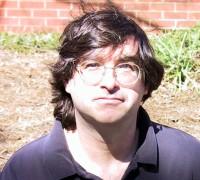
Kurt Wiesenfeld is a prominent physicist known for his work in the field of nonlinear dynamics, complex systems, and statistical mechanics. He has made significant contributions to our understanding of phase transitions, synchronization phenomena, and self-organizing systems. Wiesenfeld has also explored various applications of these concepts in fields such as biology and social sciences.