
Fedor Jelezko 2026-11-05
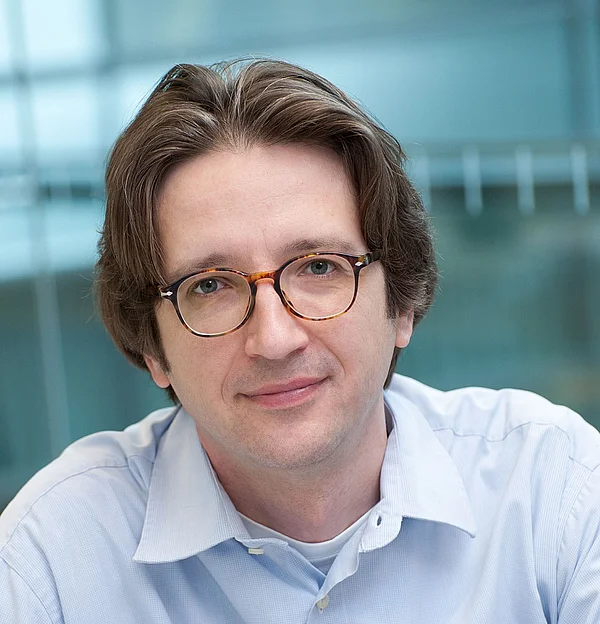
Fedor Jelezko works on solid-state quantum optics and spin control in diamond. His Ulm University CV identifies him in full and lists the exact 2004 nuclear-spin paper whose first-author byline is F. Jelezko, verifying the connection between the full name and the abbreviated record.[ref]
Fedor Jelezko at Ulm University. Official CV, page1 expertise and page2 selected publications, DOI10.1103/PhysRevLett.93.130501
That experiment addressed an electron spin coupled to a single Carbon-13 nuclear spin at a nitrogen-vacancy center. A laser initialized and read out the electron-spin-dependent signal, while microwave and radio frequency pulses manipulated the coupled levels. Nuclear-state changes were detected through the electron spin. The team observed nuclear Rabi oscillations and demonstrated a conditional two-qubit gate, providing a physical test of coherent control of an individually addressed spin system.[ref]
For an original ideal pulse example, let a selected transition have resonant Rabi frequency and start entirely in one level. The two-level model gives transition probabilityA pulse gives , while a pulse gives . Scanning the pulse duration reveals an oscillation rather than a single population change. These are chosen ideal values; detuning, relaxation and readout noise limit a real measurement.
Nitrogen-vacancy center 2026-11-05
A nitrogen-vacancy center is a point defect in diamond consisting of a nitrogen atom occupying a carbon lattice site next to a vacancy defect. The surrounding diamond remains the host crystal; the adjacent impurity and missing atom create a localized electronic system. Its electron spin and optical response make individual defects accessible to quantum control.[ref]
Observation of coherent oscillation of a single nuclear spin and realization of a two-qubit conditional quantum gate by F. Jelezko and others. Author preprint, page2 and Figure1, defect structure and spin states
A2004 experiment coupled the defect's electron spin to one nearby carbon-13 nuclear spin. Laser pulses provided optical preparation/readout, while microwave and radio frequency pulses manipulated the spin system. The researchers observed coherent nuclear-spin oscillations and implemented a conditional two-qubit operation.[ref]
Observation of coherent oscillation of a single nuclear spin and realization of a two-qubit conditional quantum gate by F. Jelezko and others. Abstract and Figure2, electron/nuclear system and pulse/readout arrangement
Detecting fluorescence thus provided access to a spin experiment inside a solid, rather than requiring electrical contact to the individual defect.For an ideal resonantly driven two-state model, a Rabi oscillation gives transition probability , where is the angular Rabi frequency. A pulse lasting ideally transfers the population, while returns it. This illustrates controlled coherent evolution; actual fluorescence counts and gate accuracy also depend on preparation, readout and loss of coherence.