
Got it working as mentioned at: github.com/cirosantilli/feathers-chat/tree/sequelize-pg
Bibliography:
There's also a
heroku branch at: github.com/feathersjs/feathers-chat/tree/heroku, but it also seems to use NeDB? So you can have a filesystem in Heroku? Doesn't seem so: stackoverflow.com/questions/42775418/heroku-local-persistent-storage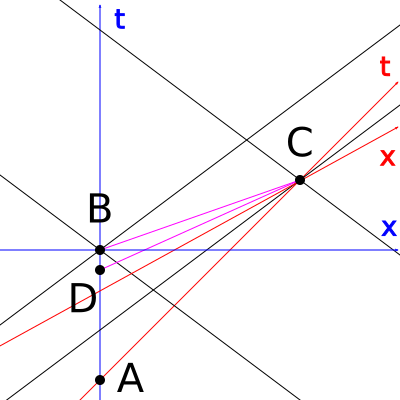
Bibliography:
- physics.stackexchange.com/questions/13001/does-superluminal-travel-imply-travelling-back-in-time/615079#615079
- physics.stackexchange.com/questions/574395/why-would-ftl-imply-time-travel
- physics.stackexchange.com/questions/516767/how-does-a-tachyonic-antitelephone-work
- www.physicsmatt.com/blog/2016/8/25/why-ftl-implies-time-travel shows the causality violation on a Spacetime diagram
gothinkster/realworld implementations based on Express.js.
- 10 8:
st_name=01000000= character 1 in the.strtab, which until the following\0makeshello_world.asmThis piece of information file may be used by the linker to decide on which segment sections go: e.g. inldlinker script we write:segment_name : { file(section) }segment_name : { *(section) } - 10 13:
st_shndx= Symbol Table Section header Index =f1ff=SHN_ABS. Required forSTT_FILE. - 20 0:
st_value= 8x00: required for value forSTT_FILE - 20 8:
st_size= 8x00: no allocated size
Now from the
readelf, we interpret the others quickly.There are two such entries, one pointing to
.data and the other to .text (section indexes 1 and 2).Num: Value Size Type Bind Vis Ndx Name
2: 0000000000000000 0 SECTION LOCAL DEFAULT 1
3: 0000000000000000 0 SECTION LOCAL DEFAULT 2TODO what is their purpose?
Then come the most important symbols:
Num:    Value          Size Type    Bind   Vis      Ndx Name
  4: 0000000000000000     0 NOTYPE  LOCAL  DEFAULT    1 hello_world
  5: 000000000000000d     0 NOTYPE  LOCAL  DEFAULT  ABS hello_world_len
6: 0000000000000000 0 NOTYPE GLOBAL DEFAULT 2 _startIn index 0,
SHT_NULL is mandatory. Are there any other uses for it: stackoverflow.com/questions/26812142/what-is-the-use-of-the-sht-null-section-in-elf ?Contains the path to the dynamic loader, i.e.
/lib64/ld-linux-x86-64.so.2 in Ubuntu 18.10. Explained at: stackoverflow.com/questions/8040631/checking-if-a-binary-compiled-with-static/55664341#55664341Contains a lot of different flag masks.
reconstruction/ecoli/flat/condition/nutrient/minimal.tsvcontains the nutrients in a minimal environment in which the cell survives:If we compare that to"molecule id" "lower bound (units.mmol / units.g / units.h)" "upper bound (units.mmol / units.g / units.h)" "ADP[c]" 3.15 3.15 "PI[c]" 3.15 3.15 "PROTON[c]" 3.15 3.15 "GLC[p]" NaN 20 "OXYGEN-MOLECULE[p]" NaN NaN "AMMONIUM[c]" NaN NaN "PI[p]" NaN NaN "K+[p]" NaN NaN "SULFATE[p]" NaN NaN "FE+2[p]" NaN NaN "CA+2[p]" NaN NaN "CL-[p]" NaN NaN "CO+2[p]" NaN NaN "MG+2[p]" NaN NaN "MN+2[p]" NaN NaN "NI+2[p]" NaN NaN "ZN+2[p]" NaN NaN "WATER[p]" NaN NaN "CARBON-DIOXIDE[p]" NaN NaN "CPD0-1958[p]" NaN NaN "L-SELENOCYSTEINE[c]" NaN NaN "GLC-D-LACTONE[c]" NaN NaN "CYTOSINE[c]" NaN NaNreconstruction/ecoli/flat/condition/nutrient/minimal_plus_amino_acids.tsv, we see that it adds the 20 amino acids on top of the minimal condition:so we guess that"L-ALPHA-ALANINE[p]" NaN NaN "ARG[p]" NaN NaN "ASN[p]" NaN NaN "L-ASPARTATE[p]" NaN NaN "CYS[p]" NaN NaN "GLT[p]" NaN NaN "GLN[p]" NaN NaN "GLY[p]" NaN NaN "HIS[p]" NaN NaN "ILE[p]" NaN NaN "LEU[p]" NaN NaN "LYS[p]" NaN NaN "MET[p]" NaN NaN "PHE[p]" NaN NaN "PRO[p]" NaN NaN "SER[p]" NaN NaN "THR[p]" NaN NaN "TRP[p]" NaN NaN "TYR[p]" NaN NaN "L-SELENOCYSTEINE[c]" NaN NaN "VAL[p]" NaN NaNNaNin theupper moundlikely means infinite.We can try to understand the less obvious ones:ADP: TODOPI: TODOPROTON[c]: presumably a measure of pHGLC[p]: glucose, this can be seen by comparingminimal.tsvwithminimal_no_glucose.tsvAMMONIUM: ammonium. This appears to be the primary source of nitrogen atoms for producing amino acids.CYTOSINE[c]: hmmm, why is external cytosine needed? Weird.
reconstruction/ecoli/flat/reconstruction/ecoli/flat/condition/timeseries/contains sequences of conditions for each time. For example:reconstruction/ecoli/flat/reconstruction/ecoli/flat/condition/timeseries/000000_basal.tsvcontains:which means just using"time (units.s)" "nutrients" 0 "minimal"reconstruction/ecoli/flat/condition/nutrient/minimal.tsvuntil infinity. That is the default one used byrunSim.py, as can be seen from./out/manual/wildtype_000000/000000/generation_000000/000000/simOut/Environment/attributes/nutrientTimeSeriesLabelwhich contains just000000_basal.reconstruction/ecoli/flat/reconstruction/ecoli/flat/condition/timeseries/000001_cut_glucose.tsvis more interesting and contains:so we see that this will shift the conditions half-way to a condition that will eventually kill the bacteria because it will run out of glucose and thus energy!"time (units.s)" "nutrients" 0 "minimal" 1200 "minimal_no_glucose"
Timeseries can be selected with--variant nutrientTimeSeries X Y, see also: run variants.We can use that variant with:VARIANT="condition" FIRST_VARIANT_INDEX=1 LAST_VARIANT_INDEX=1 python runscripts/manual/runSim.pyreconstruction/ecoli/flat/condition/condition_defs.tsvcontains lines of form:"condition" "nutrients" "genotype perturbations" "doubling time (units.min)" "active TFs" "basal" "minimal" {} 44.0 [] "no_oxygen" "minimal_minus_oxygen" {} 100.0 [] "with_aa" "minimal_plus_amino_acids" {} 25.0 ["CPLX-125", "MONOMER0-162", "CPLX0-7671", "CPLX0-228", "MONOMER0-155"]conditionrefers to entries inreconstruction/ecoli/flat/condition/condition_defs.tsvnutrientsrefers to entries underreconstruction/ecoli/flat/condition/nutrient/, e.g.reconstruction/ecoli/flat/condition/nutrient/minimal.tsvorreconstruction/ecoli/flat/condition/nutrient/minimal_plus_amino_acids.tsvgenotype perturbations: there aren't any in the file, but this suggests that genotype modifications can also be incorporated heredoubling time: TODO experimental data? Because this should be a simulation output, right? Or do they cheat and fix doubling by time?active TFs: this suggests that they are cheating transcription factors here, as those would ideally be functions of other more basic inputs
There are unlisted articles, also show them or only show them.