Clarence Zener is a notable figure primarily known for his contributions to electrical engineering, particularly in the field of semiconductor devices. He is best known for developing the Zener diode, a type of semiconductor device that allows current to flow in the reverse direction when a specific voltage, known as the Zener breakdown voltage, is reached. Zener diodes are widely used in various applications, including voltage regulation and protection circuits.
Articles by others on the same topic

Clarence Zener introduced double exchange to connect electrical conduction with ferromagnetism in mixed-valence manganese compounds. In this mechanism, carrier motion and the alignment of local spins influence one another: the magnetic arrangement changes how effectively an electron can move, and the resulting change in electronic energy can favor aligned spins. His 1951 treatment of manganese compounds with a perovskite crystal structure sought to explain why conduction and ferromagnetic ordering occur together. It links magnetic order to carrier motion rather than treating conductivity and magnetism as unrelated properties.[ref]
His work on double exchange connected carrier motion with ferromagnetism in mixed-valence materials. Carnegie Mellon preserves his research papers: findingaids.library.cmu.edu/repositories/2/resources/93.
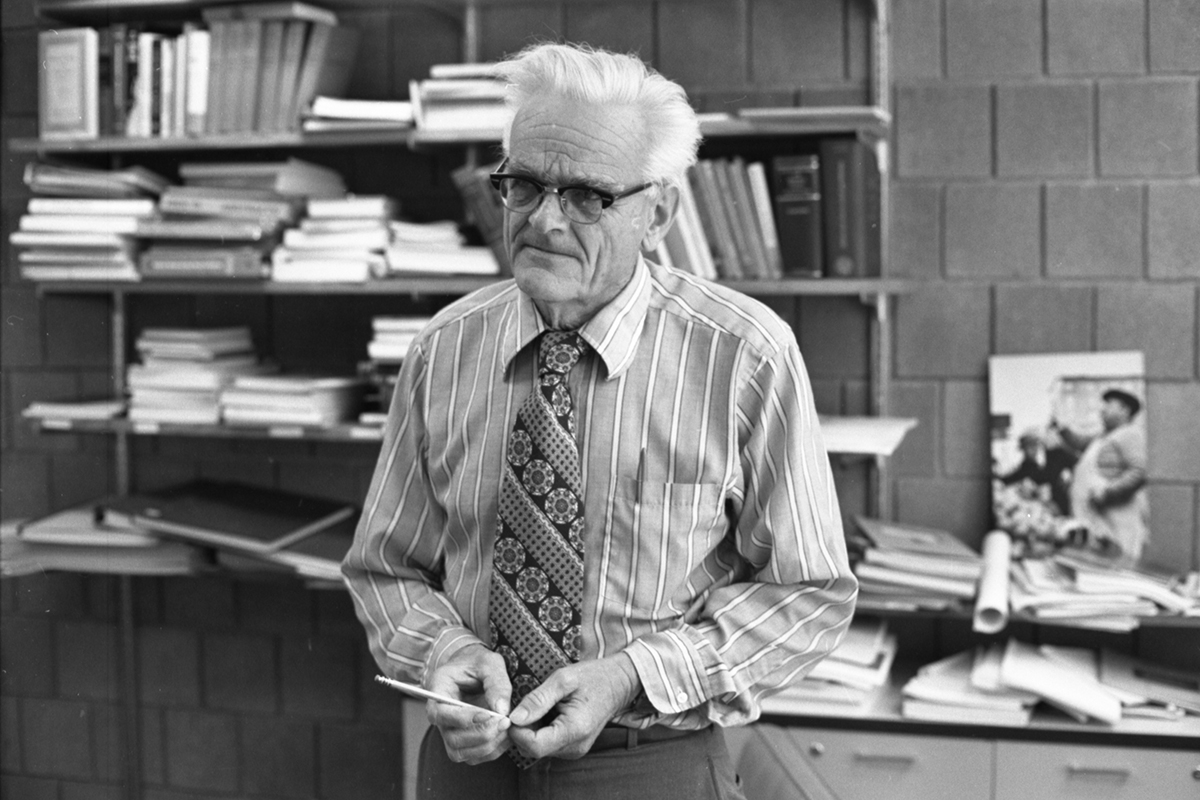
Clarence Melvin Zener, from Carnegie Mellon University Archives
.