Replica plating is a microbiological technique used to transfer colonies of microorganisms, such as bacteria or fungi, from one agar plate to another. This method is particularly valuable for studying genetic mutations, antibiotic resistance, or the effects of various environmental conditions on microbial growth. The basic procedure involves the following steps: 1. **Initial Culture:** A master plate is inoculated with microorganisms, allowing colonies to grow.
Articles by others on the same topic

Replica plating transfers samples from corresponding biological colonies or patches to several growth conditions while preserving their spatial arrangement. A master plate makes it possible to relate growth or failure at one location to the same source population on another plate.
The master preserves the source biological colonies; each replica tests a sample of their biological cells. A fabric carrier takes one spatial impression from the master and deposits samples onto fresh plates. Different cell culture medium formulations can then reveal different growth phenotypes at corresponding sites. The carrier copies locations, not a guaranteed number of biological cells. Replica plating spatial correspondence therefore lets an investigator connect a readout to a recoverable source without treating every empty replica site as a missing master biological colony.
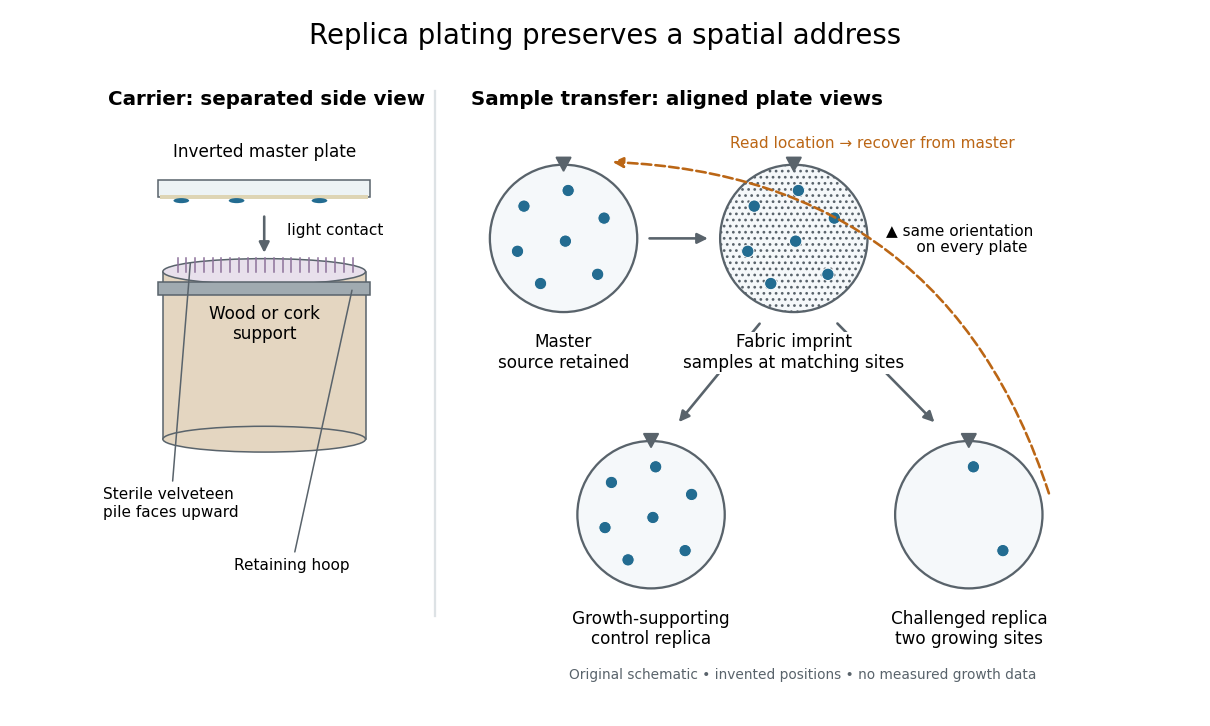

The useful trick is that a destructive or growth-restricting test can interrogate one sample while another remains available. In indirect selection of bacterial mutants, the replica supplies information about which source to recover. This also makes a failure-to-grow phenotype accessible: a missing replica biological colony cannot be picked, but its source may still be present on the master. Matching positions is the bridge between testing and retrieval.