
Harold W. Kuhn connected game theory with continuous and discrete optimization. His work with Albert W. Tucker supplied the1951 nonlinear-programming formulation behind the Karush-Kuhn-Tucker conditions, while his1955 Hungarian algorithm addressed the assignment problem. He also developed extensive-form games and the relation between mixed strategies and behavioral strategies.[ref]
https://www.princeton.edu/news/2014/07/05/harold-kuhn-princeton-mathematician-who-advanced-game-theory-dies-88. Princeton University obituary, research on nonlinear programming, extensive games and the1955 assignment paper
These contributions distinguish three mathematical questions: local constrained optimality, a discrete cost-minimizing assignment, and which randomized decisions can represent a player's information-dependent plan.Biography: www.princeton.edu/news/2014/07/05/harold-kuhn-princeton-mathematician-who-advanced-game-theory-dies-88
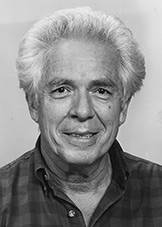
Portrait of Harold W. Kuhn
. Portrait identified on the Princeton University obituary. Image credit: Princeton University Office of Communications.
Harold W. Kuhn is an American mathematician known for his contributions to game theory and operations research. Born on August 24, 1925, he is perhaps best known for coining the term "Nash equilibrium" in the context of non-cooperative game theory, a concept that has had a significant impact on economics, social sciences, and military strategy.
New to topics? Read the docs here!