John William Strutt, 3rd Baron Rayleigh
ID: john-william-strutt-3rd-baron-rayleigh

A physicist whose research joined waves, optics, acoustics and precise measurement. He maintained a laboratory at Terling and served as Cavendish professor of experimental physics from 1879 to 1884. At Cambridge he developed laboratory courses; later he donated his Nobel award proceeds toward a Cavendish laboratory extension.[ref]
John William Strutt (Lord Rayleigh) by John Joseph O'Connor and Edmund Frederick Robertson. O'Connor and Robertson, biography: Terling laboratory; Cavendish professorship and laboratory courses; donation of Nobel proceeds
The Rayleigh-Ramsay argon density experiment, pursued with William Ramsay, connects a small discrepancy in gas weighing to chemical separation. Its lesson is practical: agreement within one preparation method does not ensure that a second method produces the same chemical substance. The gas density model explains how composition and filling conditions both affect the readout.
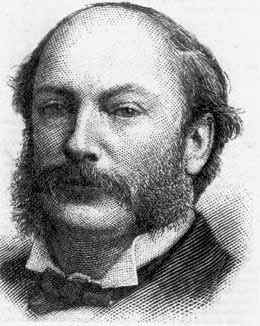
Lord Rayleigh, portrait from the MacTutor picture collection
. 
John William Strutt, 3rd Baron Rayleigh (1842–1919) was a prominent British physicist known for his significant contributions to the field of physics, particularly in the study of light and sound. He was a key figure in the development of various scientific principles, including those related to the scattering of light and the properties of gases. Strutt was born into an aristocratic family and was educated at Trinity College, Cambridge.
New to topics? Read the docs here!