The light cone through an event consists of null displacement vectors. In one spatial dimension its two directions satisfy .
The past light cone of an event consists of earlier events connected to it by past-directed null curves. A retarded field at the event depends on sources where their worldlines intersect this cone.
The speed of light is the invariant speed of every inertial frame and the limiting speed of causal propagation in special relativity.
Articles by others on the same topic

A light cone is a crucial concept in the theory of relativity, particularly in the context of spacetime. It helps illustrate how information and causal relationships are structured in the universe according to the speed of light.

The key insights that it gives are:
- future and past are well defined: every reference frame sees your future in your future cone, and your past in your past coneOtherwise causality could be violated, and then things would go really bad, you could tell your past self to tell your past self to tell your past self to do something.
- every other event (to right and left, known as spacelike-separated events) can be measured to happen before or after your current spacetime event by different observers.
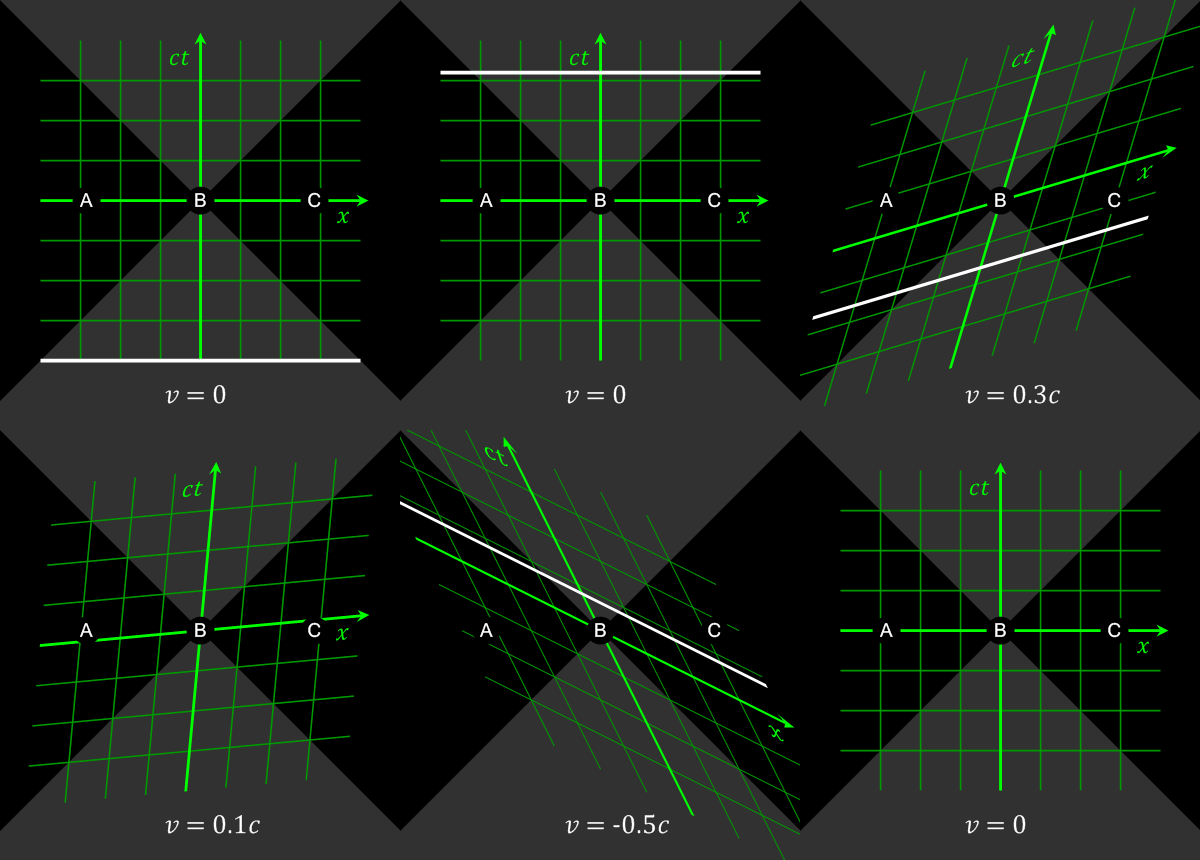
Animation showing how space-separated events can be observed to happen in different orders by observers in different frames of reference
. Source. 