Iain Mathieson is a population geneticist who studies human variation, demographic history and natural selection. His work combines modern and Ancient DNA to investigate how ancestry and selection shape observed variation. In Genome-wide patterns of selection in 230 ancient Eurasians by Iain Mathieson and others, changes across sampled past biological populations help separate historical allele-frequency patterns from a present-day snapshot. [ref]
https://mathii.github.io/. Personal research account: human population history, complex traits and selection

Iain Mathieson, institutional laboratory portrait
. Wolfgang Haak is a researcher in Ancient DNA and population genetics, studying the ancestry and movement of past human biological populations. Massive migration from the steppe was a source for Indo-European languages in Europe by Wolfgang Haak and others used genome-wide data to identify a major ancestry change in prehistoric Europe. Genetic ancestry provides evidence about biological population history, while the linguistic interpretation additionally depends on archaeological and linguistic context. [ref]
https://www.eva.mpg.de/de/archaeogenetics/staff/wolfgang-haak/. Institutional biography and research appointments
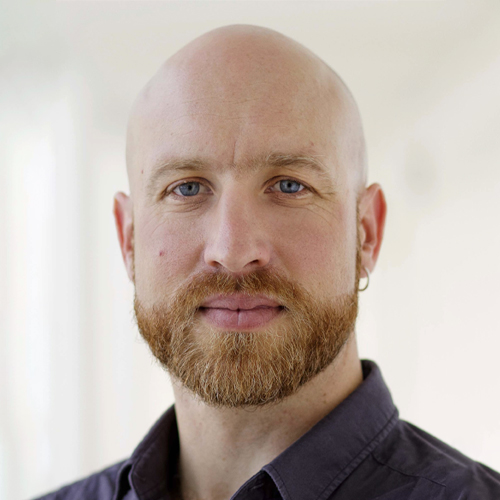
Wolfgang Haak, Max Planck Institute portrait
. Iosif Lazaridis is a population geneticist studying human history with Ancient DNA. Ancient human genomes suggest three ancestral populations for present-day Europeans by Iosif Lazaridis and others compared ancient and present-day genetic data to model distinct ancestry contributions. The result illustrates why a biological population’s history can require genetic admixture rather than a single branching tree. [ref]
https://reich.hms.harvard.edu/people/iosif-lazaridis. Institutional laboratory profile

Iosif Lazaridis, institutional laboratory portrait
. Aaron P. Ragsdale is a population geneticist who develops and applies models connecting demographic history to genetic variation. A weakly structured stem for human origins in Africa by Aaron P. Ragsdale and others evaluates histories with long-lived structure and continuing exchange rather than treating all ancestral biological populations as completely isolated branches. This connects mathematical model choice to the interpretation of human ancestry. [ref]
https://apragsdale.github.io/2_people.html. Laboratory biography: evolutionary and historical processes shaping variation
Richard E. Green is a researcher in genomics and human evolutionary genetics. He led A draft sequence of the Neandertal genome by Richard E. Green and others, which used ancient sequence data to investigate relationships between Neanderthals and present-day humans. His research also includes genome assembly and sequencing methods, connecting recovery of molecular information to inference about biological population history. [ref]
https://directory.ucsc.edu/cd_detail?guid=G016508286. UC Santa Cruz institutional profile, research interests
Luca Pagani is a researcher in molecular anthropology and human population genomics. His work uses present-day and Ancient DNA to investigate biological population history, interactions between modern and archaic humans, and variation within contemporary biological populations. Comparing alternative histories with genomic data helps distinguish shared ancestry from later gene flow. [ref]
Swapan Mallick is a researcher associated with human population genetics and genome-scale data resources. He is first author of The Simons Genome Diversity Project: 300 genomes from 142 diverse populations by Swapan Mallick and others, a resource for studying shared ancestry, biological population differences and demographic history. Sampling many biological populations increases the range of histories represented; it does not make the sample an exhaustive inventory of all human variation. [ref]
The Simons Genome Diversity Project: 300 genomes from 142 diverse populations by Swapan Mallick and others. 2016, project design, sequencing and population sampling
Articles by others on the same topic
There are currently no matching articles.