Michael Dopita modeled the physical processes producing emission from ionized astronomical gas. With David C. Nicholls and Ralph S. Sutherland, he investigated why different spectral lines can give discrepant electron temperatures and chemical abundances in H II regions and planetary nebulae.
Their proposed explanation changed the assumed electron kinetic energy distribution from a Maxwell-Boltzmann distribution to a Kappa distribution, which has a more populated high-energy tail. Because different atomic transitions sample different electron energies, this change affects their inferred temperatures differently. The paper presented a testable interpretation of the diagnostic discrepancy.[ref]
Resolving the electron temperature discrepancies in H II regions and planetary nebulae: kappa-distributed electrons by David C. Nicholls and others. Abstract: nebular temperature discrepancies and consequences of a kappa electron distribution
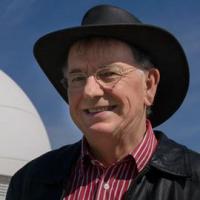
Portrait of Michael Dopita
. External portrait hosted by Australian Academy of Science. Source. Articles by others on the same topic

Michael Dopita is a prominent astrophysicist known for his work in the fields of extragalactic astronomy and spectral analysis of astronomical objects. He has contributed to our understanding of galaxies, star formation, and the interstellar medium, particularly through the study of emission-line spectroscopy. Dopita has published numerous scientific papers and has been involved in various research projects and collaborations within the astronomical community.