
Quantum computing certification Updated 2025-07-16
Tea-bagging Updated 2026-10-18
Peripheral interface Updated 2025-07-16
Open source advocacy entity Updated 2025-07-16
Bone Updated 2025-07-16
Bezos Academy Updated 2025-07-16
Bezos Academy is building a network of tuition-free, Montessori-inspired preschools in underserved communities.
Paraphyly Updated 2025-07-16
Alpha Investments Updated 2025-07-16
Very good channel that gives some idea of the behind the scenes of working with card stores and secondary market trading.
Such lessons can have applicability in business and investment outside of the Magic The Gathering context as well. Yet another example that usefulness can come out of uselessness.
The Process of Opening a MTG Store by Alpha Investments (2016)
Source. Machine learning YouTube channel Updated 2025-07-16
Two Minute Papers Updated 2025-07-16
The approach of this channel of exposing recent research papers is a "honking good idea" that should be taken to other areas beyond just machine learning. It takes a very direct stab at the missing link between basic and advanced!
The Dropout Updated 2025-07-16
It is good to watch the Out For blood in Silicon Valley (2019) documentary after this to see how the characters look like in real life. Many feel amazingly cast, very close to the original. The only great exception is the Indian dude, who is completely different. Was it that hard to find some indian dude who looked and felt a little more like the real one?
The Playlist Updated 2025-07-16
Great reports to how 2022-Ciro Santilli views how OurBigBook.com could go. Ciro can't help to feel that he is a mixture of both of the vision, tech and people guy. Not as extreme as any of them, but more like a well rounded (and less good individually) version of each. High flying bird vs gophers.
2014 Nobel Prize in Physiology and Medicine Updated 2025-07-16
2022 Nobel Prizes in Economics Updated 2025-07-16
Eclipse (IDE) Updated 2025-07-16
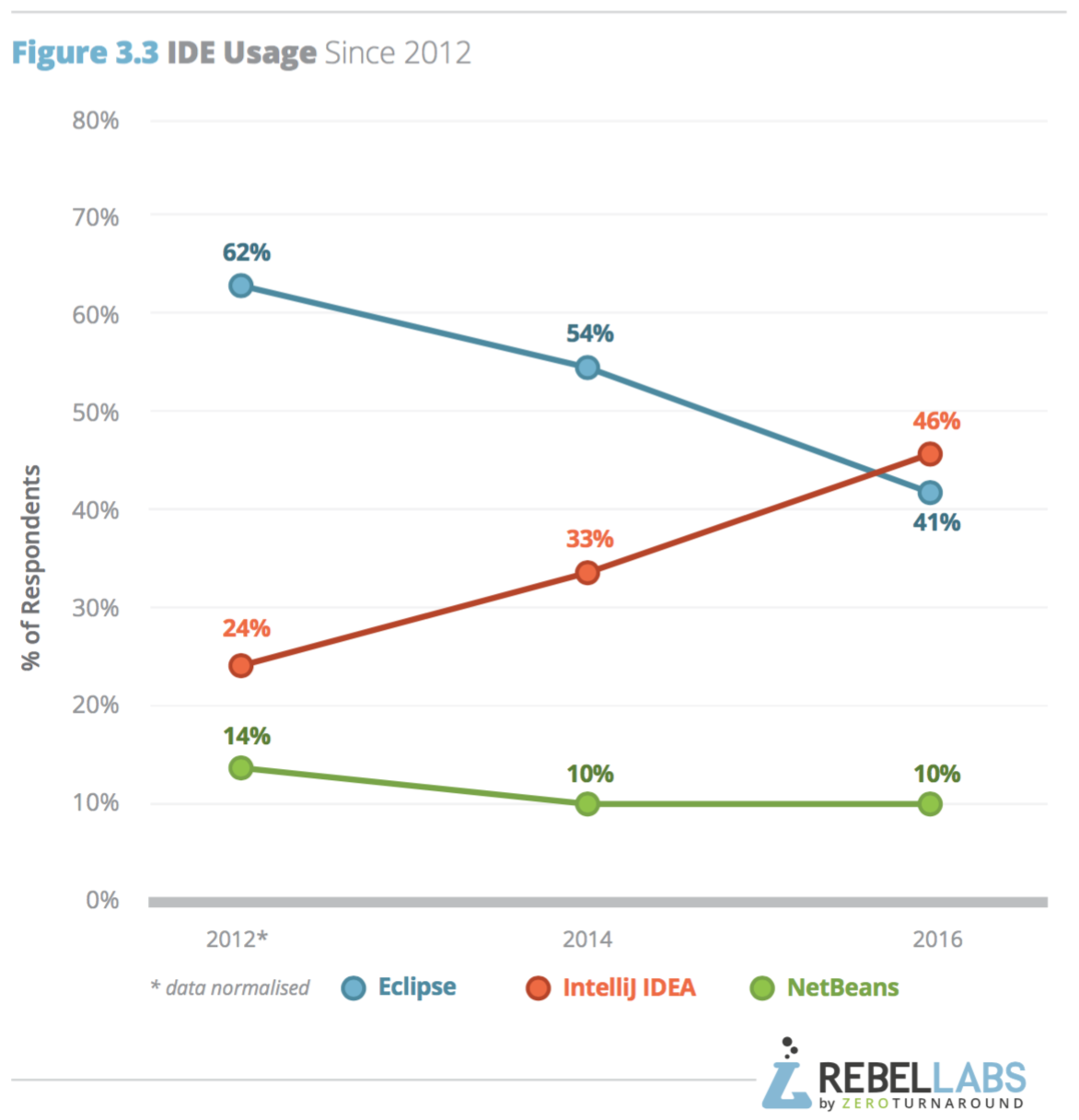
Once upon a time (early 2010's), Eclipse dominated the IDE landscape and all was good. NetBeans was around too. And Java was still unmarred by Google LLC v. Oracle America, Inc..
But then something happened.
And the project that had once been a vibrant community of awesomeness, started to become... a zombie of its former self.
Buggyness started increasing. And not even hard to fix bugs. One liners that affect every user immediately after startup.
Sometimes, to Eclipse's defense they weren't "bugs". Just features that it became evident with time every programmer expected from a modern IDE.
But somehow the Eclipse community had a deep problem. A cancer. It had completely lost touch with user experience.
Perhaps is was due to the increasing interest of the several corporations that had adopted Eclipse as the base IDE for the proprietary solutions?
Perhaps.
Many users stuck to the IDE.
Some heroic efforts were made as plugins that drastically improved certain defects. The Darkest Dark plugin comes to mind.
But all those efforts required configuration. A setup time that most users simply don't have. The core devteam had become dumb and dead, unable to incorporate such changes.
This greatly opened up the space for other competing IDEs to come along. The "semi feature complete but at least easy to use and not so buggy" Visual Studio Code and the proprietary JetBrains IDEs being some of the most notable ones.
Using Eclipse as of the early 2020's is such a mixed experience. If you spend enough time to configure out the key buggyness, there are moments where you can feel "OMG, this feature is amazing".
But the effort is just too great, and soon another bug or obvious missing feature hits you and brings you back to reality.
Every young person uses VS Code now. Eclipse is dead, and there is no way back, usage will just continue dropping.
Bibliography:
JetBrains Updated 2025-07-16
Very good television series Updated 2025-07-16
RPG Maker Updated 2025-07-16
Unity (game engine) Updated 2025-07-16
There are unlisted articles, also show them or only show them.