Moon Updated 2025-07-16
MySQL Updated 2025-07-16
Create user for further logins without sudo askubuntu.com/questions/915585/how-to-login-mysql-shell-when-mysql-have-no-password/1325689#1325689:
sudo mysql -e "CREATE USER $USER"
Create test user with password:
sudo mysql -e 'CREATE USER user0 IDENTIFIED WITH mysql_native_password BY "a"'
sudo mysql -e 'GRANT ALL PRIVILEGES ON database_name.* TO "user0"'
and login as that user:
mysql -u user0 -p
Login with password given on the command line:
mysql -u user0 -pmypassword
The IDENTIFIED WITH mysql_native_password part is to overcome "Client does not support authentication protocol requested by server" when connecting from Node.js.
List users:
sudo mysql -e 'SELECT * FROM mysql.user'
View permissions for each user on each DB: serverfault.com/questions/263868/how-to-know-all-the-users-that-can-access-a-database-mysql
sudo mysql -e 'SELECT * FROM mysql.db'
List databases:
sudo mysql -e 'SHOW DATABASES'
Create database:
sudo mysql -e 'CREATE DATABASE mydb0'
Destroy database:
sudo mysql -e 'DROP DATABASE mydb0'
Show tables in database:
sudo mysql -e 'SHOW TABLES' mydb0
or:
sudo mysql -e 'SHOW TABLES FROM mydb0'
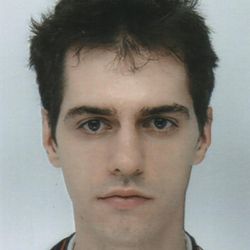
Neil Fernandez Updated 2025-07-16
“Especially my father. He was doing most of it and he is a savoury, strong character. He has strong beliefs about the world and in himself, and he was helping me a lot, even when I was at university as an undergraduate.”
An only child, Arran was born in 1995 in Glasgow, where his parents were studying at the time. His father has Spanish lineage, having a great grandfather who was a sailor who moved from Spain to St Vincent in the Carribean. A son later left the islands for the UK where he married an English woman. Arran’s mother is Norwegian.
“My father was writing and my mother is an economist. They both worked from home which also made things easier,” Arran says.
A bit like what Ciro Santilli feels about himself!
One of the articles says his father has a PhD. TODO where did he work? What's his PhD on? Photo: www.topfoto.co.uk/asset/1357880/
www.thetimes.co.uk/article/the-everyday-genius-pxsq5c50kt9:
Neil, a political economist, attended state and private schools in Hampshire but was also taught for a period at home by his mother.
It’s strange because for most people maths is a real turn-off, yet maths is all about patterns and children of two or three love patterns. It just shows that schools are doing something seriously wrong.”
Network switch Updated 2025-07-16
A switch is a box with a bunch of Ethernet wires coming into it:
+--------------------+
| +-+  +-+  +-+  +-+ |
| |1|  |2|  |3|  |4| |
| +-+  +-+  +-+  +-+ |
+--------------------+
Except that it doesn't have to be Ethernet, e.g. it would also be a Wi-Fi.
What the switch does is:
  • an Ethernet request came in from wire 1
  • decide which wire to send it out on, e.g. wire 2, 3, 4, 5, etc. You likely don't want to send it back through 1 where it came from.
After the destination is found, a confirmation is somehow sent back to the switch, which then learns which wire to send each MAC address to.
A switch is a bit like a router but it is a bit dumber/operates at a lower level: it basically operates only on MAC addresses, not on IP addresses.
The Internet service provider boxes most people have at home combines a switch for the local network and a router for the ISP communication.
Onion service Updated 2025-07-16
This is a way to host a server that actually hide the IP of the server from the client, just like Tor hides the IP of the client from the server. Amazing tecnology!
This is why it enables hosting illegal things like the Silk Road: law enforcement is not able find where the server is hosted, and take it down or identify the owner.
And of course, 4chan just takes that to a whole new level, usually closing on the same day, and then getting deleted within a week. Why would anyone contribute non-illegal content to that king of system?!
Ridiculous, so when new information comes out, we just duplicate all the old comments on a new thread again?
Remember, Ciro Santilli is the Necromancer God.
silkqin.com Updated 2025-07-16
John Thompson's Guqin website.
Holy crap amazing list of Guqin pieces by the guy for MP3 download! www.silkqin.com/06hear.htm And the explanations are insane. What a dude. Ciro Santilli's hero.
Download all MP3:
wget -r -np -l 1 -A mp3 http://www.silkqin.com/06hear.htm
Ciro Santilli Contacted John by email in 2019 telling him to put his stuff on YouTube and offering help, and he replied, but nothing came of it unfortunately. Edit: he uploaded a bunch of videos of him playing live in 2020! www.youtube.com/user/silkqin/videos
John focuses on playing the tunes in a "historically informed performance", in particular using silk strings rather than metal ones which are used by most modern artists: www.silkqin.com/08anal/hip.htm
Video 1.
Dialog between Fisherman and Woodcutter performed by John Thompson (2020)
Source.
OpenStreetMap Updated 2025-07-16
It is rare to find a project with such a ridiculously high importance over funding ratio.
E.g., as of 2020, their help login help.openstreetmap.org/ shows MyOpenID as an option, which was discontinued in 2014, and not Google OAuth.
They do still seem to have a bit more activity than gis.stackexchange.com/questions/tagged/openstreetmap on Stack Exchange.
Complaints:
All of this is a shame, because they do have some incredible data that you cannot find easily on other maps because people just edited it up.
Open University Updated 2025-07-16
Not really dedicated to open source course material, nor to free courses...
The "Open" in its name only made sense in the 60's, when it was founded, nowadays, there isn't much about this institution that is very different compared to traditional Oxbridge. "Cheap more online university" would be a more adequate name for it.
A system that would truly live up to the name "Open" in the year 2020 is the one described at the ideal university by Ciro Santilli.
Wikipedia even says that the initial focus was on broadcasting learning material on television and radio, so what happened to that now that we have an even more powerful on-demand tool called Internet!
They even created their own MOOC website, FutureLearn. But www.freecodecamp.org/news/massive-open-online-courses-started-out-completely-free-but-where-are-they-now-1dd1020f59/ mentions:
The course content is still free to access, but it’s only available for the duration of the course, and for two weeks after it ends.
OMG. God why.
A few open sources at: www.open.edu/openlearn/free-courses. The 5-hour course on particle physics says it all. Stated as of 2023 at www.open.ac.uk/about/open-educational-resources/openlearn/free-learning:
The OU provides around 5% of its formal course materials as free open educational content every year on OpenLearn
www.youtube.com/watch?v=Pj0rbafFBak What's an Open University Degree Like? by Luke Cutforth (2021) mentions that it is more autodidactic/online, and it encourages part time learning.
youtu.be/rsWwffX-u0A?t=99 Open University - How does it work? by Matt Greg Vlogs (2017) shows that they do have their own custom institutional material. And it is not open???? Please. youtu.be/rsWwffX-u0A?t=222 mentions that there is no entry exam, and you can change your courses at any time, that is good at least.
Israel apparently also created their own version in the 70's inspired by the British one: Open University of Israel. Same story it seems.
OurBigBook.com / Consulting Updated 2025-07-16
Start with consulting for universities to get some cash flowing.
Help teachers create perfect courses.
At the same time, develop the website, and use the generated content to bootstrap it.
Choose a domain of knowledge, generate perfect courses for it, and find all teachers of the domain in the world who are teaching that and help them out.
Then expand out to other domains.
TODO: which domain of knowledge should we go for? The more precise the better.
A list of reviews of such systems is maintained at:
This is the class of existing software the perhaps comes the closest to OurBigBook, in particular systems such as:
While we believe that OurBigBook can hold its own against most of them as a personal knowledge base, there is one feature which we believe truly distinguishes OurBigBook from all others in a big way: trustless mind meld with the OurBigBook topic feature, which no other system seems to have.
Many such systems are also no publishing focused enough, and are more focused only in maintaining people's private knowledge bases. Some of them don't even have publishing at all, or its complicated. While publishing is optional in OurBigBook, it is a crucial feature and extremely well supported.
OurBigBook.com / Knowledge market Updated 2025-07-16
If enough people use it, we could let people sell knowledge content through us.
Teachers have the incentive of making open source to get more students.
Students pay when they want help to learn something.
We take a cut of the transactions.
However this goes a bit against our "open content" ideal.
Forced sponsorware would be a possibility.
Would be a bit like Fiverr. Hmmm, maybe this is not a good thing ;-)
OurBigBook.com / Wikipedia Updated 2025-07-16
The first thing we did was to filter the water samples with a membrane filter that is so fine that not even bacteria can pass through, but water can.
Therefore, after filtration, we would have all particles such as bacteria and larger dirt pieces in the filter.
From the 1 liter in each bottle, we only used 400 ml because previous experiments showed that filtering the remaining 600 ml is very time consuming because the membrane filter gets clogged up.
Therefore, the filtration step allows us to reduce those 400 ml volumes to more manageable Eppendorf tube volumes: Figure 1. "An Eppendorf tube". Reagents are expensive, and lab bench centrifuges are small!
Figure 1. . Source. They are small, convenient and disposable.
Figure 2.
Labelled Eppendorf tubes on a rack
. Source.
Since the filter is so fine, filtering by gravity alone would take forever, and so we used a vacuum pump to speed thing up!
Figure 3.
Peeling the vacuum pump filter protection peel before usage
. Source.
Figure 4.
Placing the vacuum pump filter
. Source.
Video 1.
Pouring the water sample into the vacuum tube and turning on the vacuum pump
. Source.
After filtration, all DNA should present in the filter, so we cut the paper up with scissors and put the pieces into an Eppendorf: Video 1. "Cutting vacuum pump filter and placing it in Eppendorf".
Video 1.
Cutting vacuum pump filter and placing it in Eppendorf
. Source.
Now that we had the DNA in Eppendorfs, we were ready to continue the purification in a simpler and more standardized lab pipeline fashion.
First we added some small specialized beads and chemicals to the water and shook them Eppendorfs hard in a Scientific Industries Inc. Vortex-Genie 2 machine to break the cell and free the DNA.
Once that was done, we added several reagents which split the solution into two phases: one containing the DNA and the other not. We would then pipette the phase with the DNA out to the next Eppendorf, and continue the process.
In one step for example, the DNA was present as a white precipitate at the bottom of the tube, and we threw away the supernatant liquid: Figure 1. "White precipitate formed with Qiagen DNeasy PowerWater Kit".
Figure 1.
White precipitate formed with Qiagen DNeasy PowerWater Kit
. Source.
At various stages, centrifuging was also necessary. Much like the previous vacuum pump step, this adds extra gravity to speed up the separation of phases with different molecular masses.
In our case, we used a VWR Micro Star 17 microcentrifuge for those steps:
Figure 2.
VWR Micro Star 17 microcentrifuge.
Source.
Figure 3.
VWR Micro Star 17 microcentrifuge loading.
Source.
Then, when we had finally finished all the purification steps, we measured the quantity of DNA with a Biochrom SimpliNano spectrophotometer to check that the purification went well:
Figure 4.
Biochrom SimpliNano spectrophotometer loading sample.
Source.
Figure 5.
Biochrom SimpliNano spectrophotometer result readout.
Source.
And because the readings were good, we put it in our -20 C fridge to preserve it until the second day of the workshop and called it a day:
Figure 6.
Minus 20 fridge storing samples.
Source.
One cool thing we did in this procedure was to use magnetic separation with magnetic beads to further concentrate the DNA: Figure 1. "GE MagRack 6 pipetting.".
The beads are coated to stick to the DNA, which allows us to easily extract the DNA from the rest of the solution. This is cool, but bio people are borderline obsessed by those beads! Go figure!
Figure 1.
GE MagRack 6 pipetting.
Source.
Figure 2.
GE MagRack 6 eppendorf with magnetic beads mounted.
Source.
Here some of the steps required a bit more of vortexing for mixing the reagents, and for this we used the VELP Scientifica WIZARD IR Infrared Vortex Mixer which appears to be quicker to use and not as strong as the Vortex Genie 2 previously used to break up the cells:
Figure 3.
VELP Scientifica WIZARD IR Infrared Vortex Mixer running.
Source.
After all that was done, the DNA of the several 400 ml water bottles and hours of hard purification labour were contained in one single Eppendorf!
Path integral formulation Updated 2025-07-16
This one might actually be understandable! It is what Richard Feynman starts to explain at: Richard Feynman Quantum Electrodynamics Lecture at University of Auckland (1979).
The difficulty is then proving that the total probability remains at 1, and maybe causality is hard too.
The path integral formulation can be seen as a generalization of the double-slit experiment to infinitely many slits.
Feynman first stared working it out for non-relativistic quantum mechanics, with the relativistic goal in mind, and only later on he attained the relativistic goal.
TODO why intuitively did he take that approach? Likely is makes it easier to add special relativity.
This approach more directly suggests the idea that quantum particles take all possible paths.

There are unlisted articles, also show them or only show them.