Experiments, the techniques required to to them, and the history of how they were first achieved, are the heart of the natural sciences. Without them, there is no motivation, no beauty, no nothing.
School gives too much emphasis on the formulas. This is bad. Much more important is to understand how the experiments are done in greater detail.
The videos must be completely reproducible, indicating the exact model of every experimental element used, and how the experiment is setup.
We should strive to achieve the cheapest most reproducible setup possible with currently available materials: recreating the original historic setup is cute, but not a priority.
Furthermore, it is also desirable to reproduce the original setups whenever possible in addition to having the most convenient modern setup.
This project is to a large extent a political endeavour.
Someone with enough access to labs has to step up and make aname for themselves through the huge effort of creating a baseline of amazing content without yet being famous.
Until it reaches a point that this person is actively sought to create new material for others, and things snowball out of control. Maybe, if the Gods allow it, that person could be Ciro.
Ciro Santilli visited the teaching labs of a large European university in the early 2020's. They had a few large rooms filled with mostly ready to run versions of several key experiments, many/most from "modern physics", e.g. Stern-Gerlach experiment, Quantum Hall effect, etc.. These included booklets with detailed descriptions of how to operate the apparatus, what you'dexpect to see, and the theory behind them. With a fat copyright notice at the bottom. If only such universities aimed to actually serve the public for free rather than hoarding resources to get more tuition fees, university level education would already have been solved a long time ago!
One thing we can more or less easily do is to search for existing freely licensed videos and add them to the corresponding Wikipedia page where missing. This requires knowing how to search for freely licensed videos:
Theorems are strings, proofs are string manipulations, and axioms are the initial strings that you can use.
Once proved, press a button on your computer, and the proof is automatically verified. No messy complicated "group of savants" reading it for 4years and looking for flaws!
However, as expressed by the QED manifesto, is unbelievable that there isn't one awesome and dominating website, that hosts all those proofs, possibly an on the browser editor, and which all mathematicians in the world use as the one golden reference of mathematics to rule them all!
Just imagine the impact.
Standard library maintainers don't have to deal with the impossible question of what is "beautiful" or "useful" enough mathematics to deserve merged: users just push content to the online database, and star what they like!
We then just use GitHub-like namespaces for each person'stheorem, e.g. "cirosantilli/fundmaental-theorem-of-calculus" or "johndoe/fundmaental-theorem-of-calculus" so that each person owns their own preferred definition IDs, which others can reuse.
No more endless bikeshedding over what insane level of generality do your analysistheorems need to be (Ciro Santilli attended at talk about Lean where the speaker mentioned this was a problem)!
This would move things more out of the "pull request and Git tracked code" approach, into a more "database with entries" version of things.
Furthermore, it is just amatter of time until the "single standard library" approach starts to break down, as the git clone becomes impossibly large. At this point, people have to start publishing separate packages. And when this happens, you would need to retest every package that you add to your project. This is why acentralizeddatabase is just inevitable at some point, it just scales better.
Interested in aconjecture? No problem: just subscribe to its formal statement + all known equivalents, and get an email on your inbox when it gets proved!
Are you a garage mathematician and have managed to prove a hard theorem, but no "real" mathematician will read your proof because your unknown? Fuck that, just publish it on the system and let it get auto verified. Overnight fame awaits.
Notation incompatibility hell? A thing of the past, just automatically convert to your preferred representation.
Furthermore, it would not be too hard to achieve this system!
All we would need would be something analogous to a package registry like PyPI or NodeJS' registry.
Then, each person can publish packages containing proofs.
Packages can rely on other packages that contain pre-requisites definition or theorem.
Packages are just regular git repos, with some metadata. One notable metadata would be ahuman readable description of the theorems the package provides.
The package registry would then in addition to most package registries have a CIserver in it, that checks the correctness of all proofs, generates aweb-page showing each theorem.
All proofs can be conditional: the package registry simply shows clearly what axiom set atheorem is based on.
The Math Genome Project has very similar end goals. Apparently it will run proofs on server against the stdlib, but not allow one proof to depend on another, so in the end you still have to pull requesteverything back. Also there may be moderation forever, unclear. Ciro tried to create a dummy lolol theorem without any correct syntax and it just became private. Also apparently every single proof needs corresponding LaTeX manually written to be accepted. Cowards!
Pose any theorem and bots will try to prove it. If they fail, then it's an open question. People can collaborate to prove it or make partial progress, generalize it, use it as an axiom.
. Source. Only transistor count increases, which also pushes core counts up. But what you gonna do when atomic limits are reached? The separation between two siliconatoms is 0.23nm and 2019 technology is at 5nm scale.
The medical consequences of this revolution are still trickling down towards medical applications of 2019, inevitably, but somewhat slowly due to tight privacy control of medical records.
Ciro Santilli predicts that when the 100dollar mark is reached, every person of the First world will have their genome sequenced, and then medical applications will be closer at hand than ever.
But even 100dollars is not enough. Sequencing power is like computing power: humankind can never have enough. Sequencing is not a one per person thing. For example, as of 2019 tumors are already being sequenced to help understand and treat them, and scientists/doctors will sequenceas many tumor cellsas budget allows.
Just imagine this: at the comfort of your own garage, you take some model organism of interest, maybe start humble with Escherichia coli. Then you modify its DNA to your liking, and upload it to a 3D printer sized machine on your workbench, which automatically synthesizes the DNA, and injects into a bootstrapped cell.
Of course, even if we were able to do the bootstrap, the debugging process then becomes key, asvisibility is the key limitation of biology, maybe we need other cheap technologies to come in at that point.
This a place point we see the beauty of evolution the brightest: evolution does not require observability. But it also implies that if your changes to the organism make it less fit, then your mutation will also likely be lost. This has to be one of the considerations done when designing your organism.
How hard could it be? You just have to learn the encoding of the neural spine/eyes/ear, add an invasive device that multiplexes it, and then the benefits could be mind blowing.
Interestingly and obviously, the initial advances in the area are happening for people that have hearing or vision difficulties. Since they already have a deficient sense, you don't lose that much by a failed attempt.
Hearing is likely to be the first since it feels the simplest. Ciro heard there are even already clinical applications there. TODO source.
The project's mission is one of, or perhaps the most important, life objective of Ciro Santilli. Reproductive goals aside. These two types of goal are incommensurable. This is one of the great challenges of life.
This is ongoing project.
Ciro's goals in advertising this half done project are is partly to obtain some feedback, and partly to give the idea to someone else who might help push it further, be it in this stack or not.
But besides that, it is already in broad strokes the best approach Ciro Santilli can come up with to try and reach the mission statement only with technical advances, i.e. without large amounts of money or political influence which Ciro Santilli does not have.
Maybe that website isn't enough of a technical advance to reach its mission. Maybe there is some further not yet imagined technical insight that would push it into viability. Maybe not. But one must try. Only God can know the answer to these questions.
Then around 2021 he put in some more 1.5year of full time work, now with a possibly overly complicated (or perhaps just insane/immature) Next.js/Sequelize from scratch website stack.
It makes Ciro abit ashamed to see that "so little user visible stuff was achieved in so much time". It is partly because he and many people underestimate the difficulty of web development. Perhaps there were some bad stack/useless feature choices issues. And agood dose of indulging in studying the natural sciences to bootstrap content and have fun. But really trying is the only way to learn.
Terminal dump of a LKMC session with two tmux panes with QEMU on left and GDB on right showing a backtrace of the Linux kernelcode currently being under QEMU
answer important questions found through Google which he needs to solve an actual problem he has right now, and for which none of the existing answers satisfied him, and close duplicates.
monitor less known tags which very few people know a lot about and where the knowledge sharing desperately lacking, but in which Ciro specializes and therefore has some uncommon knowledge to share
In practice it also happens that Ciro:
Googles for his own answers to remember some detail he wrote down but with slightly different terms that were closer to mind at the time, and find other similar questions for which he has the perfect answer.
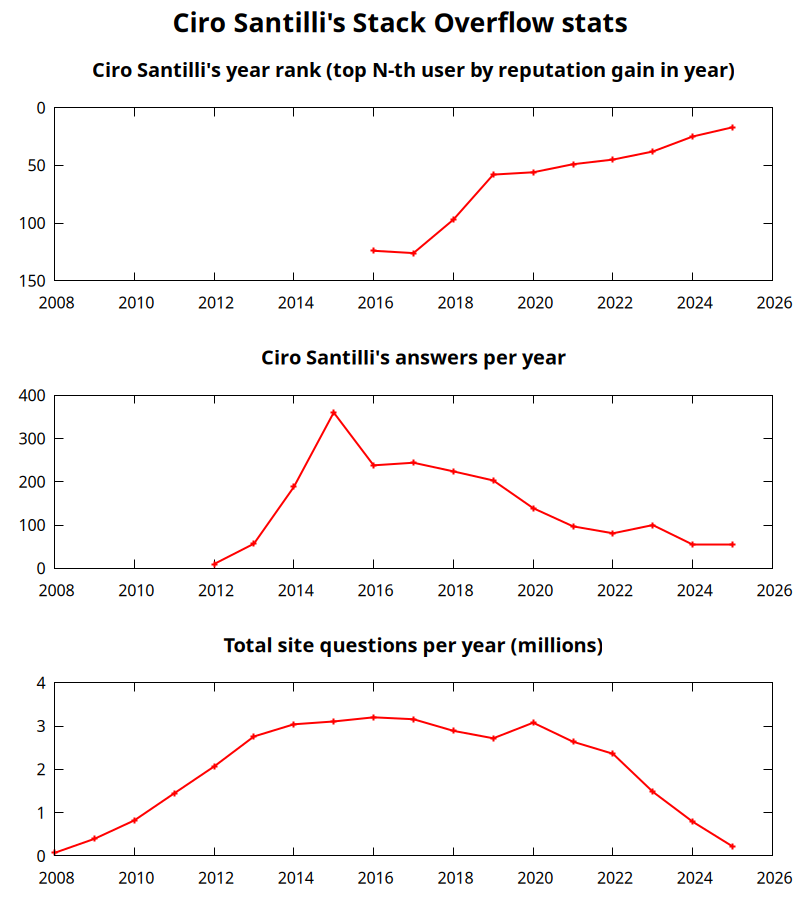
The result is that Ciro ends up getting relatively a lot of reputation without much work! The term passive income, much beloved by fake investment gurus, comes to mind. But now it's "passive reputation"! And it is useless! Yay!
The more patentsaresearch project generates, the less actually working products it produces.
and this does ring true in Stack Overflowas well. When you are answering stuff, it means that you either didn't know, or that the information wasn't well available, and so your specific application is progressing slowly because of that. Once the generic prerequisites are well solved and answered, you will spend much more time on your business specific things rather than anything else that can be factored out across projects, and so you will get more "directly useful work" done, and less Stack Overflow answers. Of course, without the prior research in place, you can't get the final product done either.
What happens on the specialized topics though is that you end up getting to know all the 5users who contribute 95% of the content pretty soon as you study those subjects.
There is great beauty when you are involved in a programming problem, and you suddenly remember: wait, I answered something related a few years ago! And especially so when you can go back and improve your old answer with new insight. This has great value, because when you were more newbie, you would have typed different words into Google Search than you would now. So by updating posts from when you were a newbie, you are helping other newbies more, as they are more likely to be also searching for those keywords. It is also very nice to have some head start on the answer's upvote count and not have to bootstrap yet another answer from 0 upvotes and have to go through all the competition!
Ciro tends to take most pride on his systems programming answers, which is a subject that truly relatively few people know about. He likes it when he goes insanely deep into a subject, way beyond what OP had in mind, exposing full root causes and broader causes, see e.g.:
Ciro's deep understanding of Stack Overflow mechanisms and its shortcomings also helped shape his ideas for: OurBigBook.com. So it is abit funny to think that after all time Ciro spent on the website, he actually wants to destroy it and replace it with something better. There can be no innovation without some damage. It also led to Ciro's creation of Stack Overflow Vote Fraud Script.
After answering so many questions, he ended up converging to a more or less consistent style, which he formalized at:
Like any other style guide, this answer style guide, once fully incorporated and memorized, allows Ciro to write answers faster, without thinking about formatting issues.
When he started contributing, Ciro was still a newbie. One early event he will never forget was when someone mentioned a "man page", and Ciro commented saying that there was a typo!
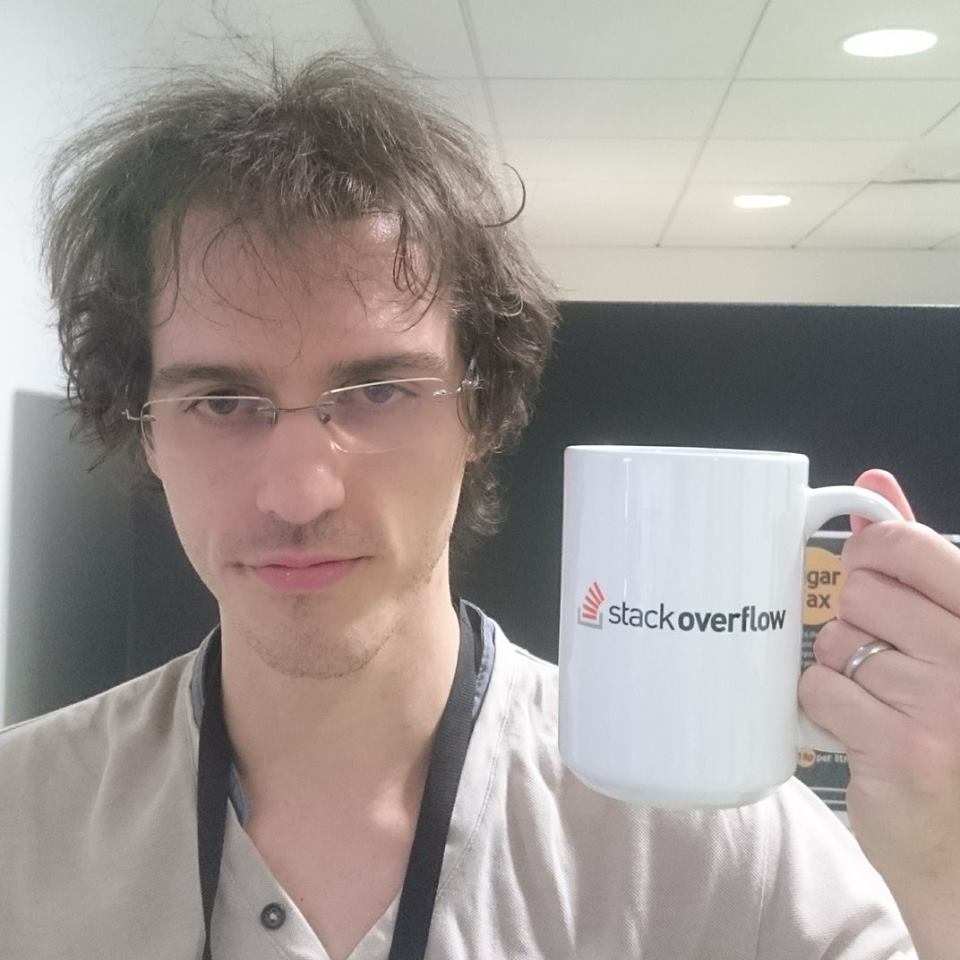
When Ciro reached 15 points and gained the ability to upvote, it felt like a major milestone, he even took a screenshot of the browser! 1k, 10k and 100k were also particularly exciting. When the 100k cup (archive) arrived in 2018, Ciro made a show-off Facebook post (archive). At some point though, your brain stops caring, and automatically filters out any upvotes you get except on the answers that you are really proud of and which don't yet have lots of upvotes. The last remaining useless gamed achievement that Ciro looked forward to was legendary (archive), and which he achieved on 2021-02-16.
It feels especially amazing when people in the real world start taking note of you, and either close friends tell you straight out that you're aStack OverflowGod, or as you slowly and indirectly find out that less close know or came to you due to your amazing contributions.
It is also amazing when you start having a repertoire of answers, and as you are writinga new answer, you remember: "hey, the knowledge of that answer would be so welcome here", and so you link to the other answer as well at the perfect point. This somewhat achieves does what OurBigBook.com aims to do: for each small section of a tutorial, gather the best answers by multiple people.
Another one is Aaron Hall, who is also very high on the necromancer list, answers in Python which is a topic Ciro cares about, and states on his profile:
Follow me on Twitter and tell me what canonical questions you would like me to respond to!
so another necromancer.
Way to go.
Ciro also asks some questions on aratio of about 1 question per 10 answers. But Ciro's questions tend to be about extremely niche that no one knows/cares about, and a high percentage of them ends up getting self answered either at asking time or after later research.
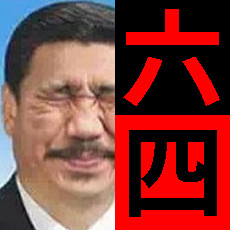
This was one of the profile pictures that Ciro Santilli used as part of his campaign.
Ciro later went on to prefer the "unmodified" Xi Jinping photo cover of some edition Xi Jinping Though, which also reminds Ciro very much of religious devotional pictures, e.g. those of Li Hongzhi.
Ciro understood that the best propaganda against a dictatorial enemy is recontextualized unmodified propaganda produced by the enemy itself. Their propaganda speaks for itself
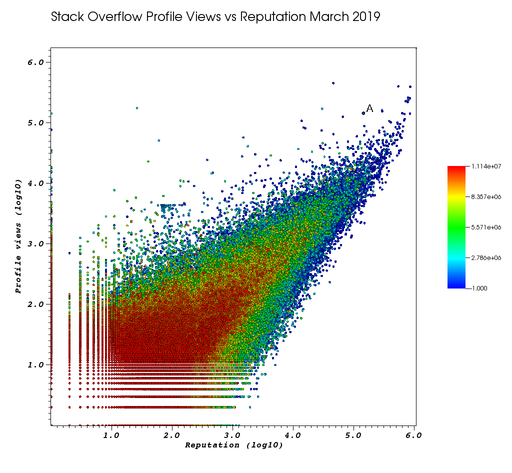
Ciro feels that the view count started increasing more slowly since 2020 compared to his reputation, likely every single Chinese user has already viewed the profile.
GitLab sent Ciro afree swag bottle later after they got funding on to thank him for his contributions: Figure 1. "Ciro Santilli in adune lake in Jericoacoara, Brazil, with his GitLab bottle". He had to pay for the beach trip though.
Vim: sometimes Ciro want crazy and wasted his time with Vimscript:
Vim Markdown: the owner plasticboy was really nice and made Ciro a collaborator for his contributions, notably a live ToC outline and the header mappings