Owen Willans Richardson (1879–1959) was a British physicist known for his pioneering work in thermionic emission, which refers to the release of electrons from a heated material. He was awarded the Nobel Prize in Physics in 1928 for his contributions to the understanding of the phenomenon.
Articles by others on the same topic

Owen Willans Richardson studied thermionic emission, the release of electrons from a heated surface. In the ideal Richardson form, the emitted current density is , where is a work function, is temperature and is an appropriate prefactor. A plot of against has slope under the model's surface and collection assumptions. This turns a strong temperature dependence into a way to infer the electronic escape barrier.[ref]
Thermionic Phenomena and the Laws which Govern Them by Owen Willans Richardson. Nobel lecture: temperature dependence and electron-emission laws
Physics.[ref]
https://makingscience.royalsociety.org/people/na7014/owen-willans-richardson. Independent professional profile
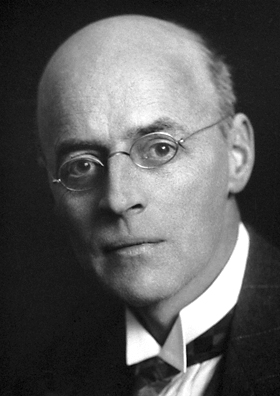
Portrait of Owen Willans Richardson
. Source. 