Topics (206k) Articles (211k) Users (302) Discussions (237) Comments (383) Files (716) New article


Affiliation: Massachusetts Institute of Technology.
Doctoral advisor: Murray Gell-Mann.
A charismatic, perfect-English-accent (Received Pronunciation) physicist from University of Cambridge, specializing in quantum field theory.
He has done several "vulgarization" lectures, some of which could be better called undergrad appetizers rather, a notable example being Video "Quantum Fields: The Real Building Blocks of the Universe by David Tong (2017)" for the prestigious Royal Institution, but remains a hardcore researcher: scholar.google.com/citations?hl=en&user=felFiY4AAAAJ&view_op=list_works&sortby=pubdate. Lots of open access publications BTW, so kudos.
The amount of lecture notes on his website looks really impressive: www.damtp.cam.ac.uk/user/tong/teaching.html, he looks like a good educator.
David has also shown some interest in applications of high energy mathematical ideas to condensed matter, e.g. links between the renormalization group and phase transition phenomena. TODO there was a YouTube video about that, find it and link here.
Ciro Santilli wonders if his family is of East Asian, origin and if he can still speak any east asian languages. "Tong" is of course a transcription of several major Chinese surnames and from looks he could be mixed blood, but as mentioned at www.ancestry.co.uk/name-origin?surname=tong it can also be an English "metonymic occupational name for a maker or user of tongs". After staring at his picture for a while Ciro is going with the maker of tongs theory initially.
www.youtube.com/playlist?list=PLVV0r6CmEsFw1phnddYWXtVkRW8eUVlqx Edward Teller interview by Web of Stories (1996) Date shown at: www.webofstories.com/play/edward.teller/1. Listener: John H. Nuckolls
Edward Teller, An Early Time
. Source. Comissioned by the Los Alamos National Laboratory in 1979. Producer: Mario Balibreraa.- youtu.be/Goim-4MF_uE?t=338; holy fuck he almost cut his foot off on a stupid tram accident!
- youtu.be/Goim-4MF_uE?t=457: he plays the piano
- youtu.be/Goim-4MF_uE?t=965: he drove Szilard to propose to Einstein the Einstein-Szilard letter
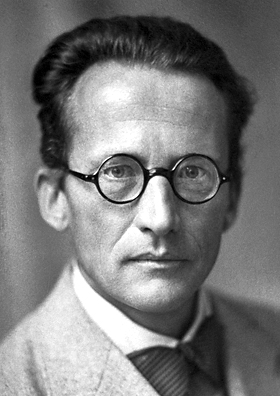
Died of cancer at age 53. Ciro Santilli just can't help but speculate that it is linked to radioactivity exposure.

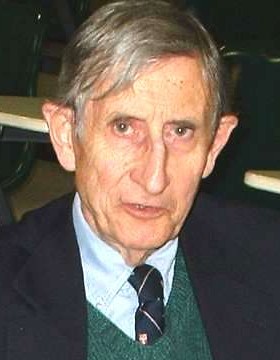
Ciro Santilli's admiration for Dyson goes beyond his "unify all the things approach", which Ciro loves, but also extends to the way he talks and the things he says. Dyson is one of Ciro's favorite physicist.
Besides this, he was also very idealistic compassionate, and supported a peaceful resolution until World War II with United Kingdom was basically inevitable. Note that this was a strategic mistake.
Dyson is "hawk nosed" as mentioned in Genius: Richard Feynman and Modern Physics by James Gleick (1994) chapter "Dyson". But he wasn't when he was young, see e.g. i2.wp.com/www.brainpickings.org/wp-content/uploads/2016/03/freemandyson_child-1.jpg?resize=768%2C1064&ssl=1 It seems that his nose just never stopped growing after puberty.
He also has some fun stories, like him practicing night climbing while at Cambridge University, and having walked from Cambridge to London (~86km!) in a day with his wheelchair bound friend.
Ciro Santilli feels that the label child prodigy applies even more so to him than to Feynman and Julian Schwinger.
Bibliography:
- QED and the men who made it: Dyson, Feynman, Schwinger, and Tomonaga by Silvan Schweber (1994) chapter 9 Freeman Dyson and the Structure of Quantum Field Theory
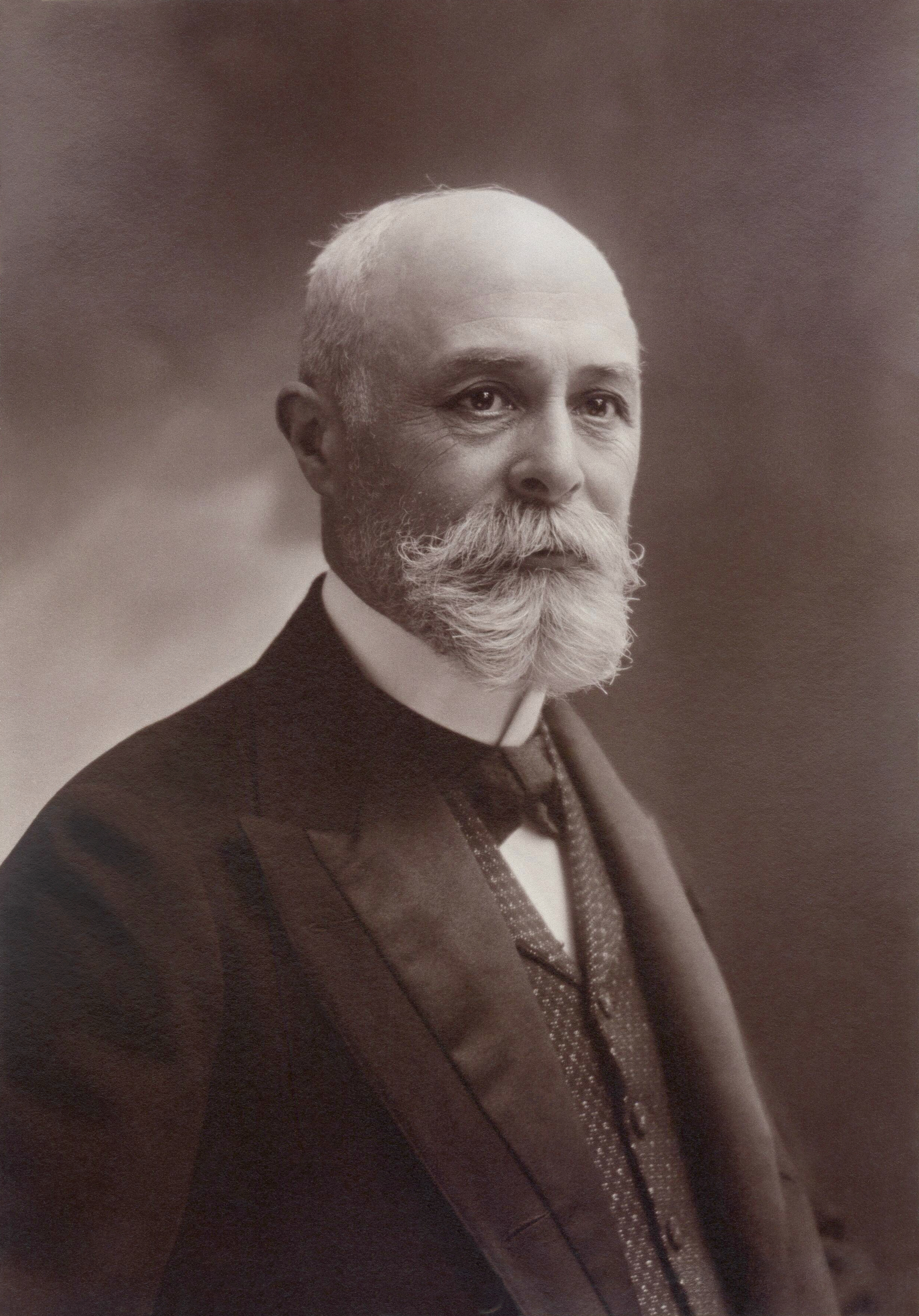
Richard Feynman was working under him there, and was promoted to team lead by him because Richard impressed Hans.
He was also the person under which Freeman Dyson was originally under when he moved from the United Kingdom to the United States.
And Hans also impressed Feynman, both were problem solvers, and liked solving mental arithmetic and numerical analysis.
This relationship is what brought Feynman to Cornell University after World War II, Hans' institution, which is where Feynman did the main part of his Nobel prize winning work on quantum electrodynamics.
Pinned article: Introduction to the OurBigBook Project
Welcome to the OurBigBook Project! Our goal is to create the perfect publishing platform for STEM subjects, and get university-level students to write the best free STEM tutorials ever.
Everyone is welcome to create an account and play with the site: ourbigbook.com/go/register. We belive that students themselves can write amazing tutorials, but teachers are welcome too. You can write about anything you want, it doesn't have to be STEM or even educational. Silly test content is very welcome and you won't be penalized in any way. Just keep it legal!
Intro to OurBigBook
. Source. We have two killer features:
- topics: topics group articles by different users with the same title, e.g. here is the topic for the "Fundamental Theorem of Calculus" ourbigbook.com/go/topic/fundamental-theorem-of-calculusArticles of different users are sorted by upvote within each article page. This feature is a bit like:
- a Wikipedia where each user can have their own version of each article
- a Q&A website like Stack Overflow, where multiple people can give their views on a given topic, and the best ones are sorted by upvote. Except you don't need to wait for someone to ask first, and any topic goes, no matter how narrow or broad
This feature makes it possible for readers to find better explanations of any topic created by other writers. And it allows writers to create an explanation in a place that readers might actually find it.
Figure 1. Screenshot of the "Derivative" topic page. View it live at: ourbigbook.com/go/topic/derivativeVideo 2. OurBigBook Web topics demo. Source. - local editing: you can store all your personal knowledge base content locally in a plaintext markup format that can be edited locally and published either:This way you can be sure that even if OurBigBook.com were to go down one day (which we have no plans to do as it is quite cheap to host!), your content will still be perfectly readable as a static site.
- to OurBigBook.com to get awesome multi-user features like topics and likes
- as HTML files to a static website, which you can host yourself for free on many external providers like GitHub Pages, and remain in full control

Figure 2. You can publish local OurBigBook lightweight markup files to either OurBigBook.com or as a static website.
Figure 3. Visual Studio Code extension installation.
Figure 5. . You can also edit articles on the Web editor without installing anything locally. Video 3. Edit locally and publish demo. Source. This shows editing OurBigBook Markup and publishing it using the Visual Studio Code extension. 
- Infinitely deep tables of contents:




All our software is open source and hosted at: github.com/ourbigbook/ourbigbook
Further documentation can be found at: docs.ourbigbook.com
Feel free to reach our to us for any help or suggestions: docs.ourbigbook.com/#contact