Topics (384k) Articles (398k) Users (410) Discussions (242) Comments (383) Files (13k) New article


Portrait of Earl Babbie
. Babbie, 6 February 2016. CC BY-SA 4.0, via Wikimedia Commons. Source.Researcher whose work includes Stigma: notes on the management of spoiled identity by Erving Goffman.

Portrait of Erving Goffman
. Photographer not identified in the Commons record. Source file identifies Erving Goffman at high school in Winnipeg, circa 1940. Source.Research contributions include the primary work cited below.[ref]
https://www.kent.ac.uk/school-of-social-sciences/people/1419/milton-damian. Identity and authorship record
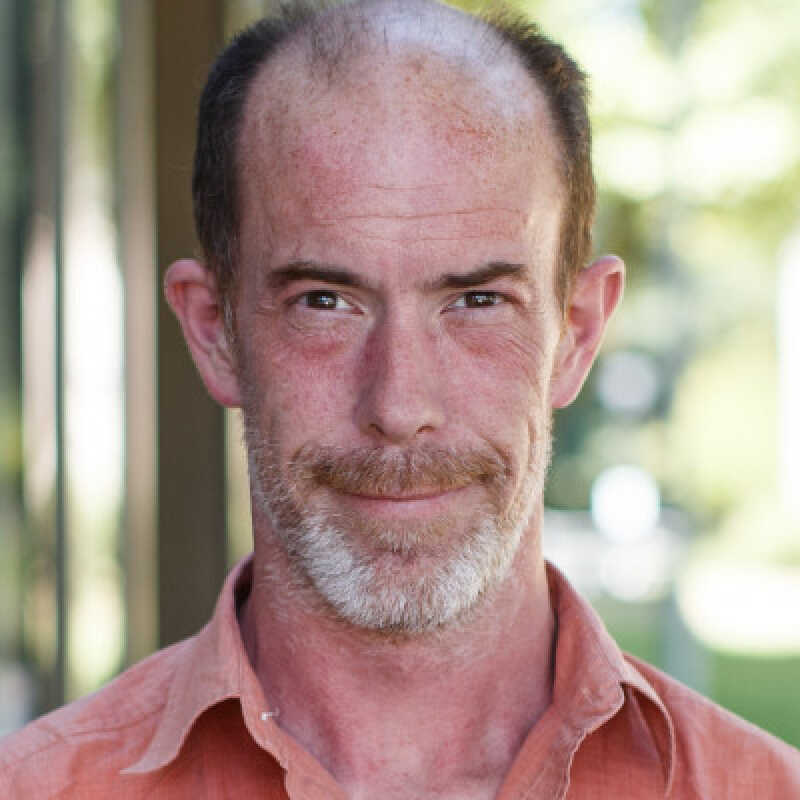
Portrait of Damian Milton
. External institutional portrait identifying Dr Damian Milton on the University of Kent staff page. This image is hosted by Kent, not Wikimedia; photographer and licence are not asserted. Source.Edward E. Jones studied social attribution, including how observers infer a writer’s attitudes from an essay. Comparing assigned and freely chosen positions tests whether observers account for constraints on the writer. The design separates information about the expressed position from information about the freedom to select it. [ref]
The attribution of attitudes by Edward E. Jones and others. 1967, assigned versus chosen essay conditions
A social psychologist who tested how cognitive load affects social attribution. Experiments required observers to judge another person while occupied with an additional task. Their results motivated a distinction between forming an initial characterization and correcting it for situational constraints: an explanation may depend on the processing resources available to the observer.[ref]

Portrait of Daniel T. Gilbert
. Daniel Gilbert; CC BY-SA 4.0. Source.A researcher who studied cultural variation in social attribution. Comparisons of American and Chinese explanations used both animated physical events and accounts of social events. The work asks how explanatory habits favor properties of an individual or features of a situation, rather than attributing every judgment to a fixed personal disposition.[ref]
A researcher who investigated cross-cultural recognition of facial expressions. His 1971 study tested how participants in New Guinea matched photographs to emotion-eliciting stories. Agreement across populations supports some shared expression–situation mappings, while the story and photograph choices define what the task can establish about everyday emotion recognition.[ref]
Constants across cultures in the face and emotion by Paul Ekman and others. 1971, story-to-photograph task

Portrait of Paul Ekman
. Paul Ekman Group, LLC; CC BY-SA 3.0. Source.A researcher in facial expression who compared spontaneous expressions of blind and sighted athletes. Including people blind from birth tests whether visually observing other people’s faces is necessary for the expressions studied. Similarities across groups inform the role of visual learning without implying that social context never modifies emotional displays.[ref]
Spontaneous facial expressions of emotion of congenitally and noncongenitally blind individuals by David Matsumoto and others. 2009, methods and results, blind and sighted athletes

Portrait of David Matsumoto
. External portrait hosted by San Francisco State University. Source.Rachael E. Jack studied facial expression and cross-cultural emotion recognition using generated facial movements and reverse correlation. Reconstructing which visual features observers use tests the assumed correspondence between an emotion label and a face. Cross-cultural differences challenge a universal mapping without implying that no facial information is shared. [ref]
Facial expressions of emotion are not culturally universal by Rachael E. Jack and others. 2012, Figures 1–3, generated stimuli and reverse correlation
A researcher who investigated how childhood viewing of television violence predicts later aggression. A longitudinal study followed childhood measures into young adulthood and examined alternative explanatory covariates. Such a design establishes temporal ordering, while interpretation of the relationship still requires attention to confounding and how viewing and behavior were measured.[ref]
A researcher who tested associations between violent video game engagement and adolescent aggression using a registered report. The study paired adolescents’ game reports with carers’ reports of behavior and specified confirmatory analyses in advance. Its null result concerns the sampled association and measures, rather than establishing that every possible gaming effect is absent.[ref]

Portrait of Andrew K. Przybylski
. Marinna; CC BY-SA 4.0. Source.A researcher who synthesized longitudinal studies of violent video game play and subsequent physical aggression. The 2018 meta-analysis combined 24 prospective studies and compared models adjusting for initial aggression and additional covariates. The work illustrates how conclusions about change depend on baseline adjustment and remaining confounding.[ref]
Metaanalysis of the relationship between violent video game play and physical aggression over time by Anna T. Prescott and others. 2018, prospective-study selection and adjusted models
A researcher who examined claims connecting violent video games with later aggression. A 2020 meta-analysis of longitudinal studies evaluated pooled associations alongside study quality. This approach asks how methodological choices affect the estimated relationship and distinguishes longitudinal prediction from a demonstrated causal effect.[ref]
Samuel L. Gaertner studied intergroup bias and the common ingroup identity model. Comparing representations of one group, two groups or separate individuals tests how group boundaries influence evaluation. The manipulation concerns how people categorize a situation, rather than assuming that changing a group label removes every source of prejudice. [ref]
John F. Dovidio studied how recategorization changes responses to members of another group. Experiments varied whether participants represented two small groups as a more inclusive group and measured evaluations, disclosure and helping. Comparing several outcomes tests whether a change in verbal evaluation also extends to behavior. [ref]
Extending the benefits of recategorization: evaluations, self-disclosure, and helping by John F. Dovidio and others. 1997, inclusive-group manipulation and behavioral outcomes
A social psychologist who compared approaches to reducing prejudice through group identity. Experiments manipulated the salience of subgroup differences and an overarching common identity. This allows tests of whether recognizing distinct subgroup identities within a shared group changes intergroup bias, rather than assuming that all subgroup distinctions must disappear.[ref]
Thomas F. Pettigrew studied intergroup contact and prejudice. His meta-analysis compared evidence across studies rather than relying on one contact setting. Examining conditions and generalization helps distinguish an average association from a claim that every possible encounter reduces prejudice. [ref]
A meta-analytic test of intergroup contact theory by Thomas F. Pettigrew and others. 2006, meta-analysis of 515 studies and contact conditions
David Dunning studies social judgment and self-evaluation. With Justin Kruger, he compared actual task scores with people’s estimates of their own performance in the original Dunning-Kruger effect study. The comparison separates measured ability, confidence and relative-rank judgments, making calibration a question for evidence rather than a conclusion from confidence alone. [ref]
Unskilled and Unaware of It by Justin Kruger and David Dunning. 1999, performance and self-assessment studies

Portrait of David Dunning
. External portrait hosted by University of Michigan, Department of Psychology. Source.Justin Kruger is a social psychologist who coauthored the original study associated with the Dunning-Kruger effect. Participants completed tasks and estimated their performance, allowing actual scores and self-assessments to be compared. Interpreting a grouped confidence-accuracy pattern requires separating an account about metacognition from effects of noisy measurement and selection on observed scores; the published pattern alone does not identify one exclusive mechanism. [ref]
Unskilled and Unaware of It by Justin Kruger and David Dunning. 1999, four studies comparing task performance and self-assessment
Pinned article: Introduction to the OurBigBook Project
Welcome to the OurBigBook Project! Our goal is to create the perfect publishing platform for STEM subjects, and get university-level students to write the best free STEM tutorials ever.
Everyone is welcome to create an account and play with the site: ourbigbook.com/go/register. We belive that students themselves can write amazing tutorials, but teachers are welcome too. You can write about anything you want, it doesn't have to be STEM or even educational. Silly test content is very welcome and you won't be penalized in any way. Just keep it legal!
Intro to OurBigBook
. Source. We have two killer features:
- topics: topics group articles by different users with the same title, e.g. here is the topic for the "Fundamental Theorem of Calculus" ourbigbook.com/go/topic/fundamental-theorem-of-calculusArticles of different users are sorted by upvote within each article page. This feature is a bit like:
- a Wikipedia where each user can have their own version of each article
- a Q&A website like Stack Overflow, where multiple people can give their views on a given topic, and the best ones are sorted by upvote. Except you don't need to wait for someone to ask first, and any topic goes, no matter how narrow or broad
This feature makes it possible for readers to find better explanations of any topic created by other writers. And it allows writers to create an explanation in a place that readers might actually find it.
Figure 1. Screenshot of the "Derivative" topic page. View it live at: ourbigbook.com/go/topic/derivativeVideo 2. OurBigBook Web topics demo. Source. - local editing: you can store all your personal knowledge base content locally in a plaintext markup format that can be edited locally and published either:This way you can be sure that even if OurBigBook.com were to go down one day (which we have no plans to do as it is quite cheap to host!), your content will still be perfectly readable as a static site.
- to OurBigBook.com to get awesome multi-user features like topics and likes
- as HTML files to a static website, which you can host yourself for free on many external providers like GitHub Pages, and remain in full control

Figure 2. You can publish local OurBigBook lightweight markup files to either OurBigBook.com or as a static website.
Figure 3. Visual Studio Code extension installation.
Figure 5. . You can also edit articles on the Web editor without installing anything locally. Video 3. Edit locally and publish demo. Source. This shows editing OurBigBook Markup and publishing it using the Visual Studio Code extension. 
- Infinitely deep tables of contents:




All our software is open source and hosted at: github.com/ourbigbook/ourbigbook
Further documentation can be found at: docs.ourbigbook.com
Feel free to reach our to us for any help or suggestions: docs.ourbigbook.com/#contact