Topics (384k) Articles (398k) Users (410) Discussions (242) Comments (383) Files (13k) New article

For a prime ideal , suppose the kernel of a ring homomorphism is a finitely generated ideal, say . Choose killing and let . Then and . If a fraction maps to zero in , then , so and the fraction was already zero in . Thus the canonical ring homomorphism is injective. The empty product handles . Every Noetherian ring satisfies the finite generation hypothesis.
The localization of a ring at the powers of is generated over by . The presentation follows from the universal property of localization: both sides universally receive a ring homomorphism from making invertible. This proof works with zero divisors and includes the zero ring when is nilpotent. In particular, a principal open subscheme of an affine scheme has an inclusion which is a morphism of finite type.
A local search method that retains one current candidate and repeatedly chooses an improving neighbor of its objective. For a conflict-minimization constraint satisfaction problem, a candidate can assign all variables within their constraint domains while violating some inter-variable constraints; the objective counts those violations. Zero conflicts certifies a solution, while a positive-conflict local minimum need not certify impossibility. Plateaus and local minima motivate sideways moves, randomized choices and restarting. Prescribed variables must remain fixed in every initialization and move.
A local minimizer is a point of the domain of a function at which that function attains a local minimum: some neighbourhood of satisfies for all . The point and the attained value are different objects. Every global minimizer is a local minimizer, but the converse need not hold.
The mechanically strong oceanic plate, including oceanic crust and underlying lithospheric mantle.
The mantle portion of the mechanically defined lithosphere, distinct from the overlying crust and underlying weak asthenosphere.
The portion of a planetary outer shell capable of supporting loads elastically on a specified timescale. Its effective elastic thickness need not equal the full thermal thickness.
The transition between strong lithosphere and weak asthenosphere. A thermal definition uses the temperature structure; a mechanical definition uses long-term strength or viscosity; a seismic definition uses wave properties. These depths need not coincide. Neither the Moho nor every sharp upper-mantle reflector is necessarily a lithosphere-asthenosphere boundary.
A seismically inferred transition associated with the base of the lithosphere, often identified by a decrease in shear-wave velocity. Its depth and sharpness constrain combinations of temperature, composition, hydration, melt fraction and seismic anisotropy. A sharp discontinuity inside a craton can instead lie within its thick lithospheric mantle.[ref]
A global view of the lithosphere-asthenosphere boundary by Catherine A. Rychert and Peter M. Shearer. Abstract and pp. 495–498, distinction between a sharp imaged interface and the possibly deeper cratonic boundary.
Thermal or chemical modification that changes an older lithosphere's properties, potentially reducing its strength or effective thickness. Magma transport, mantle plumes and other mantle flow can contribute. A younger thermal signature does not automatically imply complete replacement of the old crust or lithospheric mantle.
Robert Kass connects Bayesian statistics with statistical methods for neural data. His research includes Bayes factors, prior distributions, asymptotic inference and the analysis of spike trains. His institutional research statement describes using point-process models to analyze the timing of neuronal activity and relationships between brain regions.[ref]
https://www.stat.cmu.edu/~kass/about.html. Author Bio Sketch, Bayesian inference and neural-data analysis
A spike train is naturally represented by a point process: the data include event times rather than only a continuous response or total count. A statistical model can then express how firing intensity changes with an experimental condition or recent activity. This makes the choice of model part of the scientific question about neural communication, while uncertainty calculations distinguish a fitted pattern from a reproducible relationship.
Homepage: www.stat.cmu.edu/~kass/
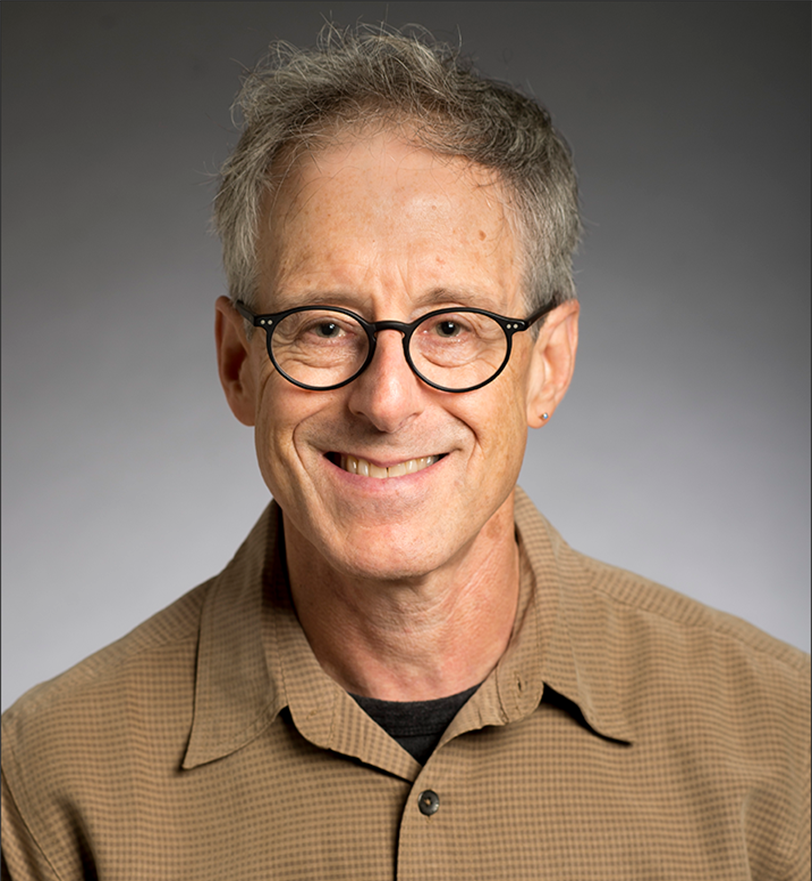
Robert E. Kass
. Donald Rubin's work connects Causal inference, missing data and Bayesian statistics. His Harvard profile lists Causal inference in experiments and observational studies, nonresponse in sample surveys, and Bayesian and empirical Bayesian methods as research interests.[ref]
The potential outcomes framework makes a causal comparison explicit by distinguishing the outcomes that would occur under alternative treatments. Only the outcome under the received treatment is observed for each individual, so identifying an average treatment effect requires design or modelling assumptions. In missing-data analysis, multiple imputation propagates uncertainty by analyzing several completed datasets and pooling their results with Rubin's rules. These ideas explain why filling in one convenient value and then treating it as observed generally understates uncertainty.

Portrait of Donald B. Rubin
. Photograph of Donald B. Rubin linked from the Harvard Department of Statistics profile and labelled Don Rubin.Nan Laird develops statistical methods for incomplete observations, repeated measurements and the combination of evidence across studies. Her Harvard biography identifies contributions to the expectation-maximization algorithm, meta-analysis, longitudinal studies and statistical genetics.[ref]
In a longitudinal study, repeated outcomes from one person are usually dependent. A model with random effects can represent persistent differences between people while estimating population relationships. Treating those observations as independent can distort uncertainty. Laird's work on longitudinal analysis addresses this connection between a scientifically plausible dependence structure and practical inference; the same concern arises when results from heterogeneous studies are combined by random-effects meta-analysis.
Homepage: hsph.harvard.edu/profile/nan-m-laird/
Arthur P. Dempster contributed to multivariate analysis, incomplete-data inference and the representation of uncertain evidence. With Nan Laird and Donald Rubin, he developed the general expectation-maximization algorithm formulation published in 1977. Its expectation step averages a complete-data log likelihood using the current Conditional distribution of latent or missing variables; its maximization step updates parameters using that average. This makes a difficult incomplete-data likelihood accessible through a sequence of simpler calculations.
Harvard's institutional tribute also traces his work on Dempster-Shafer theory, in which evidence can leave an explicit component of uncertainty about an assertion. His dissertation concerned multivariate settings with more variables than observations, anticipating a central difficulty of high-dimensional statistics.[ref]
https://statistics.fas.harvard.edu/news/2026/06/arthur-pentland-dempster-1929-2026-extended-obituary-and-tribute. Harvard tribute, dissertation, upper/lower probabilities and EM collaboration
Identity and life dates: Harvard Department of Statistics obituary and tribute.

Portrait of Arthur P. Dempster
. Llorenzi. CC BY-SA 3.0, via Wikimedia Commons. Source.Andrew Gelman works on Bayesian statistics, statistical modelling and the interpretation of data in scientific and social questions. His research and teaching connect hierarchical Bayesian models, regression, computation and statistical graphics. His Columbia research page describes applications ranging from survey inference and elections to environmental and medical measurements.[ref]
A characteristic modelling problem is learning about many related groups: completely separate estimates can be noisy, while a single common estimate can hide differences. A hierarchical Bayesian model estimates group parameters together and lets the data influence their degree of pooling. Model checking, including posterior predictive checks, then asks whether simulated observations reproduce scientifically relevant features of the actual data. This connects fitting a model with examining the adequacy of its assumptions.

Portrait of Andrew Gelman
. Andrewgelman, 13 May 2026. CC BY 4.0, via Wikimedia Commons. Source.Hal S. Stern is a statistician whose research includes Bayesian statistics and the analysis of forensic evidence. He is a coauthor of Bayesian Data Analysis by Andrew Gelman and others and of the article with Andrew Gelman explaining why a difference between statistical significance and nonsignificance need not itself be statistically significant. This distinction separates the comparison of two estimated effects from two separate hypothesis tests.[ref]

Portrait of Hal S. Stern
. Photograph linked by the author’s University of California, Irvine homepage; photographer and licence are not asserted. Source.Bernard Lewis Welch developed inference for means when sample variances cannot be treated as estimates of one shared population variance. His 1947 paper explicitly generalized Student's problem to several different population variances.[ref]
The Generalization of Student's Problem when Several Different Population Variances are Involved by Bernard Lewis Welch. Biometrika 34(1–2), 28–35 (1947), publisher title and byline
The familiar two-group Welch's t-test estimates the standard error of a mean difference using , rather than pooling both sample variances under an equal-variance model. Its reference distribution uses approximate statistical degrees of freedom. This makes the distinction between unequal population variances and unequal sample sizes explicit: both enter the uncertainty calculation, and unequal group sizes do not by themselves justify assuming equal variances.
Joseph Born Kadane is a statistician whose work connects Bayesian statistics, decision theory and applications of probability to practical evidence. In his own research statement, he describes work on prior elicitation: constructing probability distributions from an investigator's background knowledge, as well as on the foundations and computation of Bayesian inference.[ref]
https://www.stat.cmu.edu/GSS/kadane.html. Carnegie Mellon, Joseph B. Kadane research statement, theoretical interests
His institutional biography records that he joined Carnegie Mellon in 1971 and headed its statistics department from 1972 to 1981.[ref]
https://www.cmu.edu/dietrich/statistics-datascience/people/emeritus/joseph-kadane.html. Carnegie Mellon departmental biography, Bio
In computing, his name is also attached to Kadane's algorithm for the maximum subarray problem: the best segment ending at a new position either extends the preceding best-ending segment or starts at that position. This gives a linear-time dynamic programming solution.
Portrait of Joseph Born Kadane
. Photograph from Carnegie Mellon University's official researcher profile. Source.Maurice Kendall developed methods for rank-based statistical comparison and helped organize statistical theory through influential textbooks. His 1938 paper introduced a measure of rank correlation associated with the Kendall rank correlation coefficient.[ref]
A New Measure of Rank Correlation by Maurice Kendall. Biometrika 30(1–2), 81–93 (1938), publisher title and byline
The coefficient compares pairs of observations: agreement between their two orderings counts positively, disagreement negatively. This makes it a measure of ordinal association rather than a measure of linear agreement in the original measurement units. For data without ties, identical orderings give coefficient one and reversed orderings minus one. Later editions of his textbook series were developed by authors including Alan Stuart, connecting probability distributions, sampling theory and inference.[ref]

Portrait of Maurice Kendall
. University of St Andrews, MacTutor History of Mathematics Archive. Photographer and image licence are not asserted. Source.Alan Stuart was a statistician and professor at the London School of Economics, closely associated with the systematic presentation of statistical theory in Maurice Kendall's textbook tradition. The publisher credits him as an author of the sixth edition of Kendall's Advanced Theory of Statistics, volume 1, Distribution Theory, published in 1994. Its scope runs from moments and characteristic functions to sampling distributions, order statistics and multivariate normal distributions. This connects the probability distribution of raw observations to the sampling distribution of the statistics used for inference.[ref]
https://www.wiley-vch.de/en/areas-interest/mathematics-statistics/statistics-16st/probability-mathematical-statistics-16st1/kendall-39-s-advanced-theory-of-statistics-volume-1-distribution-theory-978-0-470-66530-5. Publisher catalogue, sixth-edition authorship, contents and Alan Stuart author information

Portrait of Alan Stuart, circa 1979
. Library of the London School of Economics and Political Science, via Wikimedia Commons. The source records no known copyright restrictions; this is not an asserted Creative Commons licence. Source. Pinned article: Introduction to the OurBigBook Project
Welcome to the OurBigBook Project! Our goal is to create the perfect publishing platform for STEM subjects, and get university-level students to write the best free STEM tutorials ever.
Everyone is welcome to create an account and play with the site: ourbigbook.com/go/register. We belive that students themselves can write amazing tutorials, but teachers are welcome too. You can write about anything you want, it doesn't have to be STEM or even educational. Silly test content is very welcome and you won't be penalized in any way. Just keep it legal!
Intro to OurBigBook
. Source. We have two killer features:
- topics: topics group articles by different users with the same title, e.g. here is the topic for the "Fundamental Theorem of Calculus" ourbigbook.com/go/topic/fundamental-theorem-of-calculusArticles of different users are sorted by upvote within each article page. This feature is a bit like:
- a Wikipedia where each user can have their own version of each article
- a Q&A website like Stack Overflow, where multiple people can give their views on a given topic, and the best ones are sorted by upvote. Except you don't need to wait for someone to ask first, and any topic goes, no matter how narrow or broad
This feature makes it possible for readers to find better explanations of any topic created by other writers. And it allows writers to create an explanation in a place that readers might actually find it.
Figure 1. Screenshot of the "Derivative" topic page. View it live at: ourbigbook.com/go/topic/derivativeVideo 2. OurBigBook Web topics demo. Source. - local editing: you can store all your personal knowledge base content locally in a plaintext markup format that can be edited locally and published either:This way you can be sure that even if OurBigBook.com were to go down one day (which we have no plans to do as it is quite cheap to host!), your content will still be perfectly readable as a static site.
- to OurBigBook.com to get awesome multi-user features like topics and likes
- as HTML files to a static website, which you can host yourself for free on many external providers like GitHub Pages, and remain in full control

Figure 2. You can publish local OurBigBook lightweight markup files to either OurBigBook.com or as a static website.
Figure 3. Visual Studio Code extension installation.
Figure 5. . You can also edit articles on the Web editor without installing anything locally. Video 3. Edit locally and publish demo. Source. This shows editing OurBigBook Markup and publishing it using the Visual Studio Code extension. 
- Infinitely deep tables of contents:




All our software is open source and hosted at: github.com/ourbigbook/ourbigbook
Further documentation can be found at: docs.ourbigbook.com
Feel free to reach our to us for any help or suggestions: docs.ourbigbook.com/#contact