
George Pólya was a mathematician whose research spanned probability theory, analysis, combinatorics and geometry. He also became an influential writer about mathematical discovery, emphasizing the search for analogies, simpler cases and useful auxiliary constructions.[ref]
https://mathshistory.st-andrews.ac.uk/Biographies/Polya/. Biography, research areas and approach to mathematical discovery
His work on random walks gives a striking example of dimension changing a qualitative answer: a simple symmetric random walk on the integer lattice returns to its starting point with probability one in dimensions one and two, while in dimension three that probability is less than one. The distinction connects local random steps with the distinction between recurrent graphs and transient graphs.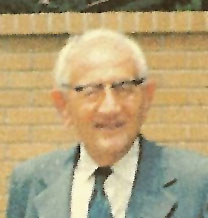
Portrait of George Pólya
. Photograph identified on the named portrait page. Source.

George Pólya (1887–1985) was a Hungarian mathematician known for his work in various areas of mathematics, particularly in the fields of combinatorics, number theory, and probability. He is perhaps best known for his contributions to mathematical education and problem-solving techniques. Pólya developed a systematic approach to solving mathematical problems, which he outlined in his influential book "How to Solve It," published in 1945.
New to topics? Read the docs here!