
Portrait of Joseph Bertrand
. Public-domain portrait, via Wikimedia Commons. Source.A mathematician working on mathematical optimization algorithms and software. The Dennis-Moré condition concerns superlinear convergence of quasi-Newton methods.
Homepage: www.mcs.anl.gov/~more/
A mathematician whose research includes mathematical optimization. The Dennis-Moré condition concerns superlinear convergence of quasi-Newton methods.
Homepage: www.cmor-faculty.rice.edu/~dennis/
British mathematician associated with numerical analysis and mathematical optimization, including Sℓ1QP.

Siméon Denis Poisson, cropped portrait from a lithograph
. Portrait source. François-Séraphin Delpech, after Nicolas Eustache Maurin; existing crop hosted on Wikimedia Commons. The file cites the Smithsonian Libraries Scientific Identity source. Public-domain artwork; faithful reproduction, PD-Art / Public Domain Mark.
A mathematician whose work includes Radon's theorem, Radon measures, the Radon-Nikodym theorem and the Radon transform.
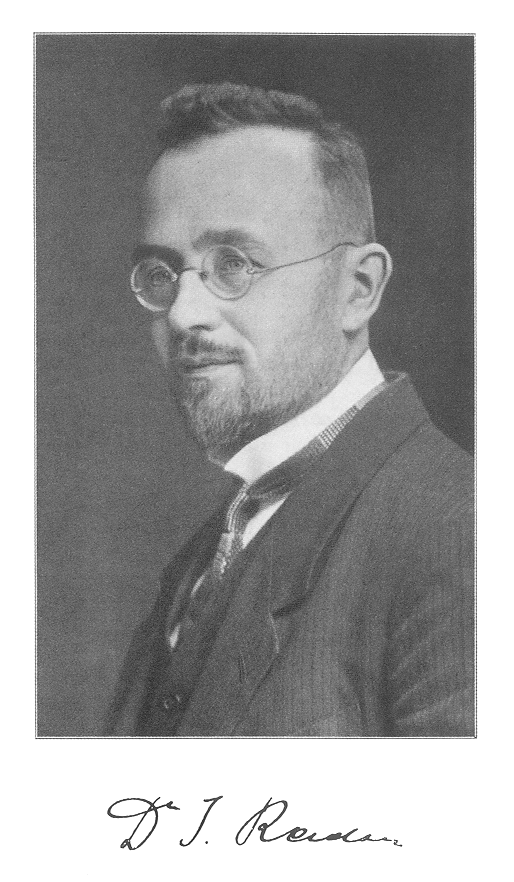
Portrait of Johann Radon around 1920
. Source. Homepage: sites.google.com/site/jmptidcott2/
A mathematician whose 1926 work introduced a component-merging method for the minimum spanning tree problem, now called Borůvka's algorithm.[ref]
O jistém problému minimálním by Otakar Borůvka. Original article, 1926, pp. 37–58

Portrait of Otakar Borůvka in 1981
. Via Wikimedia Commons; the linked file page provides image credits and usage information. Source.
Portrait of Marc Lackenby in 1997
. Crop of a photograph by George Bergman, hosted by Wikimedia Commons. Original photograph and credits; CC BY-SA 4.0. Crop details are on the linked source file page. Source.
Ernst Zermelo in the 1900s
. Unknown photographer, Mondadori archive; Wikimedia Commons lists the photograph as public domain. Source.A mathematician and physicist associated with statistical mechanics and the Ehrenfest model with Paul Ehrenfest.

Portrait of Tatyana Afanasyeva-Ehrenfest
. Historical photograph by an unknown photographer, from the Dibner Library portrait collection. Listed as public domain by Wikimedia Commons. Source.A Colombian mathematician known for Recamán's sequence. The primary sequence record cites his 1991 correspondence; an institution-hosted interview independently identifies him as the mathematician and educator.[ref]
OEIS entry A005132. References: letter of 29 January 1991
[ref]https://eduteka.icesi.edu.co/articulos/EntrevistaBernardoRecaman. Eduteka interview, hosted by Universidad Icesi
Verified Spanish-language identity page: es.wikipedia.org/wiki/Bernardo_Recam%C3%A1n_Santos. An exact usable portrait URL was not established in the bounded Commons/Wikipedia and institutional-source check; the report records that gap without inferring that no portrait exists.
A mathematician specializing in algebraic number theory. The Hasse diagram is named after him.[ref]
https://en.wikipedia.org/wiki/Helmut_Hasse. Biographical identity and field
[ref]
Portrait of Helmut Hasse by Konrad Jacobs
. Oberwolfach Photo Collection, photograph by Konrad Jacobs, via Wikimedia Commons. CC BY-SA 2.0 Germany. The linked file page identifies the sitter and the photographer. Source.Mathematician working in probability theory and stochastic calculus; author of Markov Chains by James R. Norris. Author's Cambridge page.

James R. Norris at Oberwolfach in 2007. Photograph credited to Renate Schmid; Wikimedia Commons and the Oberwolfach Photo Collection.
Photograph by Renate Schmid. Verified file and source credit, licensed CC BY-SA 2.0 Germany. No changes. Source.A mathematician whose work includes the minimax theorem and, with Oskar Morgenstern, the foundations of expected utility and game theory.

Portrait of John von Neumann
. Portrait credited to wikispaces in the Wikimedia Commons file record. CC BY-SA 3.0. Source.Mathematician associated with the Bellman-Ford algorithm.

A mathematician working in probability theory and ergodic theory, whose photographic collection became a foundation of the Oberwolfach Photo Collection.[ref]
https://www.nat.fau.de/2015/07/29/zum-gedenken-an-prof-dr-konrad-jacobs/. FAU obituary, 29 July 2015, research areas and transfer of the collection in 2005
[ref]https://opc.mfo.de/. Oberwolfach Photo Collection, introductory history and attribution to Konrad Jacobs

Portrait of Konrad Jacobs
. Via Wikimedia Commons; credits and usage information are on the linked source file page. Source.
Volker Strassen in 1970
. Photograph credited to Konrad Jacobs, via the Oberwolfach Photo Collection. The file page states Creative Commons Attribution-ShareAlike 2.0 Germany, CC BY-SA 2.0 DE. The remote photograph is linked without a local copy. Source.A mathematician associated with Broyden's method and quasi-Newton methods in numerical analysis. An institutional portrait is catalogued by the University of Essex Library Services: www.flickr.com/photos/149590996@N07/31601668406/
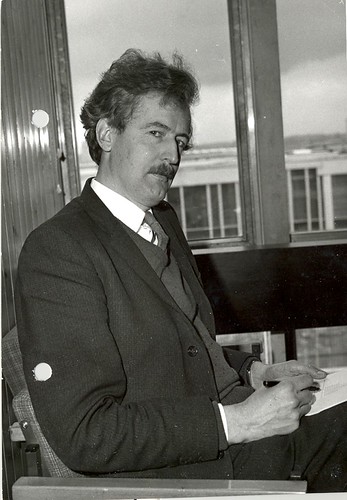
A mathematician whose work includes graph theory and matroids; Tutte's theorem on perfect matchings is one of his fundamental results.

William Thomas Tutte, portrait hosted by the University of St Andrews MacTutor archive
. A Cambridge mathematician associated with Routhian mechanics and the Routh-Hurwitz stability criterion.

Portrait of Edward Routh
. Photographer unrecorded; historical portrait reproduced by MacTutor and transferred to Wikimedia Commons from English Wikipedia (uploader QueenAdelaide). Public domain in the country of origin and jurisdictions applying a life-plus-70-year term, as tagged on Commons. Source usage terms, via Wikimedia Commons. Source.Homepage: people.maths.ox.ac.uk/belyaev/
Author of Augustin-Louis Cauchy by Hans Freudenthal. Archive biography identifying the Dictionary of Scientific Biography contribution: mathshistory.st-andrews.ac.uk/Biographies/Freudenthal/ .

Portrait of Hans Freudenthal
. L. H. Hofland, photographer; rights holder Het Utrechts Archief, portrait 1957. Creative Commons Attribution 4.0 International, as stated in file licensing section., via Wikimedia Commons. Source.Author of On the date of Cauchy's contributions to the founding of the theory of groups by Peter Michael Neumann.

Portrait of Peter M. Neumann
. User:Pruneau, self-photographed, 19 July 2008. Creative Commons Attribution-ShareAlike 3.0 Unported., via Wikimedia Commons. Source.
Portrait of Évariste Galois
. Unknown artist; reproduced in Galois, Œuvres mathématiques, Gauthier-Villars (1897), p. 18. Public domain (PD-old, as declared on Commons). Source and usage information on the linked Wikimedia file page. Source.Author of Nova methodus pro maximis et minimis by Gottfried Wilhelm Leibniz on differential calculus.

Portrait of Gottfried Wilhelm Leibniz
. Painting by Christoph Bernhard Francke; Herzog Anton Ulrich-Museum, Braunschweig, inv. 558; museum photograph credited to Claus Cordes. Public domain (PD-old and Public Domain Mark, as declared on Commons). Source and usage information on the linked Wikimedia file page. Source.Author of An Investigation of the Laws of Thought by George Boole, applying symbolic operations to mathematical logic.

Portrait of George Boole
. Public-domain portrait, via Wikimedia Commons. Source.Author of A Treatise on Algebra by George Peacock. The original preface distinguishes arithmetical algebra and symbolical algebra.

Portrait of George Peacock
. Public-domain portrait, via Wikimedia Commons. Source.
Portrait of René Descartes
. Aubert, engraving after Franz Hals, 1644; Wellcome Library, London, L0012588. CC BY 4.0, via Wikimedia Commons. Source.A mathematician associated with foundational work in analysis, complex analysis, permutation groups and elasticity.[ref]

Portrait of Augustin-Louis Cauchy
. Rudolf Hoffmann (1820–1882), lithograph, 1856, after a photograph by Bertsch, Paris; existing crop by ChickSR. Public domain: origin and life-plus-70 jurisdictions; US pre-1931 publication. Source usage terms, via Wikimedia Commons. Source.The mathematician who gave an abstract finite group definition in his 1882 paper on quadratic forms. Archive biography: mathshistory.st-andrews.ac.uk/Biographies/Weber_Heinrich/ .

Portrait of Heinrich Martin Weber
. Public-domain portrait, via Wikimedia Commons. Source.The mathematician whose elimination theory is discussed in Mémoire sur l'élimination by Alexandre-Théophile Vandermonde. Archive biography: mathshistory.st-andrews.ac.uk/Biographies/Vandermonde/ .
Translator of The Elements of Geometrie by Henry Billingsley. Original-edition transcription: github.com/textcreationpartnership/A00429 .

Portrait of Peter Shor
. International Centre for Theoretical Physics. CC BY 3.0, via Wikimedia Commons. Source.
Portrait of Alan Turing
. Unknown photographer; existing Commons crop by David Levy from Alan Turing az 1930-as években.jpg. Public domain in the UK under Commons' PD-UK-unknown statement; Commons flags possible US copyright restored under URAA. No worldwide free-license claim. Source and usage information on the linked Wikimedia file page. Source.
Portrait of Steven H. Strogatz
. Leah Strogatz (photographer identified in description); Commons uploader Strogatz. CC BY-SA 4.0, via Wikimedia Commons. Source.Diocles was a Greek mathematician associated with the cissoid of Diocles and the geometry of the parabola. The dates of his life are approximate.[ref]
Diocles by John Joseph O'Connor and Edmund Frederick Robertson. Quick Info and opening biography: approximate dates and surviving information about his mathematical work

Portrait of Charles Hermite
. Photograph by Eugène Pirou (1841–1909); heliogravure by Paul Dujardin (1843–1913); printer Ch. Whittmann; published in Correspondance d’Hermite et de Stieltjes, 1905. Public domain: origin and life-plus-70 jurisdictions; US pre-1931 publication. Source usage terms, via Wikimedia Commons. Source.
https://www.nature.com/articles/160561d0. George Green, 1793–1841 (1947): no contemporary portrait or character sketch had been found
Source.
Portrait of Peter Gustav Lejeune Dirichlet
. Unknown artist; portrait dated before 1859; Commons upload by Magnus Manske. Public domain asserted by Commons in origin and life-plus-70 jurisdictions. Source usage terms, via Wikimedia Commons. Source.
Portrait of Olinde Rodrigues
. Unknown artist; nineteenth-century portrait; source recorded as Drouot. Public domain: origin and life-plus-70 jurisdictions; US pre-1931 publication. Source usage terms, via Wikimedia Commons. Source.
Portrait of Edmond Laguerre
. Unknown artist; nineteenth-century portrait of Edmond Laguerre; current version uploaded by Ssola. Public domain asserted by Commons in origin and life-plus-70 jurisdictions. Source usage terms, via Wikimedia Commons. Source.
Portrait of Pierre-Simon Laplace
. Lithograph by Zéphirin Belliard after Jean Baptiste Regnault, printed by Delpech, 1834; British Museum 1895,0617.492. Commons PD-scan and PD-old-100-expired: origin/life-plus-100 jurisdictions and US pre-1931 publication, via Wikimedia Commons. Source.
Portrait of Ferdinand Georg Frobenius
. Carl Günther (1827–1912). Public domain (as designated on Commons). Source and usage information on the linked Wikimedia file page. Source.A mathematician researching general relativity, including singularity theorems.[ref]
Professional profile of Roger Penrose (philosophy-of-cosmology.ox.ac.uk). Independent professional identity

Portrait of Roger Penrose
. Festival della Scienza / Flickr; photograph 6 November 2005; existing Commons headshot crop by TDKR Chicago 101. Creative Commons Attribution-ShareAlike 2.0 Generic., via Wikimedia Commons. Source.A mathematician.[ref]
https://mathshistory.st-andrews.ac.uk/Biographies/Balmer/. Independent professional profile

Portrait of Johann Jakob Balmer
. F. Brandseph, photograph circa 1865; Basel University Library, UBH Portr BS Balmer JJ 1825, 2c/2b/2a; contributed with Wikimedia CH. Public domain in Switzerland under expired-term rule and in life-plus-70 jurisdictions; library declares document public domain. Source usage terms, via Wikimedia Commons. Source.A mathematics educator and senior contributing author of Prealgebra 2e.[ref]
https://openstax.org/books/prealgebra-2e/pages/preface. About the Authors / Senior Contributing Authors: Lynn Marecek
- Intermediate Algebra 2e by Lynn Marecek and Andrea Honeycutt Mathis
- Intermediate Algebra 2e by Lynn Marecek and Andrea Honeycutt Mathis 9.2 Solve Quadratic Equations by Completing the Square
- Prealgebra 2e by Lynn Marecek and others
- Prealgebra 2e by Lynn Marecek and others 3.1 Introduction to Integers
- Prealgebra 2e by Lynn Marecek and others 5.1 Decimals
A mathematics educator and senior contributing author of Prealgebra 2e.[ref]
https://openstax.org/books/prealgebra-2e/pages/preface. About the Authors / Senior Contributing Authors: MaryAnne Anthony-Smith
A mathematics educator and senior contributing author of Prealgebra 2e.[ref]
https://openstax.org/books/prealgebra-2e/pages/preface. About the Authors / Senior Contributing Authors: Andrea Honeycutt Mathis
- Intermediate Algebra 2e by Lynn Marecek and Andrea Honeycutt Mathis
- Intermediate Algebra 2e by Lynn Marecek and Andrea Honeycutt Mathis 9.2 Solve Quadratic Equations by Completing the Square
- Prealgebra 2e by Lynn Marecek and others
- Prealgebra 2e by Lynn Marecek and others 3.1 Introduction to Integers
- Prealgebra 2e by Lynn Marecek and others 5.1 Decimals
A mathematician whose research includes probability theory, stochastic processes and statistics.[ref]
Homepage: www.randomservices.org/Siegrist.html
- Random: Probability, Mathematical Statistics, Stochastic Processes by Kyle Siegrist
- Random: Probability, Mathematical Statistics, Stochastic Processes by Kyle Siegrist Discrete Uniform Distributions
- Random: Probability, Mathematical Statistics, Stochastic Processes by Kyle Siegrist The Arcsine Distribution
- Random: Probability, Mathematical Statistics, Stochastic Processes by Kyle Siegrist The Geometric Distribution
- Random: Probability, Mathematical Statistics, Stochastic Processes by Kyle Siegrist The Pareto Distribution
- Random: Probability, Mathematical Statistics, Stochastic Processes by Kyle Siegrist The Rayleigh Distribution
Homepage: sites.math.washington.edu/~lee/

Portrait of John M. Lee
. Portrait provided on the official University of Washington homepage.Homepage: www.math.toronto.edu/mgualt/
Instructor for the 2012 Topology I: smooth manifolds (MAT1300HF) course; the course information explicitly identifies his role as instructor.
Articles were limited to the first 100 out of 310 total.
Articles by others on the same topic

A mathematician is someone who is professionally engaged in the field of mathematics, which is the study of numbers, quantities, structures, spaces, and the relationships between them. Mathematicians can work in various areas, including pure mathematics (theoretical aspects that explore mathematical concepts and ideas for their own sake) and applied mathematics (using mathematical theories and techniques to solve practical problems in fields such as engineering, physics, economics, biology, and computer science).

Poet, scientists and warriors all in one? Conquerors of the useless.
A wise teacher from University of São Paulo once told the class Ciro Santilli attended an anecdote about his life:It turned out that, about 10 years later, Ciro ended up following this advice, unwittingly.
I used to want to learn Mathematics.But it was very hard.So in the end, I became an engineer, and found an engineering solution to the problem, and married a Mathematician instead.


