
A researcher who tested parent-based treatment for childhood anxiety through the SPACE treatment program. A noninferiority trial compared the parent intervention with child cognitive behavioral therapy and measured family accommodation. This asks whether changing parental responses can achieve an acceptable clinical outcome even when the child does not attend the intervention sessions.[ref]
Parent-Based Treatment as Efficacious as Cognitive-Behavioral Therapy for Childhood Anxiety: A Randomized Noninferiority Study of Supportive Parenting for Anxious Childhood Emotions by Eli R. Lebowitz and others. 2020, noninferiority design, ages 7–14 and accommodation outcomes

Portrait of Eli R. Lebowitz
. Yale Medicine profile portrait. Source.A researcher who tested cognitive behavioral therapy for childhood anxiety disorders. A randomized trial compared a sixteen-session intervention with a waiting-list condition in children aged nine to thirteen. The work made clinical claims testable through measured outcomes, while the comparison leaves separate questions about specific mechanisms and performance against another active treatment.[ref]

Portrait of Philip C. Kendall
. Publisher author portrait. Source.A researcher who tested internet-delivered cognitive behavioral therapy for adolescent anxiety disorders in routine care. A randomized comparison evaluated the addition of parent sessions, with diagnostic remission assessed after treatment and at follow-up. This separates evidence for the treatment package from evidence that involving parents supplies an additional benefit.[ref]
A randomized controlled trial of internet-delivered cognitive behaviour therapy for adolescent anxiety disorders in a routine clinical care setting with and without parent sessions by Polly Waite and others. 2019, randomized parent-session comparison and remission outcomes

Portrait of Polly Waite
. Professional-association workshop portrait. Source.A researcher who examined whether parental anxiety changes how well children respond to cognitive behavioral therapy for anxiety. Her trial compared child treatment with and without additional parent anxiety management, separating families by parental-anxiety status. The design tests when a parent intervention adds benefit instead of assuming the same effect in every family.[ref]
The role of parental anxiety in the treatment of childhood anxiety by Vanessa E. Cobham and others. 1998, parental-anxiety strata and parent-intervention comparison

Portrait of Vanessa E. Cobham
. University of Queensland profile portrait. Source.A clinical psychologist who studied prospective adaptation and differing courses after bereavement.[ref]
Resilience to loss and chronic grief by George A. Bonanno and others. 2002, author and original research

Portrait of George A. Bonanno
. Via Wikimedia Commons. Source.A clinical psychologist who tested the effectiveness and specificity of the Penn Resiliency Program.[ref]
A clinical psychologist who examined attachment and mental-health outcomes following randomized foster-care allocation.[ref]
A clinical psychologist who investigated genetic and environmental contributions to adversity exposure-conditioned adaptation scores.[ref]
A clinical psychologist who tested prospective relationships between prior adversity, later psychological stress and depression.[ref]
Randy O. Frost developed a cognitive-behavioral account of hoarding incorporating information processing, attachment, avoidance and beliefs about possessions. The model links apparently similar accumulation outcomes to several candidate maintaining processes. It generates hypotheses for assessment and intervention rather than establishing one cause from the presence of clutter alone. [ref]
A cognitive-behavioral model of compulsive hoarding by Randy O. Frost and others. 1996, original multifactor model
David F. Tolin studied decision making in hoarding. His experiment compared keep-or-discard decisions involving personally owned and control items while measuring neural activity. Ownership-dependent responses help distinguish difficulty discarding one’s own possessions from a general inability to make any decision. [ref]
Neural mechanisms of decision making in hoarding disorder by David F. Tolin and others. 2012, owned versus control-item decisions and neuroimaging
Erik Hedman studied internet-delivered cognitive behavioral therapy for severe health anxiety. A randomized trial compared therapist-guided internet treatment with an attention-control condition. The comparison tests that delivery arrangement and treatment package, rather than showing that an online format alone is sufficient or that every form of health concern has the same mechanism. [ref]
Internet-based cognitive-behavioural therapy for severe health anxiety: randomised controlled trial by Erik Hedman and others. 2011, randomized therapist-guided internet-CBT comparison
A researcher who compared people with persistent psychotic experiences who did and did not need clinical care. The 2016 study also included a control group without such experiences. Differences in distress, functioning and psychological characteristics help distinguish having an unusual experience from developing a clinical difficulty requiring support.[ref]
Charles M. Borduin studied multisystemic therapy for serious juvenile offending. The treatment is evaluated through outcomes that extend beyond immediate symptom reports, including later offending. Distinguishing a controlled treatment comparison from a simple before-and-after change is essential when attributing long-term outcomes to an intervention. [ref]
Multisystemic treatment of serious juvenile offenders: long-term prevention of criminality and violence by Charles M. Borduin and others. 1995, long-term intervention comparison


Photograph by Cfonagy, released into the public domain. Source: Wikimedia Commons.

A clinical psychologist who, with David M. Clark, proposed a cognitive model of persistent post-traumatic stress disorder. Negative interpretations and poorly contextualized autobiographical memory can generate a sense of current threat even though the event is past. The account links continuing symptoms to cognitive and behavioral strategies that prevent those interpretations from changing.[ref]
A cognitive model of posttraumatic stress disorder by Anke Ehlers and David M. Clark. 2000, proposed current-threat mechanism and maintaining strategies

Portrait of Anke Ehlers
. British Academy profile portrait. Source.A clinical psychologist who coauthored the original dual representation theory of post-traumatic stress disorder. The account distinguishes verbally accessible recollections from representations activated by situational cues. This proposed difference explains how deliberately describing an event can diverge from involuntary reliving; it is a theoretical account of human memory, not a demonstration of two isolated anatomical stores.[ref]
A dual representation theory of posttraumatic stress disorder by Chris R. Brewin and others. 1996, original theoretical distinction, pp. 670–686
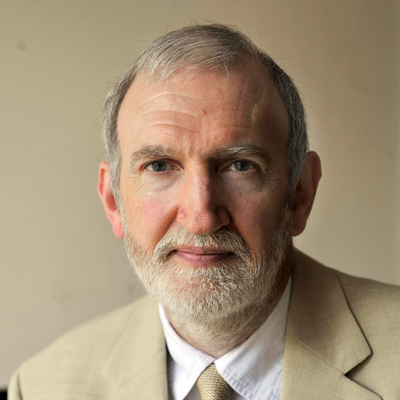
Portrait of Chris R. Brewin
. British Academy profile portrait. Source.A clinical and cognitive psychologist at the University of Western Australia whose work investigates anxiety-linked information processing. [ref][ref]
Selective attention and emotional vulnerability: assessing the causal basis of their association through the experimental manipulation of attentional bias by Colin MacLeod and others. Journal of Abnormal Psychology 111, 107–123; modified dot-probe training and responses to a standardised stress task
Portrait of Colin MacLeod
. University of Western Australia profile portrait. Source.A clinical psychologist who used virtual reality to test mechanisms maintaining persecutory delusions. A randomized experiment compared entering simulated social situations while retaining safety behaviors with entering them while dropping those behaviors. Measuring changes in conviction connects the manipulation to a proposed mechanism, beyond simply exposing participants to a social setting.[ref]
Virtual reality in the treatment of persecutory delusions: randomised controlled experimental study testing how to reduce delusional conviction by Daniel Freeman and others. 2016, 30-participant experimental study and real-world assessment

Portrait of Daniel Freeman
. University of Oxford profile portrait. Source.A researcher who tested how a visuospatial task influences later intrusive recollections. Participants watched a distressing film and, after a delay, either played Tetris or entered a control condition; subsequent intrusions and deliberate recognition memory were measured separately. The analogue experiment tests a cognitive mechanism and does not by itself establish treatment effectiveness after real-world psychological trauma.[ref]
Can Playing the Computer Game Tetris Reduce the Build-Up of Flashbacks for Trauma? A Proposal from Cognitive Science by Emily A. Holmes and others. 2009, trauma-film experiment, one-week intrusions and recognition

Portrait of Emily A. Holmes
. Katie Chan. CC BY-SA 3.0, via Wikimedia Commons. Source.
There are unlisted articles, also show them or only show them.