
Hyperchromic effect 2026-11-05
The hyperchromic effect is an increase in the intensity of an absorption band, for example when a molecule's environment or interactions change. It concerns absorption strength rather than a shift of the band's wavelength. Its converse is the hypochromic effect.[ref]
Hyperchromic effect in IUPAC Gold Book. Entry H02923, definition
At fixed concentration and optical path length, the Beer-Lambert law gives , so an increase in the molar absorption coefficient increases absorbance. A change of concentration alone can increase absorbance without demonstrating a hyperchromic change in molecular absorption strength.
A motivating measurement is DNA melting. In1962, J. Marmur and P. Doty followed the rise in260nm absorbance as DNA was heated. Their apparatus used glass-stoppered quartz cuvettes in a Beckman DU spectrophotometer, heated by circulating water through thermal spacers. A thermometer measured the cuvette temperature; measurements near the transition allowed about10minutes for equilibration at each step. They corrected absorbance for thermal expansion of the solution and plotted it relative to its value at25degrees Celsius. The midpoint of the hyperchromic rise defined their melting temperature.[ref]
Determination of the base composition of deoxyribonucleic acid from its thermal denaturation temperature by J. Marmur and P. Doty. Printedp.110, section2, apparatus and measurement procedure; Fig.1, experimental transition
For an original numerical example, a corrected absorbance increase from0.50 to0.65 is a30% hyperchromic rise. Under a stipulated two-state model with linear absorbance mixing and those fixed end-state baselines,is the fraction in the high-absorbance state. At , it gives . Sloping temperature-dependent baselines or intermediate states require a more detailed model; the30% change is not itself a universal conversion from absorbance to the fraction of melted DNA.
Julius Marmur 2026-11-05
Julius Marmur was a biochemist whose work included DNA isolation, strand reassociation and DNA hybridization. His institutional biography at Albert Einstein College of Medicine identifies his collaboration with P. Doty at Harvard and his later research in yeast genetics.[ref]
Julius Marmur profile at Albert Einstein College of Medicine. About Dr.Julius Marmur
Marmur's contribution linked preparing intact DNA with testing its physical behavior. Purification makes it possible to compare changes in the nucleic acid itself rather than changes caused by a heterogeneous cell extract. DNA melting and subsequent pairing experiments then ask whether separated complementary strands can recover an associated structure. Isolation, strand separation and sequence-dependent reassociation are distinct experimental questions.
In the1962 thermal-denaturation study with Doty, the apparatus measured absorbance as a function of sample temperature. The authors used the midpoint of the hyperchromic effect and compared it with GC content determined independently. They corrected for thermal expansion of the solution, an example of separating a molecular absorption change from the changing concentration during heating.[ref]
Determination of the base composition of deoxyribonucleic acid from its thermal denaturation temperature by J. Marmur and P. Doty. Printedpp.109–110, abstract and Materials and Methods
The resulting approach made bulk optical measurements informative about DNA composition and structural transitions. It did not directly read the order of bases along a strand: composition, pairing behavior and nucleic acid sequence remain different descriptions.
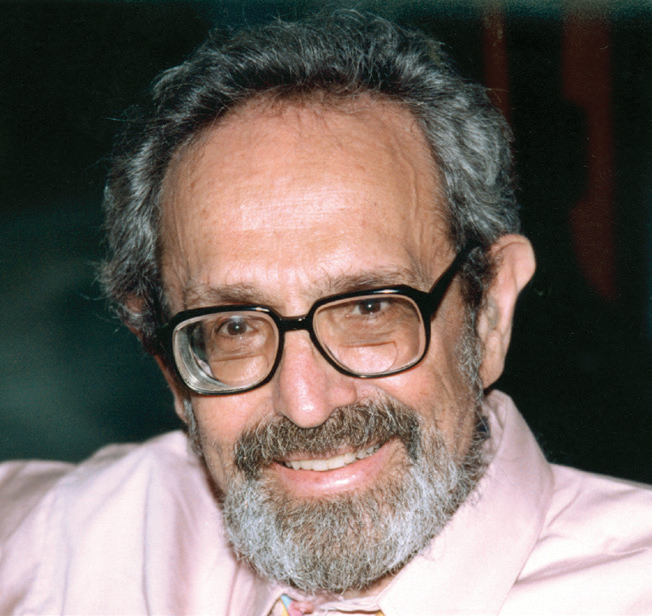
Julius Marmur
. Externally hosted portrait explicitly identified in Albert Einstein College of Medicine's institutional biography. Paul M. Doty 2026-11-05
Paul Doty was a biochemist and biophysicist who studied the physical properties of proteins and nucleic acids. Harvard's memorial identifies DNA melting and reassociation of separated strands among his scientific contributions. His research helped make DNA structure accessible through measurable physical transitions rather than chemical composition alone.[ref]
Paul Doty memorial at Harvard. Departmental memorial, scientific contributions
With J. Marmur, Doty studied how DNA thermal-denaturation temperature relates to GC content. Their1962 paper followed260nm absorbance through the hyperchromic effect accompanying the transition and compared melting measurements with independently known base compositions.[ref]
An original calculation using the paper's empirical relation illustrates its quantitative purpose. Under the stated solvent condition of about0.2molar sodium ions, the reported fit iswith expressed numerically in degrees Celsius and the percentage GC content. A measured midpoint of89.8degrees Celsius corresponds toThis inference depends on the solution conditions and the empirical fit; it is not a universal temperature-to-composition conversion for every DNA sample.[ref]
Determination of the base composition of deoxyribonucleic acid from its thermal denaturation temperature by J. Marmur and P. Doty. Abstract; Results, dependence on ionic strength and base composition
