A biochemist investigates the molecular chemistry of living systems, including the structure, reactions, and regulation of proteins, nucleic acids, lipids, and metabolites. The subject links chemistry with biology through experimentally testable mechanisms.
For example, measuring how an enzyme's reaction rate changes after a targeted amino-acid substitution can test a proposed catalytic role. Structural, kinetic, and cellular measurements answer complementary questions; a molecular interaction observed in isolation need not establish its importance in a living organism.
Meir Wilchek is a biochemist whose work helped establish affinity chromatography as a practical method of protein purification. His collaboration with Pedro Cuatrecasas used selective molecular recognition to retain a desired protein on a ligand-bearing support, connecting a biochemical interaction to a separation method.[ref]
Pedro Cuatrecasas by Alan R. Saltiel. p. 2, collaboration with Wilchek and development of affinity methods
The central idea differs from simply sorting proteins by size. An immobilized ligand supplies a binding partner for the target, while the experiment must still control unwanted retention and recover useful protein. The combination of specificity and reversibility makes a molecular interaction into an analytical tool.
For an illustrative comparison, two proteins of similar mass may behave differently on a column if only one recognizes the attached ligand. Conversely, a tightly retained protein is not automatically the intended target. Identity measurements and controls remain necessary. Wilchek's contribution is scientifically interesting because it makes biological selectivity useful for experimental isolation, rather than treating recognition only as a phenomenon to describe.[ref]
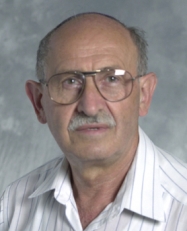
Portrait of Meir Wilchek
. Photograph explicitly identified as Wilchek Meir in the official departmental directory.Gennadiy Moiseyev is a researcher in retinoid biochemistry and the visual cycle. He was first author of a 2005 study demonstrating RPE65-dependent conversion of all-trans-retinyl esters into 11-cis-retinol in an expression system.[ref]
A subsequent study tested the enzyme's metal requirement. Chelation inhibited the measured activity, and supplying ferrous iron restored it; the tested ferric-iron additions did not. The study also examined recombinant RPE65 and measured iron associated with purified protein.[ref]
The contrast illustrates why the relevant variable is more specific than “some iron is present.” Oxidation state, accessible metal and assay conditions can affect whether an enzyme functions. Inhibition followed by chemically specific restoration provides a stronger mechanistic test than a correlation between protein abundance and product amount. Those biochemical experiments concern a defined reaction system; they do not by themselves establish a treatment or explain every physiological consequence of altered retinoid metabolism.
Venizelos Papayannopoulos is a biomedical researcher whose work concerns neutrophils and extracellular antimicrobial responses. He was first author of a 2010 study connecting neutrophil elastase and myeloperoxidase to the formation of neutrophil extracellular traps.[ref]
That work connected localization to chemistry. Neutrophil elastase entered the cell nucleus and cleaved particular histones, while experiments with purified components tested how those changes affected chromatin decondensation. A mouse loss-of-function comparison supplied evidence about trap formation in an infection model.[ref]
Neutrophil elastase and myeloperoxidase regulate the formation of neutrophil extracellular traps by Venizelos Papayannopoulos and others. Abstract and Fig. 1, component assays and genetic comparison
The scientific value lies in combining tests of different claims. Imaging can locate a protein; an enzyme assay can identify activity; removing a component can test a requirement in a larger system. Agreement among those observations supports a mechanism, while none is an automatic substitute for the others. This makes the research an example of how protein biochemistry can explain a changing cellular structure.
Emanuel Margoliash was a biochemist whose work on cytochrome c connected protein primary structure, molecular function and evolution. He isolated and sequenced the protein from different organisms and helped develop comparisons of amino acid sequences as evidence for phylogenetic trees.[ref]
His 1963 paper, Primary structure and evolution of cytochrome c by Emanuel Margoliash, made the structural comparison itself a source of evolutionary evidence. Subsequent collaborative work assembled a tree from twenty cytochrome-c sequences, combining published sequences with measurements from his laboratory.[ref]
A toy example shows the measurable idea. Align the five-residue strings
ACGKT and ACGRT: four positions agree and one differs, giving an observed mismatch fraction . These are invented strings, not Margoliash's data. An observed mismatch count is not automatically elapsed evolutionary time: repeated substitutions can hide earlier changes. The power of the approach is to make molecular resemblance explicit and test competing explanations, while retaining the distinction between sequence observations and an inferred history.Pedro Cuatrecasas was a biochemist who helped develop affinity chromatography and studied receptor biology. With collaborators including Meir Wilchek, he developed methods that used selective molecular binding to isolate particular proteins from complex mixtures.[ref]
His 1970 paper, Agarose Derivatives for Purification of Protein by Affinity Chromatography by Pedro Cuatrecasas, explained the organizing principle: attach a suitable ligand to an insoluble matrix, then exploit its reversible interaction with the desired macromolecule. The immobilized ligand supplies chemical selectivity, rather than requiring the target protein to be distinguished only by bulk size or charge.[ref]
Agarose Derivatives for Purification of Protein by Affinity Chromatography by Pedro Cuatrecasas. opening text, reversible recognition and covalently attached ligand
The method separates capture from recovery. Binding a target is useful only if the experiment can distinguish it from other retained material and recover it in a usable state. This makes protein purification a problem of controlled interactions as well as apparatus. Cuatrecasas also applied binding measurements and affinity methods to the insulin receptor, connecting recognition of a hormone to a physically isolable molecular component.[ref]
M. Soriano-Garcia is the first-listed author of a structural study connecting calcium ion binding with organization of the Gla domain of prothrombin. The 1992 paper reports an X-ray crystallography structure of calcium-bound prothrombin fragment1 at resolution and lists a chemistry affiliation at Michigan State University.[ref]
The comparison was mechanistically informative. In crystals without bound calcium, much of the Gla domain was disordered; in the calcium-bound preparation, the domain was well resolved and bound seven calcium ions. Carboxylate groups of gamma-carboxyglutamate residues helped coordinate those ions. Thus calcium was associated with a particular folded arrangement, rather than simply being another ingredient in solution.[ref]
The Ca2+ ion and membrane binding structure of the Gla domain of Ca-prothrombin fragment 1 by M. Soriano-Garcia and others. Abstract: apo/calcium-bound comparison and coordination
The study illustrates a limit of structural interpretation. Failure to resolve a region in a crystal does not prove that the corresponding amino acids are absent. The same sequence can be present while adopting multiple arrangements that do not yield one sharply defined crystallographic position. Comparing binding states can therefore reveal organization without implying that a missing part of the image was missing from the protein.
J. Stenflo coauthored the 1974 work identifying gamma-carboxyglutamic acid in prothrombin, connecting Vitamin K dependence with a specific chemical modification of a clotting protein. The study isolated a four-residue peptide from the calcium-binding amino-terminal region and found mobility that ordinary amino-acid composition did not explain.[ref]
Nuclear magnetic resonance and mass spectrometry identified two modified glutamic-acid residues in that peptide. The result supplied a chemical identity for the anomaly, rather than treating an altered migration pattern alone as a complete explanation.[ref]
Vitamin K dependent modifications of glutamic acid residues in prothrombin by J. Stenflo and others. Abstract: proton NMR, mass spectrometry and two gamma-carboxyglutamic-acid residues
An additional carboxyl group changes a side chain's chemical possibilities, including its interactions with ions. This makes post-synthesis chemistry biologically significant: two protein preparations with the same genetically specified sequence can differ in modifications and function. The finding helped connect a nutritional requirement, a measurable molecular difference and the behavior of a calcium-binding protein, while preserving the distinction between a chemical observation and a physiological inference.
R. E. Humbel coauthored experimental work identifying the chemical structure of human insulin-like growth factors with E. Rinderknecht. Their 1978 study determined the complete sequence of serum-derived insulin-like growth factor 1: a single chain of seventy amino acid residues connected by three disulfide bonds.[ref]
The comparison with proinsulin connected a biological activity to a molecular relationship. Corresponding regions resembled the insulin chains, while an intervening connecting segment remained in the growth factor. Conserved residues were compatible with a related folded structure; sequence similarity was evidence for that inference, not an atomic structure determination.[ref]
The amino acid sequence of human insulin-like growth factor I and its structural homology with proinsulin by E. Rinderknecht and R. E. Humbel. Abstract: insulin-chain correspondence, connecting segment and structural interpretation
This research illustrates why a bioassay and sequence analysis complement one another. Two preparations can produce similar responses without containing identical proteins. Establishing residue order and covalent connections provides an independent way to distinguish related signaling molecules.
- Amino-terminal sequences of two polypeptides from human serum with nonsuppressible insulin-like and cell-growth-promoting activities: evidence for structural homology with insulin B chain by E. Rinderknecht and R. E. Humbel
- The amino acid sequence of human insulin-like growth factor I and its structural homology with proinsulin by E. Rinderknecht and R. E. Humbel
E. Rinderknecht is the first-listed author of primary studies with R. E. Humbel that chemically characterized serum polypeptides with insulin-like and growth-promoting activity. Their 1976 amino-terminal sequencing paper compared two preparations then called NSILA I and II and proposed the designation insulin-like growth factor from their biological properties and resemblance to insulin.[ref]
Of the first thirty-one residue positions examined, twenty-two were identical between the two polypeptides. That is about identity over the measured segment: substantial similarity, but not identity of the entire molecules. The measured segment and the comparison being made must therefore accompany any percentage. The later complete sequence of insulin-like growth factor 1 supplied a more extensive chemical description.[ref]
The scientific contribution is a shift from classifying preparations by their effects to distinguishing specific related proteins. Shared biological activity, shared amino-terminal residues and a complete molecular sequence are progressively different kinds of evidence; none should be silently substituted for another.
- Amino-terminal sequences of two polypeptides from human serum with nonsuppressible insulin-like and cell-growth-promoting activities: evidence for structural homology with insulin B chain by E. Rinderknecht and R. E. Humbel
- The amino acid sequence of human insulin-like growth factor I and its structural homology with proinsulin by E. Rinderknecht and R. E. Humbel
Christian B. Anfinsen investigated the relation between amino-acid sequence and protein folding. Refolding experiments connect recovery of a protein's native structure with recovery of its biological activity.
The work supports the thermodynamic interpretation of folding under appropriate conditions: sequence and environment constrain the accessible stable structure. It does not imply that every protein folds rapidly or independently of cellular assistance.[ref]
Principles that govern the folding of protein chains by Christian B. Anfinsen. Primary publication: scientific topic and stated experimental result
Biochemist whose research addressed protein folding.[ref]
https://www.nobelprize.org/nomination/archive/show_people.php?id=16045. Primary identity record

Portrait of Christian B. Anfinsen
. Edward A. Hubbard / National Institutes of Health, circa 1950s; courtesy NIH Record and NIH, via the National Library of Medicine. Public domain (PD-USGov-NIH). Source.Poul Nissen coauthored the structural basis of ribosome activity in peptide bond synthesis by Poul Nissen and others.
Substrate-analogue structures in this study locate peptide bond formation in an RNA-based active site of the ribosome. This is concrete structural evidence for the catalytic role of ribosomal RNA, linking the geometry of the substrate-binding site to translation.
Paul D. Boyer developed a binding-change mechanism for ATP synthase. Different conformations of catalytic sites bind substrates, form ATP, and release it at different stages of the cycle.
This connects mechanical coupling with catalysis: rotation changes the state of a catalytic site rather than requiring an identical chemical environment at every moment.[ref]
https://www.nobelprize.org/prizes/chemistry/1997/summary/. Official prize account: enzymatic mechanism underlying ATP synthesis
Biochemist (1918–2018), recognized for elucidating the enzymatic mechanism of ATP synthase.

Portrait of Paul D. Boyer
. GBHayes. CC BY-SA 4.0, via Wikimedia Commons. Source.Saccharomyces cerevisiae is a particular species of yeast, used in baking, brewing and laboratory research. During ordinary vegetative growth it reproduces by budding: a smaller daughter grows from the mother before separation. Laboratory strains can be maintained as either haploid or diploid biological cells. This makes it possible to investigate genes in a single eukaryote, then use controlled crosses and meiosis to connect a genotype to a phenotype. See Burgess, Powers and Mell, Budding Yeast Saccharomyces cerevisiae as a Model Genetic Organism (2017), pp. 1–2.
A actin filament assembled from actin subunits. actin filament mass and actin filament number are distinct quantities; subunit exchange can continue while the total mass is approximately steady.
A locus prone to abnormal gaps, undercondensation or breakage under specified cellular conditions. A cytological gap is not by itself proof of a DNA double-strand break.
DNA replication copies a double-stranded DNA molecule into two daughter double-stranded DNA molecules. In semiconservative replication, each daughter retains one parental strand and receives one newly synthesized complementary strand. DNA polymerases build the new strands from incoming nucleotides; they do not make RNA or proteins in this copying step. See Alberts et al., Molecular Biology of the Cell, 4th edition (2002): DNA replication mechanisms.
David S. Hong investigated delivery of a miR-34a mimic in the phase1 MRX34 study in patients with advanced solid tumours. Encapsulation in a liposome linked a proposed microRNA intervention with the separate experimental problem of delivering an RNA molecule in the body.[ref]
Phase 1 study of MRX34, a liposomal miR-34a mimic, in patients with advanced solid tumours by David S. Hong and others. 2020, phase1 study: liposomal miR-34a mimic; preserve study-specific scope and adverse-event discussion when developing further
Carla P. Concepcion investigated whether the miR-34 family is necessary for p53-dependent responses. Deletion of the family in the studied house mouse models left major p53 responses intact, distinguishing the necessity of an endogenous regulator from the effects of artificially increasing its expression.[ref]
Intact p53-dependent responses in miR-34-deficient mice by Carla P. Concepcion and others. 2012, Discussion: complete miR-34 deletion, intact p53 pathway and necessity versus sufficiency
Lin He coauthored research on microRNA.[ref]
A microRNA component of the p53 tumour suppressor network by Lin He and others. publication title and author list
A small regulatory RNA that guides an Argonaute-containing complex to target RNAs, influencing their stability or biological translation.
A microRNA encoded with miR-16-1 in a cluster implicated in B-cell proliferative control. The broader deleted genomic region can have effects beyond the miRNA genes.
A small regulatory RNA that guides an Argonaute-containing complex to target RNAs, influencing their stability or biological translation.
Steven M. Johnson coauthored research on microRNA.[ref]
RAS is regulated by the let-7 microRNA family by Steven M. Johnson and others. publication title and author list
A small regulatory RNA that guides an Argonaute-containing complex to target RNAs, influencing their stability or biological translation.
Justin L. Sparks coauthored research on ribonucleotide excision repair.[ref]
RNase H2-initiated ribonucleotide excision repair by Justin L. Sparks and others. publication title and author list
Repair of ribonucleotides embedded in DNA, including molecules with correct base pairing. RNase H2 can initiate an incision followed by replacement synthesis and ligation.
Repair that recognizes and corrects mismatched sequence after copying or strand exchange. It can also inhibit homologous recombination between sufficiently divergent sequences.
Nicoleta Constantin helped reconstitute human DNA mismatch repair from purified components. A strand break on either side of a mismatch could direct correction, showing how strand information and repair proteins cooperate in selecting the sequence to replace.[ref]
Human mismatch repair: reconstitution of a nick-directed bidirectional reaction by Nicoleta Constantin and others. 2005, abstract: seven purified human activities and 3-prime/5-prime nick-directed repair
Robert E. Goldsby investigated the consequences of defective DNA polymerase proofreading in house mouse models. The reported increase in epithelial cancers connected a molecular mechanism for copying fidelity with tumour development in the studied animals.[ref]
High incidence of epithelial cancers in mice deficient for DNA polymerase δ proofreading by Robert E. Goldsby and others. 2002, abstract: DNA polymerase-delta proofreading deficiency and epithelial cancer incidence
Uri Ben-David investigated genetic changes in patient-derived tumour xenografts grown in MICE. The reported mouse-specific evolution shows that a research model can change under its experimental environment rather than remain a fixed copy of the original human tumour.[ref]
Erica L. Jackson investigated lung tumour initiation and progression using conditional expression of oncogenic KRAS. Controlling where and when the oncogene is activated makes it possible to separate the triggering event from later changes during tumour development.[ref]
Analysis of lung tumor initiation and progression using conditional expression of oncogenic K-ras by Erica L. Jackson and others. 2001, conditional oncogenic K-ras model and tumour initiation/progression
Lenny Dang coauthored research on 2-hydroxyglutarate.[ref]
Cancer-associated IDH1 mutations produce 2-hydroxyglutarate by Lenny Dang and others. publication title and author list
A hydroxyglutarate metabolite whose enantiomer and source matter. The R form accumulates after the neomorphic reaction of certain cancer-associated IDH1 mutants.
Andrew J. Aguirre studied how genomic genomic copy number affects CRISPR-Cas9 screening. Targeting amplified genomic regions can produce a response independent of the targeted gene's usual function, an important distinction when interpreting whether a screening signal demonstrates a gene-specific dependency.[ref]
Genomic Copy Number Dictates a Gene-Independent Cell Response to CRISPR/Cas9 Targeting by Andrew J. Aguirre and others. 2016, abstract and copy-number-dependent gene-independent targeting response
Profiling of preserved ribosomal and small-subunit-associated complexes to distinguish stages including scanning and recycling. Captured distributions remain subject to crosslinking and fragment-selection biases.
The establishment of malignant growth at a site distant from the original tumour, requiring successful dissemination, survival and expansion. Circulating tumour cells alone do not establish that a metastasis has formed.
Assembly and positioning of the biological translation machinery at a selected start. ribosome recruitment, scanning and start-codon recognition are distinguishable processes.
A stem cell derived from early embryonic tissue with capacity to generate many differentiated cell types under suitable conditions.
The complex of DNA and associated proteins that organises nuclear genetic material and helps regulate its accessibility.
Suhas S. P. Rao coauthored research on cohesin.[ref]
Cohesin loss eliminates all loop domains by Suhas S. P. Rao and others. publication title and author list
Cohesin is a multisubunit chromosome-associated protein complex involved in sister-chromatid cohesion and chromosome organization. Cleavage of a cohesin component helps permit sister separation at anaphase. Cohesin also contributes to chromosomal loop organization: acute removal can eliminate loop domains without implying that every aspect of gene expression changes immediately. Its segregation and interphase-organization roles are related but experimentally separable.
A DNA-binding protein associates physically with DNA. Some recognize selected base patterns, while others preferentially recognize DNA shape, ends or damage. Transcription factors regulate expression, histones organize packaging and repair factors inspect damaged substrates. These roles illustrate why binding alone does not establish a specific regulatory outcome. Sequence selectivity, affinity and cellular occupancy are distinct measurable properties.
A crystal structure specifies the chemical species and spatial arrangement of the chemical atoms or ions in a crystal. For an ideal periodic structure, separate two ingredients: a Bravais lattice specifies the translations that repeat the arrangement, and an atomic basis of a crystal specifies the chemical motif repeated at every lattice point. The outward shape, or crystal habit, is a different description: the internal arrangement is what this article describes.
A stress-associated RNA–protein assembly whose formation and composition depend on context. RNA enrichment does not establish obligatory translational silence.
A stress-associated RNA–protein assembly whose formation and composition depend on context. RNA enrichment does not establish obligatory translational silence.
Production of different mature RNA sequences from the same precursor by changing which splice sites or exons are used. A cassette exon can be included in one transcript isoform and skipped in another.
Bringing separated RNA segments into proximity while an intervening segment forms a loop. Multivalent RNA-binding proteins can stabilize this geometry, with consequences for accessibility and splice-site use.
Florian C. Oberstrass investigated the structure of the polypyrimidine tract-binding protein bound to RNA. The work connected sequence recognition with the arrangement of RNA-binding domains and the regulation of RNA splicing.[ref]
Structure of PTB bound to RNA: specific binding and implications for splicing regulation by Florian C. Oberstrass and others. 2005, abstract: PTB–RNA structure and implications for splicing regulation
A precursor-RNA position used as a boundary in RNA splicing. Selecting different donor or acceptor sites changes which sequences remain in the mature product.
Production of different mature RNA sequences from the same precursor by changing which splice sites or exons are used. A cassette exon can be included in one transcript isoform and skipped in another.
A structured RNA recognition element bound by iron regulatory proteins. In suitable 5′ contexts it controls biological translation, whereas a 3′ stability-control context can regulate RNA decay. It is not an autonomous iron-sensing riboswitch.
The network of chemical reactions that maintains a living system, supplies energy and builds or processes its material. Gas emissions can arise as primary metabolic byproducts or secondary metabolic byproducts, with different implications for an atmospheric biosignature gas.
A structured RNA recognition element bound by iron regulatory proteins. In suitable 5′ contexts it controls biological translation, whereas a 3′ stability-control context can regulate RNA decay. It is not an autonomous iron-sensing riboswitch.
Articles were limited to the first 100 out of 311 total.